
For Sedona STR buyers and sellers, the single most important action is to confirm insurance availability and document key mitigation features before your inspection or due diligence period ends. That one step protects earnest money, keeps deadlines honest, and tells us early whether a property can even be insured. Everything else, from roofing upgrades to disclosure paperwork, flows from that first check.
TL;DR:
- Buyers should request insurance quotes as escrow opens and set a 7 to 10 day quote window with cancellation rights before inspection deadlines.
- Standard carriers may decline forest adjacent parcels, so buyers should check Arizona DIFI’s higher risk insurer list and compare surplus lines pricing and renewal terms.
- Prioritize screened vents, clear gutters, and a noncombustible 0 to 5 foot foundation zone; these lower cost fixes may improve insurability faster than roof replacement.
- Order the parcel’s Natural Hazard Disclosure early, and write cancellation rights and remediation cost responsibilities into the contract before due diligence closes.
- Parcels bordering the forest or on steep downhill slopes near Oak Creek Canyon face greater premium pressure than interior lots, often understated by citywide risk maps.
Table of Contents
- Immediate checklist: the six things every buyer or seller should do first
- Insurance timing, types and how wildfire exposure changes quoting for Sedona STRs
- Property prep and mitigation that matter to underwriters and buyers
- Due diligence, disclosures and contractual protections for wildfire-prone STRs
- How wildfire exposure affects valuation, appraisal and saleability
- Seller prep and listing messaging for minimizing wildfire friction
- Equity Team perspective: case notes and common outcomes we see with Sedona STR transactions
- How The Equity Team and OwnInAZ can help with wildfire-related STR decisions
- FAQ
- Sources
Immediate checklist: the six things every buyer or seller should do first
We’ve watched enough Sedona STR deals wobble at the finish line to know the pattern: nobody checked insurability until it was almost too late. Here’s the order that actually saves deals and deposits.
- Request an insurance availability check or formal quote the day escrow opens, not the day before inspection ends.
- Walk the property and visually confirm the roof class, vent screening, gutters, and the 0-5 foot zone around the foundation.
- Order a Natural Hazard Disclosure report and any available wildfire hazard mapping for the parcel.
- Ask the seller for prior mitigation permits, receipts, or HOA Firewise USA community records if they exist.
- Build a buyer contingency tied directly to insurability and mitigation verification, with a firm deadline.
- If selling, knock out quick wins now: clear Zone 1 debris, screen exposed vents, and clean gutters before photos go up.
Pro Tip: Ask your agent to request the insurance check in writing, with a date, so the contingency has teeth instead of being a vague promise.
Insurance timing, types and how wildfire exposure changes quoting for Sedona STRs
Skipping the insurance check until the final days of due diligence is how good-faith deposits disappear. ADRE’s consumer advisory recommends that buyers investigate insurance availability before the due diligence period closes, because inspection costs, appraisal fees, and other due-diligence spending are usually nonrefundable if the home turns out to be uninsurable. That’s a painful lesson to learn after the fact.
Standard carriers sometimes pull back from forest-adjacent Sedona parcels, pushing buyers toward surplus lines coverage with different pricing and renewal terms. Arizona’s DIFI maintains resources and a list of insurers willing to write policies in higher-risk, forested regions, which is worth checking before assuming a property is uninsurable.
Mitigation changes the conversation with underwriters:
- A Class A roof, mesh-screened vents, and a cleared 0-5 foot zone often move a property into a friendlier pricing tier.
- New construction built to current Wildland Urban Interface code tends to secure coverage more easily than older homes retrofitted after the fact, according to recent Coconino County wildfire insurance discussions.
- Agents should build a 7 to 10 day insurance-quote window into the offer, with buyer termination rights attached, per practitioner guidance.
Properties built or retrofitted to current Wildland Urban Interface standards generally see smoother underwriting, according to county-level insurance session findings, though a true data commons for underwriting transparency isn’t fully in place yet. For a deeper dive into carrier options, our guide to wildfire insurance for Arizona rentals walks through what Sedona owners typically encounter.
Property prep and mitigation that matter to underwriters and buyers
Underwriters and buyers both look at the same handful of details, and most of them cost far less to fix than people assume.
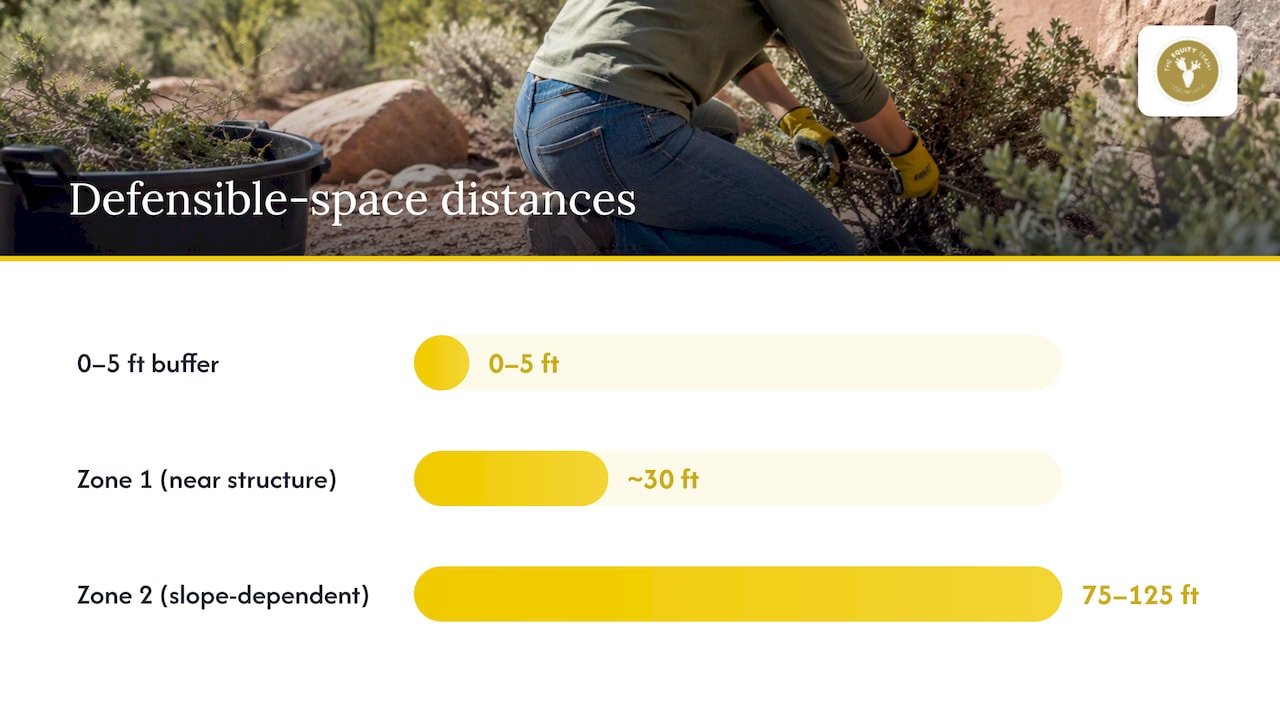
University of Arizona Cooperative Extension defensible-space guidance breaks the property perimeter into zones: Zone 1 runs about 30 feet from the structure and needs aggressive clearing, while Zone 2 extends 75 to 125 feet depending on slope, with thinned vegetation and no ladder fuels connecting ground brush to tree canopy.
- Roofing: Sedona Fire District’s Wildland Urban Interface policy generally requires Class A roofing materials, and a roof replacement affecting roughly a quarter or more of the surface typically triggers full code compliance.
- Vents and eaves: screened, ember-resistant vents and protected under-eave areas are standard checklist items for inspectors and underwriters alike.
- Gutters: noncombustible gutters, kept clear of leaf litter, prevent one of the most common ember ignition points.
- The 0-5 foot zone: IBHS’s Wildfire Prepared Home standard treats this noncombustible buffer right against the foundation as one of the highest-impact, lowest-cost mitigation moves available.
Pro Tip: Clearing gutters, screening vents, and moving firewood or mulch piles ten feet from the structure often shifts a property’s insurability tier faster than a full roof replacement.
Sellers who want a structured walk-through before listing can lean on our investment property inspection guide to catch these items early. Roofing contractors working through material options may also find commercial roofing fire rating guidance useful for comparing Class A products.
Due diligence, disclosures and contractual protections for wildfire-prone STRs
Paperwork and contract language do as much work as the mitigation itself when it comes to protecting both sides of a Sedona STR sale.
- Order a Natural Hazard Disclosure report early in the transaction, since timing it before or during inspection shapes how much negotiating room remains.
- Remember that ADRE expects licensees to direct clients toward authoritative wildfire risk resources and to exercise reasonable skill and care in those conversations.
- Add contract clauses that spell out an insurance-obtained contingency, a right to cancel if the property proves uninsurable, and clear allocation of any remediation costs.
- Keep permits and receipts for completed mitigation work organized and ready to hand to underwriters or buyers on request.
Our Sedona property disclosure guide spells out the local wording sellers should use so disclosures stay accurate and compliant.
How wildfire exposure affects valuation, appraisal and saleability
Wildfire risk touches valuation in ways that go beyond the obvious insurance line item.
- Insurance cost and availability shift the buyer pool itself, since cash buyers and investors weigh uninsurability differently than owner-occupants.
- Appraisers and lenders increasingly factor mitigation status into comp selection and marketability adjustments, favoring updated, code-compliant homes.
- Buyers commonly respond to unresolved wildfire risk with earnest-money reductions, repair credits, or outright cancellation.
- Parcels bordering Coconino National Forest or sitting in Oak Creek Canyon face sharper premium pressure than interior Sedona lots, since insurer analysis shows underwriters price heavily for downhill exposure and steep slopes that citywide risk maps tend to understate.
Our piece on how wildfire risk affects Sedona home value unpacks these valuation levers in more detail, and a Sedona vacation rental CMA is where mitigation investments actually get reflected in pricing conversations.
Seller prep and listing messaging for minimizing wildfire friction
A little preparation before listing day heads off most buyer objections before they start.
- Photograph the cleared 0-5 foot zone and Zone 1 defensible space, and keep receipts for roof and vent work handy for the listing packet.
- Use accurate language: a Firewise community is “recognized,” never “certified,” and overstating mitigation invites disputes later.
- Weigh a modest price adjustment against the actual cost of remediation before deciding which route makes more sense.
- Offer a seller credit for smaller items, but complete the high-visibility fixes, like gutters and vent screens, outright.
Pro Tip: Bundle your mitigation receipts and NHD report into one packet handed to every showing agent, it answers the insurability question before a buyer even has to ask.
Equity Team perspective: case notes and common outcomes we see with Sedona STR transactions
We’ve seen a buyer save a deal simply by requesting an insurance quote the same week escrow opened, catching a coverage gap with weeks to negotiate instead of days. We’ve also watched a seller near Oak Creek Canyon boost buyer confidence just by screening vents and clearing brush before the first showing. Forest-adjacent lots and steep, downhill parcels remain our biggest red flags. We generally advise buyers to lock insurance contingencies early and sellers to market mitigation honestly rather than oversell it.
— Chad
How The Equity Team and OwnInAZ can help with wildfire-related STR decisions
We focus on short-term rental transactions, incorporating wildfire readiness into how we represent both buyers and sellers.

- Buyers working with us benefit from an early insurance-availability check as part of the offer strategy.
- Sellers receive a seller-prep consultation that targets mitigation fixes likely to reassure underwriters and buyers.
- Owners weighing their options can start with a Sedona rental exit strategy and valuation conversation to see how mitigation status factors into timing and pricing.
If a property has prior fire damage, resources for selling fire-damaged homes outline paths worth considering alongside a traditional listing. Start with a Sedona Home CMA and we’ll walk you through what your property’s wildfire profile means for price and timeline.
FAQ
What is a Natural Hazard Disclosure and when do I need one in Sedona?
A Natural Hazard Disclosure is a report that flags wildfire and other environmental risks tied to a specific parcel. Order it early in a Sedona STR transaction so both sides understand risk exposure before negotiating repairs or price.
How soon should I check insurance availability when buying a Sedona STR?
Request an insurance availability check or quote as soon as escrow opens, well before your due diligence period expires. ADRE’s consumer advisory notes that due-diligence costs are typically nonrefundable if the home proves uninsurable, so early checking protects your deposit.
What mitigation features matter most to insurance underwriters?
Underwriters generally favor a Class A roof, screened ember-resistant vents, noncombustible gutters, and a cleared 0-5 foot zone around the foundation. IBHS’s updated Wildfire Prepared Home standard highlights that noncombustible zone as one of the most effective, lower-cost mitigation steps available.
Does wildfire risk actually lower the sale price of a Sedona STR?
Wildfire risk itself doesn’t automatically cut price, but unresolved insurability questions often lead to earnest-money reductions, repair credits, or buyer walkaways. Properties with documented mitigation and clean disclosure paperwork tend to move through escrow with fewer of these negotiation hits.
Is a Firewise USA community the same as a certified wildfire-safe community?
No, Firewise USA communities are “recognized,” not “certified,” and that distinction matters in listing language. Overstating the designation can create disclosure problems later, so stick to accurate wording when marketing a property.
Sources
These are the primary resources referenced throughout this guide for readers who want the original documents.
- Arizona Real Estate Consumer Advisory – Wildfire and Insurability (ADRE)
- Building in the Wildland Urban Interface (Sedona Fire District)
- IBHS releases updated Wildfire Prepared Home standard
- Defensible space guidance (University of Arizona Cooperative Extension)