

Charge a cleaning fee only when it recovers your true per-turn costs; otherwise, roll those costs into your nightly rate instead. The quick benchmark worth memorizing is the 25 to 50 percent fee-to-ADR sweet spot, adjusted up or down based on your property’s size and your local cleaner’s going rate.
TL;DR:
- Hosts should set cleaning fees based on their actual turnover costs, aiming for a fee-to-ADR ratio within 25 to 50 percent for optimal performance.
- The median US cleaning fee is approximately $75, but actual charges vary significantly depending on property size and local labor rates.
- Incorporating cleaning costs into the nightly rate or adjusting fees for short stays can better align with Airbnb’s Total Price Display, influencing booking decisions.
- Most hosts underperform their potential by setting a static fee that they do not update as costs or market conditions change.
- Running a 90-day comparison of actual costs against market benchmarks helps optimize fee structure and improve occupancy and revenue.
Table of Contents
- What a cleaning fee is and why hosts charge it
- How Airbnb displays cleaning fees and what that means for bookings
- U.S. benchmarks: what hosts actually charge
- How to calculate your cleaning fee step by step
- Pricing strategies to protect bookability and guest satisfaction
- Operational checklist and budget template for cleaning costs
- A Sedona-focused benchmark note on local cleaning costs
- One test every host should run first
- Get a Sedona-specific read on your rental’s pricing
- FAQ
- Sources
What a cleaning fee is and why hosts charge it
A cleaning fee exists to recover the real cost of turning a property over between guests: laundry, restocking, sanitizing, and the labor it takes to make a home guest-ready again. It is not meant to be a quiet profit center tacked onto the nightly rate, even though plenty of hosts treat it that way.
Airbnb gives hosts two main ways to structure this charge. Per Airbnb’s own guidance on adding cleaning fees, hosts can set a standard cleaning fee that applies to every reservation, or a reduced short-stay cleaning fee for bookings of one or two nights. The short-stay option recognizes that a quick weekend visit doesn’t generate the same mess as a weeklong family stay, so the turnover cost should scale accordingly.
A few policy basics matter here:
- Cleaning fees are set by the host and appear as a separate line item during checkout.
- The fee is kept by the host in full and is not refunded to the guest after the stay, regardless of how tidy the place was left.
- Hosts can adjust standard and short-stay fees independently at any time through their listing settings.
Thinking of the fee as cost recovery, not revenue, changes how you set it. It also changes how guests perceive it, which matters more than ever now that Airbnb shows the full price upfront.
How Airbnb displays cleaning fees and what that means for bookings
Airbnb’s Total Price Display shows guests the full cost of a stay, including the cleaning fee, directly in search results rather than tucking it away at checkout. That single interface change reshaped how hosts think about pricing because a cleaning fee is no longer a hidden add-on discovered three screens in. It’s part of the number a guest sees the moment they start browsing.
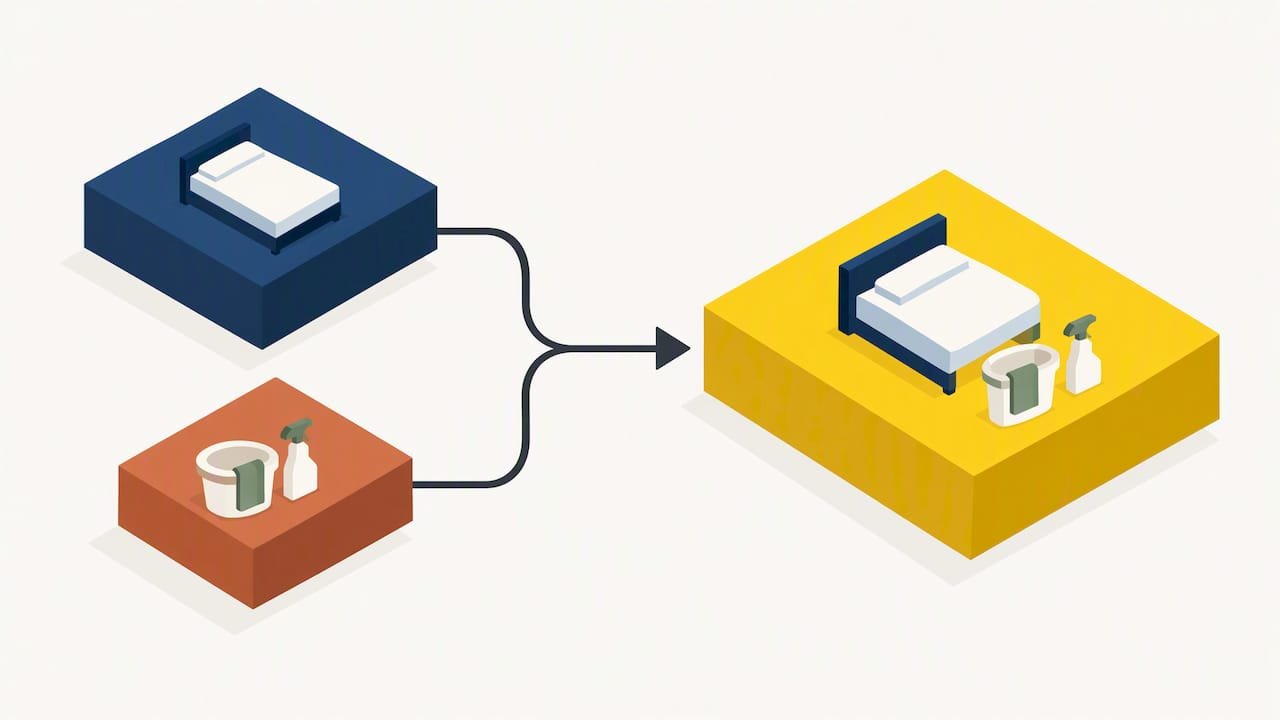
This visibility cuts both ways. A reasonable, well-explained fee rarely scares off a serious guest. But a cleaning fee that looks disproportionate to the nightly rate can push your total price above a comparable listing down the street, even if your base rate is lower. Airbnb’s own pricing tools resource notes that any added fee raises the total price guests see, which can discourage bookings if that total doesn’t match perceived value.
That dynamic is exactly why many hosts rethought their fee structure after Total Price Display became the default experience. Rather than losing clicks to listings with lower sticker prices, a meaningful share of hosts folded cleaning costs into their nightly rate or trimmed fees that had crept up over time, according to RapidEye’s analysis of cleaning fee trends. The lesson isn’t that cleaning fees are bad. It’s that the fee and the nightly rate now have to be priced as one number, because that’s how guests see them.
U.S. benchmarks: what hosts actually charge
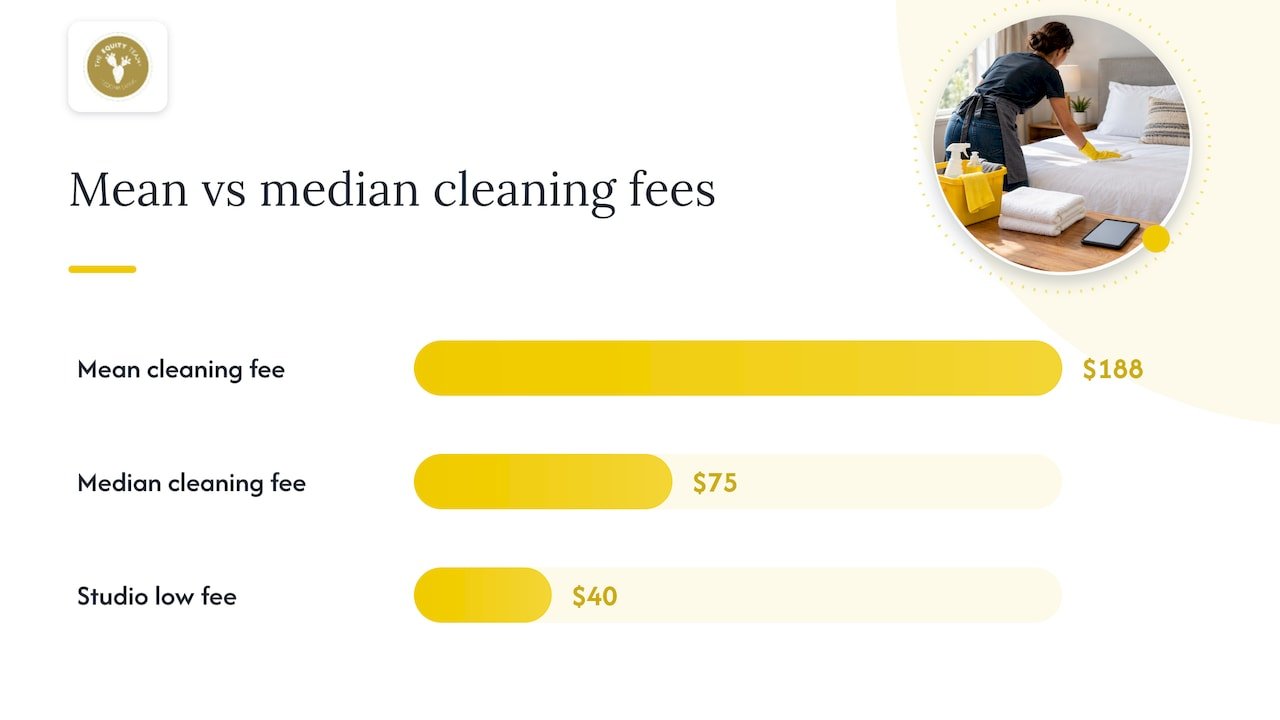
Numbers help more than instinct here, and the dataset worth anchoring to comes from a large-sample analysis of over 685,000 U.S. entire-home listings. It found a mean cleaning fee of $188 and a median of $75, a wide gap that tells you something important: a small number of high-end listings with steep fees are pulling the average well above what most hosts actually charge.
A fee-to-ADR ratio of 25 to 50 percent correlates with higher annual revenue and stronger occupancy than either waiving the fee entirely or setting it disproportionately high, according to the same RapidEye benchmark data. Listings outside that band, on either end, tend to underperform.
Cleaning fees also scale predictably with property size, since a three-bedroom home simply takes longer to turn than a studio. Here’s how that typically breaks down based on the same benchmark dataset:
| Property size | Typical fee range | Fee-to-ADR context |
|---|---|---|
| Studio or 1 bedroom | $40 to $75 | Often near or below the 25% floor |
| 2 bedroom | $75 to $120 | Commonly lands in the sweet spot |
| 3 bedroom | $100 to $160 | Requires a higher ADR to stay in range |
| 4+ bedroom or luxury | $160 and up | Mean-skewing properties, often above $188 |
The takeaway isn’t to copy these numbers directly into your listing. It’s to check where your fee falls relative to your own nightly rate, then adjust toward that 25 to 50 percent band rather than guessing at a round number because it looks tidy.
How to calculate your cleaning fee step by step
Start with the real cost of a turnover, then decide whether to charge it as a separate fee or build it into your rate. Here’s the process:
- Add up labor cost. Multiply the hours a cleaner spends per turnover by their hourly rate.
- Add laundry and supplies. Include detergent, linens wear, and restocking items like soap or coffee.
- Add turnover extras. Factor in anything property-specific, like hot tub maintenance or extra trash hauling.
- Amortize deep cleans. Divide the cost of periodic deep cleans by the number of turnovers between them, and add that per-turn share.
- Total it up. That sum is your true per-turn cost, the floor your cleaning fee should cover.
As an alternate check, apply the fee-to-ADR rule: take your nightly rate and multiply it by 0.25 and 0.50 to get your target fee range, then compare that against your actual cost total.
Here’s how that plays out with two illustrative examples:
| Example | ADR | Labor + supplies | Turnover extras | Per-turn total | 25 to 50% of ADR |
|---|---|---|---|---|---|
| 1-bedroom condo | $150 | $50 | $10 | $60 | $37.50 to $75 |
| 3-bedroom house | $320 | $110 | $20 | $130 | $80 to $150 |
In the one-bedroom example, the $60 cost sits comfortably within the ADR-based range, so a straightforward cost-recovery fee works fine. In the three-bedroom example, the $130 cost also fits the band, which confirms the fee is neither gouging guests nor leaving money on the table.
Pricing strategies to protect bookability and guest satisfaction
Once you know your true cost, the next decision is how to present it. A single standard fee works well for listings with fairly consistent stay lengths, but a short-stay reduced fee makes sense if you see a lot of one and two night bookings that don’t generate full-week mess.
Bundling the cleaning cost into your nightly rate is another option worth testing, especially since Total Price Display means guests judge your listing on the all-in number anyway. A slightly higher ADR with no separate fee can sometimes outperform a lower ADR plus a fee, purely on perceived value.
A few tactical notes worth keeping in mind:
- Reserve pet fees and extra-guest fees for genuinely added cleaning or wear, not as a blanket surcharge.
- Use damage reimbursement rather than inflating the cleaning fee when the concern is property protection, not turnover labor.
- Review your tax treatment of cleaning expenses, since how you record these costs can affect your bottom line at filing time.
- Consider short-term rental insurance as a separate layer of protection rather than folding risk coverage into your cleaning fee math.
Pro Tip: Test one change at a time, like switching to a short-stay fee, and give it at least 60 days before comparing booking rates to your baseline.
Operational checklist and budget template for cleaning costs
Building a realistic per-turn budget starts with knowing your market’s labor rate. Typical U.S. short-term rental cleaning labor runs about $20 to $30 per hour, with a standard one to two bedroom turnover costing $40 to $60 and a three-bedroom-plus deep clean running $80 to $150 or more.
A few budgeting and sourcing habits make this easier to manage over time:
- Estimate turnover hours honestly, including setup time, not just active cleaning minutes.
- Buy linens, towels, and cleaning supplies in bulk to lower your per-turn supply cost.
- Set aside a small amortized reserve for periodic deep cleans rather than treating them as surprise expenses.
- Factor in seasonal wear, since high-traffic months put more strain on floors, linens, and appliances.
When negotiating with cleaners, ask about guaranteed hours versus a flat per-turn rate, since a flat rate can simplify your budgeting even if it costs slightly more per job. Build in a quality-control checkpoint, like a photo checklist after each clean, so fee increases stay tied to actual service quality rather than guesswork.
A Sedona-focused benchmark note on local cleaning costs
Sedona’s red rock scenery draws guests who expect a polished, high-end experience, and that expectation shows up in cleaning costs. Peak-season turnovers around spring and fall often run higher than the national averages cited above, partly because vendor availability tightens when every host in town needs the same cleaning crew the same weekend.
We’ve found that Sedona owners who line up a reliable cleaning vendor well before peak season, and who budget for a seasonal deep clean rather than skipping it, tend to protect their guest ratings more consistently. For a market-specific look at how local cleaning costs and occupancy patterns compare, our Sedona cleaning cost benchmarks break down a worked example using current local figures.
One test every host should run first
The BLUF here holds up under scrutiny: price your cleaning fee to cover real turnover costs, lean on the 25 to 50 percent of ADR range as your starting benchmark, and adjust for your property’s size and your market’s labor rates. Most hosts get this wrong not because they ignore the math, but because they set a fee once and never revisit it as costs or guest expectations shift.
The single test worth running is a 90-day comparison: calculate your true per-turn cost, set your fee against the ADR benchmark, then track booking conversion against your prior baseline. If you want a tailored look at how this plays out for a specific Sedona property, our Sedona vacation rental valuation resource is a reasonable next stop.
— Chad
Get a Sedona-specific read on your rental’s pricing
Cleaning fee math gets you part of the way, but it only tells you half the story if you’re also wondering whether your Sedona property is priced, positioned, and performing the way it should be. We work with short-term rental buyers and sellers, which means the pricing conversations we have go beyond a single line item on a listing.

A few ways we can help if you’re weighing a bigger decision than just your cleaning fee:
- A Sedona vacation rental CMA that shows how your property compares to similar STRs currently on the market.
- A seller prep consultation if you’re weighing whether now is the right time to sell.
- A rental exit strategy and valuation conversation for owners thinking through their next move.
If you’d like a market-specific review of how your fee structure and overall pricing stack up in today’s Sedona rental landscape, reach out through our main site and we’ll walk through the numbers with you.
FAQ
What is the 75-55 rule in Airbnb?
This isn’t a term defined by Airbnb or established industry research, so treat any specific numeric version of it cautiously. If you’ve seen it referenced as a pricing shortcut, it’s safer to rely on the documented fee-to-ADR benchmarks covered above, like the 25 to 50 percent sweet spot, rather than an unverified rule.
What is a reasonable cleaning fee for Airbnb?
A reasonable fee covers your true per-turn cost without pushing your total price far above comparable listings. U.S. data shows a median cleaning fee of $75, though the right number for your property depends on size and local labor rates.
What is the 80/20 rule in Airbnb?
Like the 75-55 rule, this isn’t a figure documented in Airbnb’s own policy pages or the benchmark research referenced throughout this piece. Rather than relying on an informal shortcut, hosts get more reliable results by calculating actual per-turn costs and checking them against the 25 to 50 percent fee-to-ADR sweet spot.
Can I waive the cleaning fee on Airbnb?
Yes, hosts can choose not to charge a separate cleaning fee and instead fold those costs into the nightly rate. Under Total Price Display, this approach can sometimes improve how competitive your listing looks in search results, since guests see one combined total rather than a rate plus an add-on fee.
Sources
- Add cleaning fees to home listings — Airbnb Help Center
- Airbnb Cleaning Fee Statistics (2026) | Averages, Trends, Revenue Impact | RapidEye