

A backup offer in Sedona is a signed purchase contract that waits politely in line behind another buyer’s contract. If the first deal falls apart, the backup steps up to the front. If the first deal closes, the backup quietly bows out and any earnest money goes home. Think of it as the understudy at a red rock amphitheater: ready, rehearsed, and hoping (but not wishing too hard) for a chance to shine.
Sedona homes have a way of drawing a crowd. Red cliffs out the window, a vortex or two within driving distance, and a short-term rental (STR) income story that makes spreadsheets blush. So it is no shock that a good listing can be under contract before the dust settles. This guide covers how a backup offer works here, what the Arizona paperwork says, and how both sides can use one without tripping over a cactus.
TL;DR
- A backup offer is a binding contract that sits second in line and only becomes the main deal if the first contract is cancelled. Quicken Loans describes it the same way.
- In Arizona, the Arizona Association of REALTORS® (AAR) Additional Clause Addendum carries a “Back-Up Contract” clause. Once the prior contract is canceled, the seller gives written notice and the buyer opens escrow.
- The notice date counts as the acceptance date for the contract’s time periods, so inspection and financing clocks start from there, not from the day the backup was signed.
- Sellers get a ready replacement buyer. Buyers get a shot at a home that looked gone. Both should read the terms before signing, because a backup is still a real contract.
- STR buyers and sellers in Sedona have extra things to weigh, like booking calendars, furnishings and income documentation. Those are worth sorting out before the backup ever activates.
Table of Contents
- What a backup offer actually is
- How Arizona handles backup contracts
- A backup offer, start to finish
- Earnest money and a backup offer
- Contingencies: the quiet drivers of everything
- Backup offer versus bump clause
- Smart moves for buyers
- Smart moves for sellers
- Common backup-offer slip-ups
- Perspective: why we like a well-written backup
- Thinking about a backup offer in Sedona?
- FAQ
- Sources
What a backup offer actually is
A backup offer is a legally binding contract. If the seller accepts it, the buyer is next in line to purchase the home should the first buyer back out. Rocket Mortgage notes that in many states the buyer makes an earnest money deposit into an escrow account in exchange for that spot in line.
The key word is “second.” While the backup waits, the first offer stays valid and under contract. The seller is not shopping around, the first buyer is not out of the picture, and nobody is doing anything sneaky. The backup simply says: if that deal ends, this one is ready.
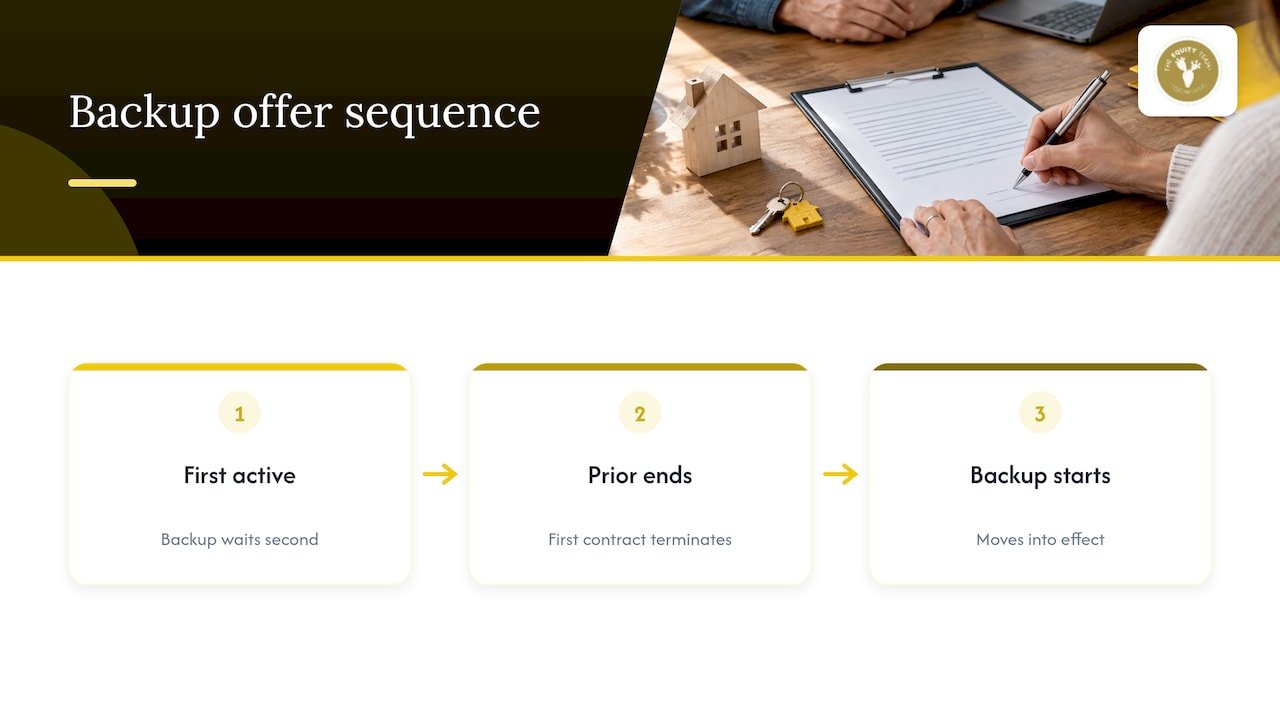
It helps to know what a backup is not. It is not a casual “call me if it falls through” note, and it is not a wish list. It is a signed, written purchase agreement with one extra condition: it only springs to life when the prior contract terminates.
How Arizona handles backup contracts
Arizona does not make everyone reinvent the wheel. The AAR’s Additional Clause Addendum includes a “Back-Up Contract, Contingent Upon Cancellation of Prior Contract” clause. Here is the flow it describes:
- The prior contract is canceled.
- The seller promptly gives the backup buyer written notice.
- After receiving that notice, the buyer opens escrow and deposits any required earnest money.
- The date of the notice is treated as the contract acceptance date for the applicable time periods.
That last step matters more than it looks. It means the backup buyer is not handed a pile of already-expired deadlines. The clock starts when the notice arrives.
The AAR also steers agents toward using its own addendum for backup offers rather than drafting custom language, as its guidance on common contract pitfalls explains. Home-brewed backup language is the kind of creative writing that belongs in a Sedona poetry circle, not in a purchase contract.
The standard Arizona offer, quickly
The Arizona standard purchase contract form runs nine pages, according to the Sedona Buyer’s Guide. The buyer’s agent prepares it, presents it to the seller, and the seller accepts or sends back a counter offer. It often moves fast, because the buyer wants the right to buy the home before other offers are presented. A backup offer uses that same machinery, plus the addendum that puts it in second position. For a refresher on the main contract, see our real estate purchase contract guide.
A backup offer, start to finish
Here is how the story usually unfolds in Sedona.
- A home goes under contract. The listing status changes, but the seller or the listing agent can still accept a backup, and many will.
- A buyer’s agent submits a backup offer. It uses the standard contract plus the backup clause in the addendum, with price, terms and any earnest money spelled out.
- The seller accepts it. Both parties sign, and the seller’s acceptance is communicated to the buyer or the buyer’s agent. The backup is now a binding contract, although the obligations are limited until the first contract ends.
- Everyone waits. The first buyer moves through inspection, appraisal and financing. The backup buyer waits and keeps their finances tidy.
- One of two endings arrives. The first deal closes, and the backup falls away. Or the first deal ends, the seller sends written notice, and the backup becomes the main contract.
If the first deal closes, the earnest money is returned and the buyer is released from the backup’s terms, as Quicken Loans explains. If the first deal ends, the backup buyer opens escrow and the countdown begins.
Earnest money and a backup offer
Earnest money is the buyer’s good-faith deposit, held by a neutral escrow company. Whether and when it goes into escrow on a backup depends on the contract wording. Under the Arizona addendum, the buyer opens escrow and deposits any required earnest money after receiving the seller’s notice that the prior contract has been canceled. Some backups may handle the deposit differently, which is exactly why the written terms are worth a careful read before signing.
A few practical points:
- Know when the deposit is due. The addendum language ties it to the seller’s written notice.
- Know what happens to it if the first deal closes. Per the guidance above, it is returned and the buyer is released.
- Know what it means once you are primary. In Arizona purchase contracts, earnest money typically works as the seller’s remedy if a buyer breaches. Once the backup is live, it is a live contract with the same stakes as any other.
Seller carry arrangements and creative financing can change the picture a little. If that is on the table, our piece on seller carry financing in Sedona walks through the basics.
Contingencies: the quiet drivers of everything
Most contracts that stumble do so over inspection, appraisal or financing. That is why a backup buyer cares about the first deal’s contingencies as much as their own.
Inspection
The inspection period lets the buyer investigate the property and ask for repairs. A first buyer who gets cold feet after a roof, septic or foundation finding can send a backup into the spotlight. Our explainer on the inspection repair addendum shows how Arizona deals typically handle that back-and-forth.
Financing and appraisal
The Arizona purchase contract’s loan contingency, as described by Agent Contractors, requires the buyer to obtain loan approval without Prior to Document conditions no later than three days before the Close of Escrow date. If the buyer cannot and gives timely notice, the contract is cancelled and the earnest money returned. That is one of the classic ways a first contract ends and a backup moves up.
Appraisal issues feed into the same story. If you want a plain-English look at how an appraisal clause lets a buyer step away, this guide to the appraisal contingency is a handy companion, even though the Arizona forms have their own wording.
Risk of loss
The Arizona contract also covers damage between acceptance and close of escrow. Per the Sedona Buyer’s Guide, the risk of loss from fire, vandalism, flood, earthquake or an act of God sits with the seller. If repairs would exceed ten percent of the purchase price, either side may elect to cancel. Sedona monsoon season is dramatic, so it is a clause that earns its keep.
For investors, our page on investment property contingencies in Sedona covers the extra items STR buyers tend to need.
Backup offer versus bump clause
These two get mixed up often. A backup offer is passive: the seller holds a signed replacement contract that kicks in only if the primary deal ends on its own. A bump clause, sometimes called a kick-out clause, is active: the seller keeps marketing the home and can accept competing offers, as LegalClarity lays out.
| Backup offer | Bump (kick-out) clause | |
|---|---|---|
| Seller keeps marketing the home | Usually not required | Yes |
| Primary buyer’s position | Stays under contract | Can be bumped by a better offer, per the clause |
| What triggers the switch | The first contract ending | The seller receiving a qualifying offer |
| Feel | Calm and orderly | Brisk, with a ticking clock |
The backup is the polite queue at the trailhead. The bump clause is the shuttle that leaves when it fills up.
Smart moves for buyers
A backup is a patient strategy, and the quirky thing about patience in Sedona is that it can pay off. Some homes look sold and then, a few weeks later, are not. Here is how a buyer can play it well.
- Pick a home you would be genuinely happy to own. A backup is binding, so it is not a placeholder for something you are lukewarm about.
- Keep financing ready. If the call comes, a loan approval already in good shape helps the clock work for you rather than against you.
- Read the termination terms. Buyers can generally step out before activation if the contract allows it, and the contract’s wording on written notice controls. Ask your agent how your specific backup handles it before you sign.
- Think hard before offering on another home while the backup is live. Two live contracts can create complications, so line up your plan with your agent first.
- Use the waiting time to stay informed. Our Sedona home purchase timeline shows what the schedule looks like when a deal moves forward, and the best-price steps for Sedona buyers help sharpen your terms.
An STR buyer adds a few items to the list. Booking calendars, existing reservations, furnishings, and the home’s rental history all matter to the number you offer. These are worth discussing early, so the backup price reflects the property you would really be taking on.
Smart moves for sellers
From the seller’s chair, a backup is a safety net. If the first contract unravels, there is no scramble to relist, no lost momentum, and no sad Sunday of reshooting photos. A seller who has already signed with a backup buyer can simply send notice and keep moving.
A few things to weigh:
- Compare backup terms the way you would compare a primary offer. Price is only one line. Look at financing type, timing and contingencies.
- Make sure the paperwork uses the proper addendum. Written, signed and clearly worded wins.
- Send written notice promptly when the first contract ends. The Arizona clause calls for prompt written notice, and the notice date drives the new timeline.
- Mind STR details. If the home is a rental, bookings, transfer of licenses and permits, and furnishings can all influence a buyer’s decision and the timeline. Our guide to Sedona multiple offers, STR value and closing certainty explains how to weigh a high number against a clean close.
- Expect concession conversations. Backup buyers may ask for credits or repairs, and our seller concessions guide shows how those usually play out.
Preparation helps, too. A home that is in good shape before the first buyer arrives tends to avoid late-stage surprises. The Sedona pre-listing repairs guide covers what to fix, skip and disclose. For timing the whole sale, the 2026 seller timeline is a good map.
Common backup-offer slip-ups
Sedona is full of delightful surprises, but these are not among them.
- Treating a backup as optional. It is binding. Silence is not a strategy, and a buyer who stops responding could end up obligated if the first deal collapses.
- Writing custom language. The AAR recommends its own addendum for a reason.
- Forgetting deadlines reset. The notice date is the acceptance date for time periods, so mark the calendar when notice arrives, not before.
- Ignoring the market’s tempo. Fast-moving inventory means a backup can become primary more often than expected. Our Sedona real estate market trends page keeps the context handy.
- Hiring an agent who is not fluent in the local scene. A rental-focused deal calls for rental-focused experience. Our red flags for choosing a Sedona agent is a quick checklist.
Perspective: why we like a well-written backup
We spend our days with Sedona short-term rental buyers and sellers, and we have watched what a backup offer does for both. For a seller, it means the property keeps its momentum. For a buyer, it means the door is not fully closed on a home that looked taken.
What we like most is the clarity. A backup works best when the terms are written cleanly, the deadlines are understood, and everyone knows who is next in line. In a market where STR income, furnishings and calendars can all change the math, that clarity is worth a lot.
We built our team around short-term rentals in Northern Arizona, so when a backup is on the table we look at it through both lenses: the contract and the cash flow. That means asking questions early, like what the booking calendar looks like and what a buyer will need to see once the notice arrives, so nothing catches anyone off guard.
Our advice is simple. If a Sedona home is the one, get your finances in order, get the paperwork right, and let the backup do its quiet work. Sometimes the best deals are the ones that come to those who wait politely.
Chad
Thinking about a backup offer in Sedona?
We are a team of agents focused on Sedona short-term rental purchases and sales. We can walk buyers through writing a backup that fits the property and the income story, and help sellers weigh offers, backups and timing. Start with our buyer and seller representation, or if you are selling a rental, our vacation rental CMA and seller prep consultation is a good first stop.

If you are weighing an exit from a rental, the rental exit strategy and valuation conversation can help you see the options before you decide.
FAQ
Can I make a backup offer on a Sedona home that is already under contract?
Yes, if the seller is willing to accept one. Your agent prepares the standard purchase contract with the backup clause from the Arizona Association of REALTORS® addendum, and the seller signs if they agree. Your offer is then second in line behind the first contract.
What happens to my earnest money if the first deal closes?
In that case the backup becomes null and the money is returned, as Quicken Loans describes. Your specific contract controls the details, so confirm deposit timing and refund terms with your agent before you sign.
When do my deadlines start on a backup offer in Arizona?
They start when the seller gives you written notice that the prior contract has been canceled. Under the AAR addendum, the date of that notice is deemed the contract acceptance date for applicable time periods. You then open escrow and deposit any required earnest money.
Is a backup offer the same as a bump clause?
No. A backup waits passively for the first contract to end. A bump clause lets the seller keep marketing and accept competing offers, which is more active.
Can a seller accept more than one backup offer?
That depends on how the seller and listing agent structure the contracts and what each backup says about its position in line. Because order and wording matter, a seller should talk to their agent before accepting more than one.
Sources
- How Do Backup Offers Work: A Complete Guide, Quicken Loans
- Backup offers for home buyers and sellers, Rocket Mortgage
- Additional Clause Addendum, Arizona Association of REALTORS®
- Five Pitfalls to Avoid on the Road to Mastering the RPC, Arizona Association of REALTORS®
- Home Buyer’s Guide, Sedona
- The Arizona Residential Purchase Contract, Agent Contractors
- Backup Offers in Real Estate: Addendum and Seller Strategy, LegalClarity