

A rate buydown is a pile of money that makes a mortgage payment smaller, either for the first year or two or for the whole life of the loan. In Sedona, where red rock views tend to come with serious price tags, a buydown can be the quirky little lever that makes a deal pencil out. It is not magic, though. The money has to come from somewhere, and the payment goes back up when a temporary buydown runs out.
This guide walks through the types, the math, who usually pays, and the extra homework Sedona short-term rental buyers should do before leaning on a buydown.
TL;DR
- A temporary buydown (like a 2-1 or 3-2-1) lowers the payment for the first one to three years, then the loan returns to its full note rate.
- A permanent buydown uses discount points paid at closing to lower the rate for the life of the loan.
- Either the buyer or the seller can fund a buydown, and the buyer still has to qualify at the full note rate on a 2-1.
- For a Sedona STR, the smart move is to model the investment at the full rate, then treat the buydown as a cushion rather than the plan.
- Ask the lender for the exact terms in writing before writing an offer around one.
Table of Contents
- What a rate buydown actually is
- Temporary buydowns: the 2-1 and the 3-2-1
- Permanent buydowns: paying points
- Who pays for it
- Buydown or price cut?
- What happens if you sell or refinance early
- Qualifying: the buydown is not a free pass
- Sedona STR buyers: run the numbers before leaning on a buydown
- When a Sedona seller might offer one
- A lender checklist you can copy
- Perspective
- Want a Sedona-specific read on your deal?
- FAQ
- Sources
What a rate buydown actually is
Think of a buydown as prepaying part of the interest so the monthly bill looks friendlier. Cornell’s Legal Information Institute describes it as a financing arrangement that lowers the interest rate, the monthly principal-and-interest payment, or both, in exchange for funds provided in connection with the loan. It can be temporary or permanent.
That is the whole idea. The details, and the price, depend on which flavor is on the menu.
Temporary buydowns: the 2-1 and the 3-2-1
A temporary buydown lowers what the borrower pays for an initial period, commonly one to three years. The VA explains that funds are set aside in an escrow account, and each month a portion of that escrow lowers the borrower’s payment. It also notes that a temporary buydown can last from one to three years, with 3-2-1 and 2-1 as the common frameworks, and that the funds are used up by the end of the period.
One point trips people up: the lender still gets the full payment. A Federal Home Loan Bank training deck describes buydown funds being applied each month to cover part of the principal and interest, with the lender still responsible for the full amount stated in the note. When the temporary period ends, the account should be empty and the borrower pays the full note-rate payment.
The 2-1 in plain numbers
With a 2-1 buydown, the effective rate is 2% lower in year one and 1% lower in year two, then the loan returns to the full note rate from year three on.
Here is one worked example from a lender. On a $380,000 loan with a 7.25% note rate, Herring Bank shows a 2-1 buydown trimming the principal-and-interest payment by about $494 a month in year one and about $253 a month in year two. The same example puts the seller’s cost at roughly $8,957, which equals the total of the monthly subsidies deposited into escrow at closing.
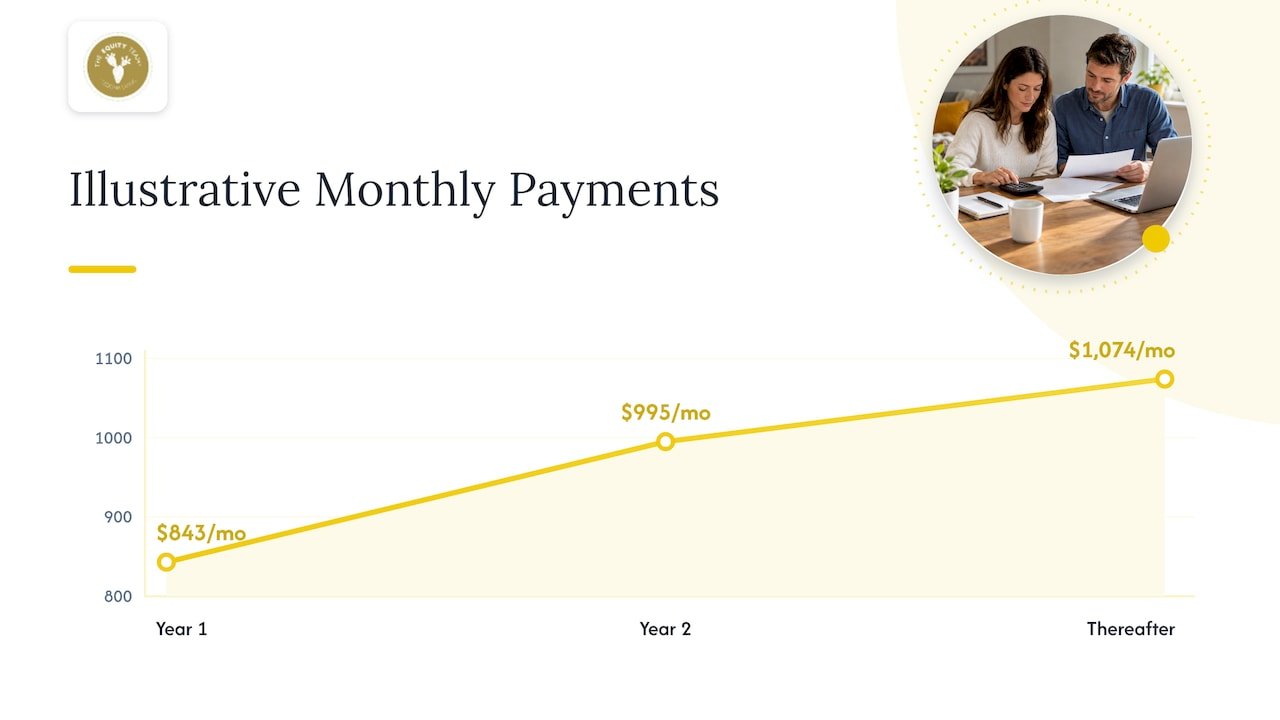
Another illustration, assuming a 30-year loan at a 5% prevailing rate, has payments of $843 a month in year one, $995 in year two, and $1,074 afterward. Those are example figures, not Sedona quotes. Sedona loan sizes tend to be bigger, so the dollars scale up accordingly.
The takeaway: a 2-1 is a payment holiday with a return date. Investopedia stresses that it is not a permanently lower rate, which is why the payment climbs once the discounted period ends.
The 3-2-1
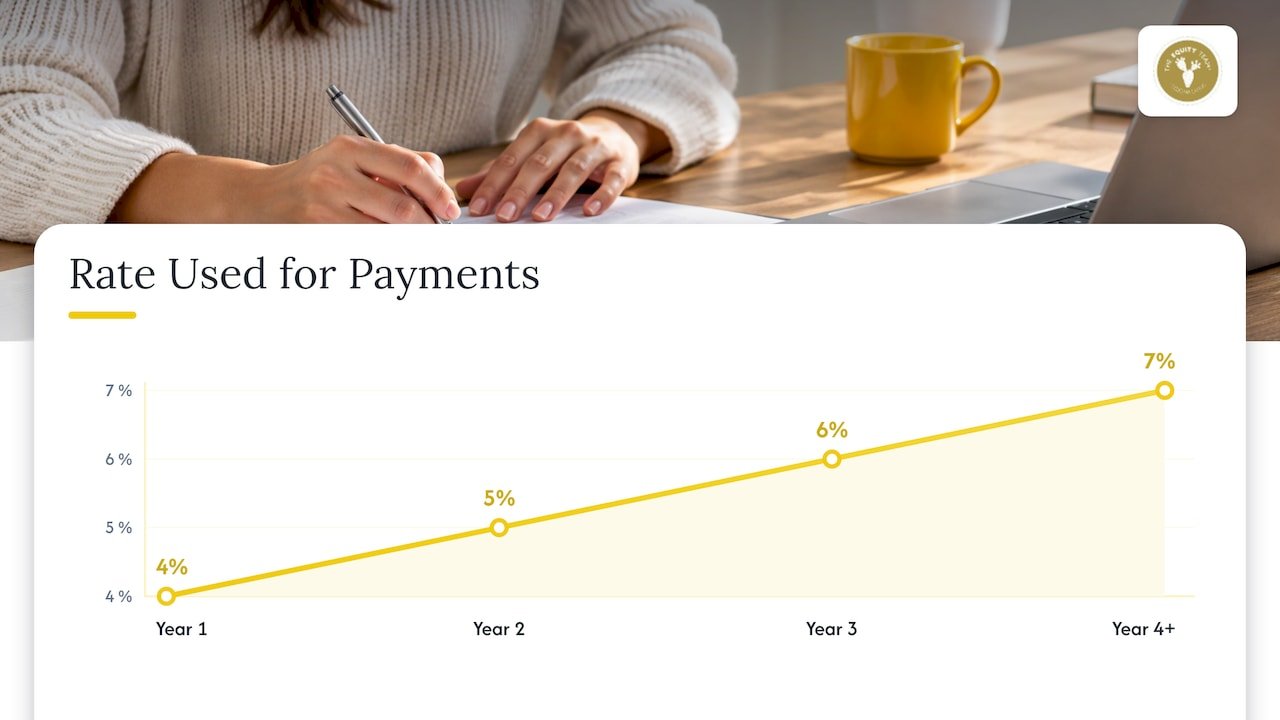
Same idea, one more year of help. In Cornell’s example, with a 7% note rate, year-one payments are calculated as if the rate were 4%, year two as if 5%, and year three as if 6%. From year four the full 7% payment applies. A longer runway costs more to fund, because more subsidy has to be parked in escrow at closing.
Permanent buydowns: paying points
A permanent buydown works differently. Cornell notes that it typically uses discount points paid at closing to lower the contractual rate for the life of the loan. Chase explains that a point is usually about 1% of the loan amount and that each point could lower the rate by about 0.25%, depending on the lender.
Permanent buydowns suit people who plan to keep a property for a long time, because the upfront cost is spread across many years of lower payments. Temporary ones suit situations where the main goal is easing the first stretch of ownership.
Who pays for it
Either side can. Investopedia says a buyer or a seller can pay, either as mortgage points or as a lump sum deposited in escrow with the lender. Chase adds that with a temporary buydown the seller can cover the difference in interest cost for the first one to three years, while the lender still receives the full payment at the original rate.
In practice, seller-paid buydowns show up as a negotiating tool. Instead of dropping the price, a seller offers to fund the subsidy. Which brings us to the obvious question.
Buydown or price cut?
One lender comparison argues that money spent on a buydown typically lowers the payment more than the same money taken as a price reduction. Its example: a $5,700 seller-funded buydown through discount points produced a lower monthly payment ($1,801) than a price cut to $294,300 ($1,860).
That is a single example at one set of rates, so treat it as a way to frame the question, not a rule. The right answer for a real Sedona deal depends on the loan size, the rate, how long the buyer will hold, and what the lender allows. Ask the lender to run both versions side by side.
A few things make the comparison tilt one way or the other:
- Holding period. A price cut helps for as long as you own the home. A temporary buydown helps for a year or two.
- Property tax and insurance. A lower price can lower some costs tied to value. A buydown does not.
- Appraisal. A price that sits closer to the appraised value can make the financing cleaner.
- Cash flow timing. If the first two years are the tight ones, a temporary buydown targets exactly that.
What happens if you sell or refinance early
The escrow does not boomerang back to the seller. Friel Mortgage states that if the buyer refinances or sells early, the unused balance in the buydown account is credited toward the loan payoff under the buydown agreement. For VA loans, VA Pamphlet 26-7 says that if a loan is foreclosed or prepaid, temporary buydown funds must be credited against the veteran’s debt and cannot revert to the party that set up the escrow. If the property is sold subject to the loan or assumed, the escrow continues paying on behalf of the new borrower.
So a buyer who flips the plan in year one is not leaving the subsidy on the table. Still, the terms live in the buydown agreement, so read that document.
Qualifying: the buydown is not a free pass
This is the part that surprises people. Herring Bank notes that on a 2-1 the borrower must qualify at the full note rate, not the lower effective rate. A buydown eases the payment you make, but it does not stretch how much house a lender will approve you for. Loan programs and lenders can differ on this, so the question for the loan officer is simple: which rate do you qualify me at, and what are the buydown terms in writing?
Sedona STR buyers: run the numbers before leaning on a buydown
Short-term rentals add a twist. A buyer is not just asking whether a payment feels comfortable. They are asking whether the property earns its keep once the buydown disappears. A few checks keep the spreadsheet honest:
- Model at the full note rate. Year three arrives on schedule. If the property works at the full rate, the buydown is a bonus. If it only works with the discount, that is worth knowing before closing, not after.
- Use realistic income. Occupancy and nightly rates vary by property, season and permit status. Our guide to evaluating Sedona rental income potential and our Sedona Airbnb valuation walkthrough show how we approach it.
- Check the lender’s rules for rentals. Loans underwritten on rental income have their own requirements and timelines. We cover them in our piece on Sedona Airbnb lender requirements and in the Sedona Airbnb financing guide. Ask whether a buydown is even available on the loan type you are considering.
- Count cash to close. A buydown funded by the buyer adds to cash needed at closing. Our Sedona Airbnb cash to close breakdown lays out the other pieces: reserves, down payment and more.
- Plan the exit. If you may sell in a couple of years, the escrow credit rules above matter. Our rental exit strategy conversation is a good place to think through timing.
None of this makes a buydown a bad idea. It just keeps the red rocks in the photos and the math in the spreadsheet.
When a Sedona seller might offer one
A seller may consider a temporary buydown to give the buyer a lower initial payment. Chase describes seller-funded buydowns as covering the first one to three years. Good moments to bring it up:
- The home has been on the market a while and buyers are hesitating over the monthly payment, not the price.
- The seller wants to hold the list price steady for comps, and a concession is the flexible lever.
- The property is a high-performing rental and the buyer will be watching cash flow closely in the first years.
Before offering, the seller and buyer should both ask the lender which qualification rate applies to the loan and confirm the terms and the true cost of the buydown. Sellers weighing options can also look at how a Sedona home CMA frames the price, and at alternatives like seller carry financing.
A lender checklist you can copy
Bring these to the conversation with the loan officer:
- Is this a temporary or permanent buydown, and what does it cost in dollars?
- Who funds it, and how is it shown on the closing documents?
- At what rate do I qualify?
- What is the payment in each year, and what is the full note-rate payment?
- What happens to the unused funds if I sell or refinance?
- Does this loan type allow seller concessions, and is there a cap?
If you are earlier in the process, our Sedona home purchase timeline shows where financing questions fit, and the guide to buying a home in Sedona covers the rest of the road.
Perspective
We spend our days with Sedona short-term rental buyers and sellers, so here is how we see buydowns: a handy tool, best used by people who already know their numbers.
The buyers who do well tend to model the property at the full note rate first. Then a buydown, whether paid by the seller or negotiated as a concession, becomes a pleasant cushion in the early years instead of the thing holding the deal up. That discipline is part of how we help clients pursue top-performing rentals.
For sellers, we see a buydown as one more way to present a strong listing without an automatic price cut. It will not fit every home, but when it fits, it can make a buyer’s monthly math feel a lot more welcoming. We like walking through both versions with a seller before deciding.
Chad
Want a Sedona-specific read on your deal?
The Equity Team is a group of agents in Sedona focused on short-term rental investment. We help buyers weigh purchases against realistic rental performance and help sellers position a home to earn top dollar, including thinking through concessions like buydowns with your lender. If you are buying, start with our buyer representation page. If you are selling a vacation rental, see our Sedona vacation rental CMA.
Bring your numbers and your questions. We will bring the local knowledge, and probably a joke about the traffic on 89A.
FAQ
Is a 2-1 buydown a lower interest rate for the whole loan?
No. A 2-1 lowers the effective rate by 2% in year one and 1% in year two, then the loan returns to the full note rate from year three. The payment rises when the subsidy funds are used up.
Who can pay for a rate buydown?
Either the buyer or the seller can pay. The money may go in as discount points or as a lump sum deposited in escrow with the lender. Ask your lender which options your loan allows.
What happens to the buydown money if I sell or refinance early?
Per lender guidance, the unused balance is credited toward the loan payoff and does not go back to the seller. On VA loans, the lender handbook says the same for prepaid loans. Check your buydown agreement for the exact terms.
Do I qualify at the lower payment?
On a 2-1, lenders such as Herring Bank say the borrower must qualify at the full note rate. A buydown eases the early payments but does not raise the loan amount you can be approved for. Confirm the rule with your own loan officer.
Is a buydown better than a price reduction?
Sometimes. One lender example shows a $5,700 buydown producing a lower payment than a price cut. Results change with rate, loan size and how long you hold the home, so ask your lender to run both side by side.
Sources
- Cornell Legal Information Institute: mortgage rate buydown
- VA Home Loans: Temporary Buydowns
- Federal Home Loan Bank MPF: Temporary Rate Buydowns
- Total Mortgage: What Is a 2/1 Buydown
- Herring Bank: 2-1 Buydown
- Investopedia: 2-1 Buydown Loan
- Chase: How to Buy Down Your Mortgage Interest Rate
- Mortgage Research: Rate Buydown or Price Reduction
- Friel Mortgage: Seller-Paid Buydown Calculator
- VA Pamphlet 26-7 Lenders Handbook