

Yes, Sedona requires a short-term rental permit for every advertised unit, and the city’s municipal code says you need that permit in hand before you post a single listing. Each unit gets its own annual permit, renewed every year, with the city’s hotline standing by for anyone who gets stuck mid-application.
TL;DR:
- Check zoning, deed restrictions, and HOA rules before applying; an HOA may prohibit rentals, and some accessory dwelling units cannot be rented separately.
- An owner or formally authorized agent must apply, with parcel and unit details, contact information, fire safety records, and an Arizona TPT license ready.
- The city sets current fees in its portal; renew on time to avoid escalating late fees, and stop advertising until a lapsed permit is current.
- Hosts cannot use rentals as event venues, must match advertised occupancy to documented capacity, and should prepare documentation for supervised fire alarm systems.
Table of Contents
- Who needs a permit and which unit rules apply
- How to apply for a Sedona STR permit step by step
- What it costs to get and keep your permit current
- Occupancy, events, HOAs, and fire safety rules
- A practical compliance checklist before you apply
- Handling complaints and verifying your permit status
- What permit compliance really means for Sedona investors
- How The Equity Team supports Sedona STR buyers and sellers
- FAQ
- Sources
Who needs a permit and which unit rules apply
Sedona treats every “advertised unit” as its own small universe of paperwork. If you own a duplex and rent both sides, that is two permits, separate renewal cycles, and individual rules for each unit rather than one approval for the entire property. The city’s code, specifically SCC 5.25.120, spells out the permit and operational requirements that apply unit by unit, so reading it before you list anything saves a lot of guesswork later.
The person who applies should be the owner or someone the owner has formally authorized to act on their behalf, like a property manager with documented authority. Beyond the STR permit itself, Sedona expects a Transaction Privilege Tax (TPT) license from the Arizona Department of Revenue, since short-term rental income counts as taxable lodging activity in the state.
Before you start the application, confirm a few basics:
- The property sits in a zone where short-term rental use is permitted under current code
- You, or your authorized representative, are the one submitting the application
- A TPT license is active or in process alongside the STR permit application
- Each separately advertised unit on the parcel has its own permit request
Our article on Sedona vacation rental zoning walks through how zone classification shapes eligibility before you even reach the application stage.
How to apply for a Sedona STR permit step by step
Sedona runs its short-term rental permitting through a dedicated online portal, so the whole process happens without a trip to city hall. Here is the sequence that gets most applications through cleanly.
- Create an account or log in at Sedonaaz, the city’s lodging and permit portal.
- Gather property details: parcel number, unit address, and a clear description of the space being rented.
- Collect contact information for the owner and, if applicable, the local or regional contact who can respond to issues.
- Prepare proof of safety compliance, including evidence of working smoke alarms and any required fire-safety documentation.
- Confirm your TPT license number is ready to reference on the application.
- Submit the completed application through the portal and pay the associated fee.
- Watch for city correspondence requesting corrections, since incomplete submissions are the single biggest cause of delay.
Most denials trace back to mismatched parcel information, missing contact details, or a TPT license that was never finalized before submission.
Pro Tip: Double-check that the property address on your application matches county records exactly, since a small formatting mismatch can bounce an otherwise solid submission back for correction.
What it costs to get and keep your permit current
Budgeting for a Sedona STR permit means planning for the application fee and for the renewal that follows every year after. The city’s portal at sedonaaz.munirevs.com handles both the initial application and the annual renewal, along with online payment.
- Each unit requires its own annual permit fee, paid through the city’s lodging portal.
- Renewals are due on a yearly cycle, and missing that window triggers late fees that climb the longer the lapse continues.
- A lapsed permit means the unit cannot legally be advertised or rented until it is brought current.
- Transferring a permit after a property sale requires notifying the city and updating ownership records promptly, rather than assuming the old permit carries over automatically.
Because fee amounts and late-fee tiers are set and updated by the city itself, your most reliable number is always whatever currently appears on the official renewal page inside the portal, rather than a figure repeated secondhand.
Occupancy, events, HOAs, and fire safety rules
A permit gets you in the door, but staying compliant means following the operational rules baked into Sedona’s code. The city restricts short-term rentals from functioning as event venues, so weddings, large parties, and similar gatherings generally fall outside what a permitted STR can host.
Occupancy limits are typically tied to the number of bedrooms and the property’s documented capacity, which means your listing description should match what your permit application actually states, not an optimistic guest count. Deed restrictions and homeowners association rules can be stricter than city code, so a property sitting inside an HOA might be barred from short-term rental use even with a valid city permit in hand. Accessory dwelling units carry their own wrinkles too, since some are restricted from separate short-term rental use depending on how the parcel is zoned.
Supervised fire alarm systems are part of the safety expectations hosts should plan for when preparing a unit for permit approval, a detail our Sedona Airbnb fire code guide breaks down in more detail.
Quick pre-listing checklist:
- Confirm occupancy limits match bedroom count and any documented capacity on file
- Check recorded HOA or deed restrictions for STR prohibitions before applying
- Verify ADU status and whether it affects separate permit eligibility
- Prepare fire-safety documentation, including alarm system details, ahead of submission
A property manager we trust once joked that Sedona’s red rocks are more forgiving than its HOA paperwork, and there is more truth to that than fiction.
A practical compliance checklist before you apply
Permit approval gets a lot smoother when the groundwork happens before you ever open the munirevs portal. Start with a zoning check and a review of any recorded HOA or deed restrictions, since those two items catch more hosts off guard than anything in the application itself. Our breakdown on running an Airbnb inside a Sedona HOA is worth a read if your property sits in a managed community.
From there, line up fire-safety documentation, including proof that alarm systems meet current supervised-alarm expectations, and keep receipts from any inspection or installation work. Good recordkeeping pays off twice: once during the application and again if a complaint ever triggers a city review. Coordinate your TPT filings with your permit renewal dates so neither one quietly lapses while you are focused on the other.
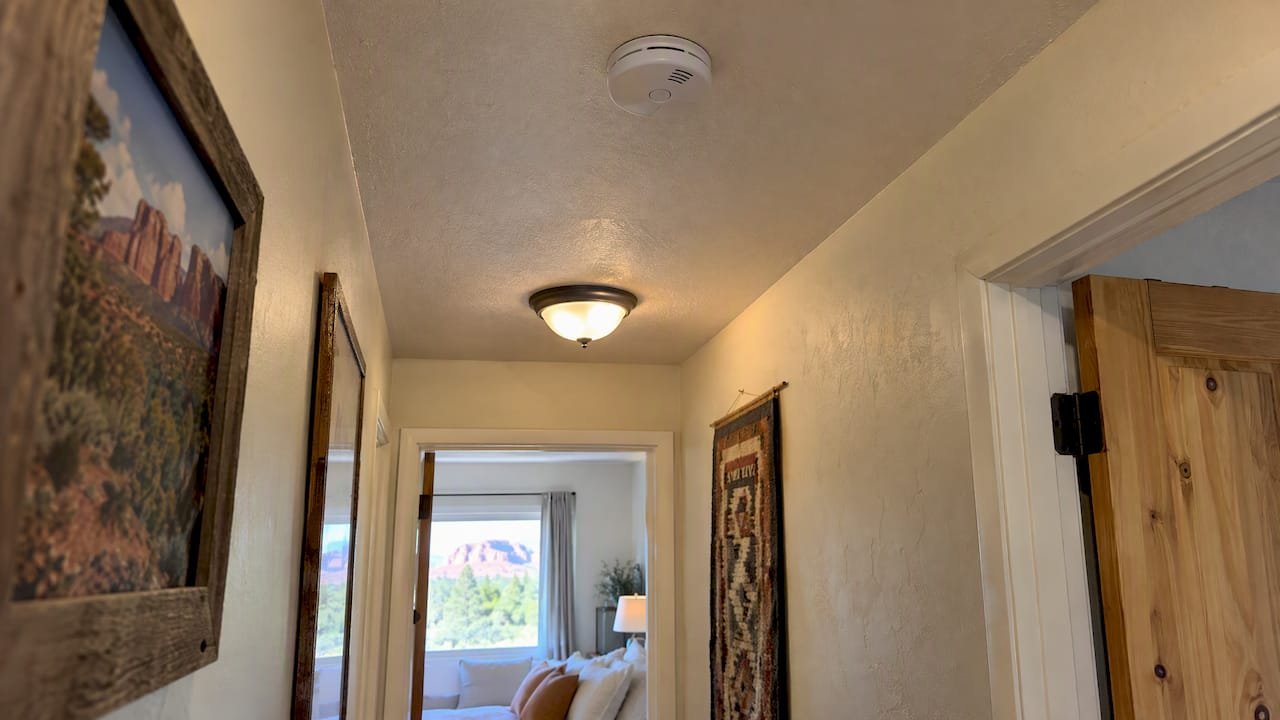
Pro Tip: Keep a single folder, digital or physical, with your permit number, TPT license, alarm documentation, and HOA correspondence, so you can respond to any city request within a day instead of scrambling.
Handling complaints and verifying your permit status
Neighbors who have concerns about noise, parking, or occupancy can file a complaint through the city’s lodging complaint form, which routes directly to enforcement staff. Sedona also maintains a short-term rental hotline for residents and hosts alike, giving both sides a direct contact point instead of letting friction build.
- File or respond to complaints through the official munirevs complaint portal
- Reach city staff directly through published STR contact points for urgent issues
- Log into sedonaaz.munirevs.com to print or verify your current permit status anytime
What permit compliance really means for Sedona investors
A permitted listing is not just paperwork, it is a sign that a property can actually operate the way its income projections assume. We have seen plenty of listings advertised with rosy numbers that fall apart the moment a buyer discovers the unit sits in an HOA that bans short-term rentals entirely. Checking permit status and zoning before closing protects the investment, not just the paperwork trail.
— Chad
How The Equity Team supports Sedona STR buyers and sellers
We built our practice around short-term rentals, which means permit checks are part of how we vet properties before a client makes an offer. Whether you are buying or selling a short-term rental, we combine local permit knowledge with market data to keep the numbers accurate.

If you are considering a purchase, our pre-purchase permit verification guide walks through exactly what we check. Sellers can start with a Sedona vacation rental CMA to see what a permitted, income-producing property is actually worth right now.
FAQ
Is Airbnb allowed in Sedona?
Short-term rentals are allowed in Sedona, but only with a valid city permit tied to the specific unit being advertised. Each unit needs its own permit under SCC 5.25.120 before it can legally appear on any booking platform.
Is Sedona a good Airbnb market?
Sedona draws steady year-round visitor traffic thanks to its red rock scenery and outdoor tourism draw, which supports strong demand for well-located short-term rentals. Performance still depends heavily on zoning, HOA restrictions, and permit compliance, so due diligence matters as much as location.
Which states do not allow Airbnb?
No entire US state bans short-term rentals outright, but cities and counties within many states, including parts of Arizona, set their own permit and zoning restrictions. Always check the specific municipal code for the property’s location rather than assuming state-level rules apply uniformly.
What is the secret 7 in Sedona?
This phrase is not tied to any official Sedona short-term rental rule, permit category, or municipal code section we could verify. If you have seen it referenced elsewhere, treat it as informal local shorthand rather than an actual city requirement.