

A real estate purchase contract is a legally binding agreement between a buyer and seller that defines the exact terms for transferring property ownership. Also called a Purchase and Sale Agreement, this document covers everything from the sale price and closing date to contingencies and earnest money. Think of it as the rulebook for the entire transaction. Without it, both sides are just shaking hands in the dark. Whether you are buying a cozy Sedona bungalow or a high-performing short-term rental, understanding this contract protects your money, your timeline, and your peace of mind.
What is a real estate purchase contract and why does it matter?
A real estate purchase agreement is a formal, written contract that outlines the terms of sale in detail, including price, financing, contingencies, disclosures, and closing date. It protects both buyer and seller by setting clear obligations for each party. That clarity is what keeps a deal from falling apart over a misunderstanding about who keeps the refrigerator.
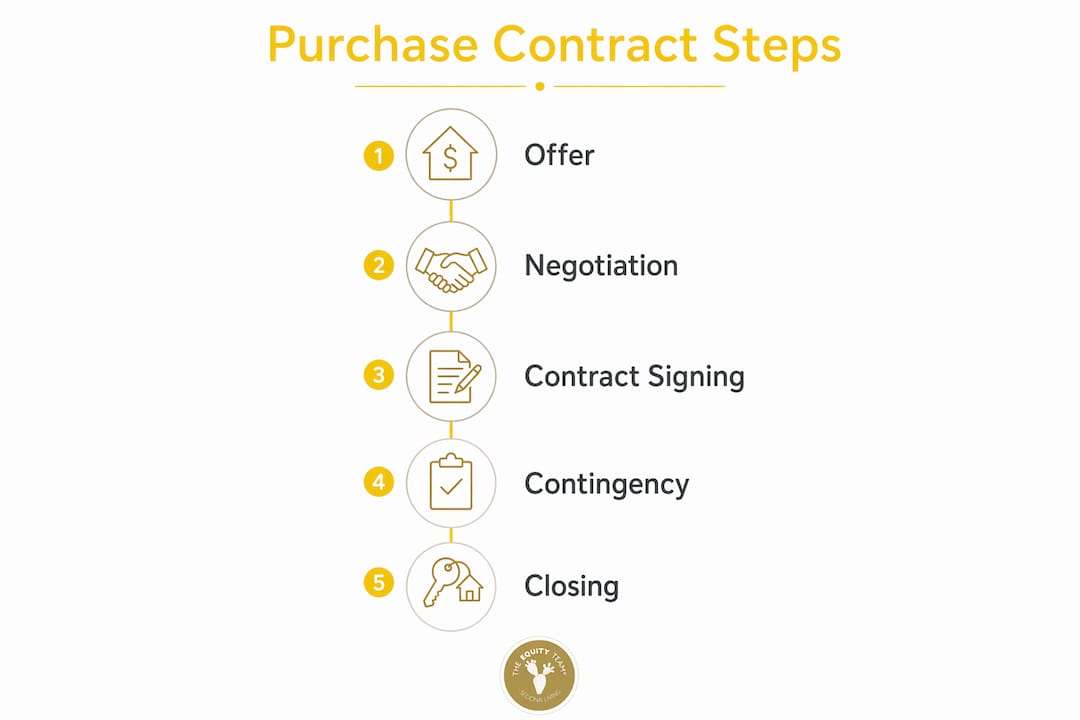
The process starts when a buyer submits a written offer. Once the seller accepts or counters and both parties sign, the document becomes a binding agreement that guides the transaction all the way through closing. At that point, it is no longer just a handshake. It is a legal document with real consequences if either side walks away without cause.

The contract also differs from a lease. A lease grants temporary use of a property. A purchase agreement transfers ownership permanently, which is why the terms are far more detailed and the stakes are considerably higher.
What are the essential components of a real estate purchase contract?
Every solid purchase contract covers the same core ground, even if the specific language varies by state or transaction type.
- Purchase price and payment terms. The agreed sale price, down payment amount, and financing method all appear here. Cash deals look different from financed ones, and the contract reflects that.
- Property description. A legal description of the property, including the address, parcel number, and any included fixtures or appliances. Sellers often forget to specify exclusions, which leads to awkward conversations at closing.
- Earnest money deposit. This is the buyer’s good-faith deposit, typically 1%–3% of the purchase price. It demonstrates serious intent and is held in escrow until closing or contract termination.
- Contingencies. Conditions that must be met before the sale proceeds, such as a satisfactory inspection, financing approval, or a clean appraisal. More on these in the next section.
- Deadlines and timelines. The contract sets specific dates for inspections, contingency removals, and the closing date itself. Missing these deadlines can delay or kill a deal.
- Dispute resolution. Most contracts include a clause specifying how disputes are handled, whether through mediation, arbitration, or litigation.
Pro Tip: Always read the inclusions and exclusions list carefully. Buyers have been surprised to find that the gorgeous chandelier in the dining room was not included in the sale. Get it in writing.
The contract also typically includes a section on closing costs, specifying which party pays for what. Title insurance, escrow fees, and transfer taxes are common items that need clear assignment before anyone signs.
How does the contract legally bind both parties?
A purchase agreement becomes binding the moment both parties sign. Before that, an offer is negotiable and non-binding. After signatures, the agreement governs every step of the transaction, from inspections to the final walkthrough.
Once bound, each party carries specific legal responsibilities. The buyer must secure financing, complete inspections within the agreed window, and show up at closing with funds. The seller must maintain the property, make agreed repairs, and deliver clear title. Neither party gets to change the rules mid-game without written consent from the other.
Breach of contract carries real consequences. If a buyer walks away without a valid contingency reason, they typically forfeit their earnest money deposit. If a seller backs out without cause, the buyer can pursue legal damages or even force the sale through a legal remedy called “specific performance.”
A purchase agreement is not just paperwork. It is the legal spine of the entire transaction. Every inspection, every appraisal, and every closing step flows from the terms set in that document. Treat it with the same seriousness you would treat any major financial commitment.
The contract also differs from closing documents like the deed or settlement statement. Those documents execute the transfer. The purchase agreement is what creates the obligation to transfer in the first place.
What are contingencies and why are they critical?
Contingencies are conditions written into the contract that must be satisfied before the sale can close. They are the safety nets that keep buyers and sellers from getting trapped in a bad deal.
| Contingency type | What it protects | Typical deadline |
|---|---|---|
| Financing contingency | Buyer’s ability to secure a loan | 21–30 days from signing |
| Inspection contingency | Buyer’s right to review property condition | 10–14 days from signing |
| Appraisal contingency | Ensures property value supports the loan amount | 21–30 days from signing |
| Title review contingency | Confirms clear ownership with no liens | 5–10 days from signing |
Contingency removal deadlines critically impact the contract’s validity. Miss a deadline, and you may unintentionally waive your right to cancel the deal. That is not a typo. Failing to act within the window can lock you into a purchase you wanted to exit.
Buyers working on Sedona investment properties often add special contingencies beyond the standard set. Short-term rental zoning verification, HOA rental restriction review, and revenue projection audits are all examples of custom protections that generic templates do not include.
Pro Tip: Calendar every contingency deadline the day you sign. Set a reminder two days before each one. The contract will not remind you, and your agent may be juggling multiple deals.
How can buyers and sellers negotiate a purchase contract effectively?
Standard templates drafted by real estate associations offer a solid starting point, but they are not one-size-fits-all. Savvy investors add custom addenda for specific needs like short-term rental disclosures or tax proration. A generic form protects generic interests.
Here are the most effective practices for negotiating and drafting a strong contract:
- Work with a licensed agent or real estate attorney. Agents and attorneys assist in drafting and reviewing contracts to safeguard client interests. This is not the place to go it alone.
- Negotiate contingency timelines, not just price. A longer inspection period gives you more time to uncover issues. A shorter financing contingency can make your offer more attractive to sellers.
- Specify every inclusion and exclusion in writing. Appliances, window treatments, outdoor furniture, and even potted plants have caused closing-day disputes. List them all.
- Review the earnest money terms carefully. Know exactly which contingencies allow you to recover your deposit if the deal falls through.
- Understand the closing cost split. Some items are negotiable. Others are standard in your market. Knowing the difference saves money.
The traditional home selling timeline also shapes how sellers approach contract terms. A seller who needs a fast close may accept a lower price in exchange for fewer contingencies. Understanding that dynamic gives buyers real negotiating power.
What happens after the purchase contract is signed?
Signing the contract is the starting gun, not the finish line. The typical timeline from signing to closing runs 30–60 days, during which several key milestones must be completed.
| Milestone | Typical timing |
|---|---|
| Home inspection | Days 3–10 after signing |
| Appraisal ordered by lender | Days 7–14 after signing |
| Title search | Days 7–21 after signing |
| Loan approval | Days 21–35 after signing |
| Final walkthrough | 1–2 days before closing |
| Closing and deed transfer | Day 30–60 |
If a contingency is not met, the contract may be canceled and the earnest money returned to the buyer, assuming the contingency clause was properly written and the deadline was respected. If no contingency applies, the buyer risks losing that deposit.
The closing itself involves signing the deed, settlement statement, and loan documents. Ownership transfers the moment the deed is recorded with the county. At that point, the keys change hands and the purchase agreement has done its job.
For buyers navigating the Sedona home purchase timeline, local market conditions can compress or extend these windows. Working with agents who know the local pace makes a real difference.
Key Takeaways
A real estate purchase contract is the legally binding document that defines every obligation, deadline, and protection from the moment both parties sign through the final transfer of ownership.
| Point | Details |
|---|---|
| Contract becomes binding at signing | Once both parties sign, the agreement governs all transaction steps through closing. |
| Earnest money is at risk | Deposits of 1%–3% of the purchase price can be forfeited if a buyer breaches without a valid contingency. |
| Contingency deadlines are non-negotiable | Missing a removal deadline can waive your right to cancel, even if the underlying issue is unresolved. |
| Custom addenda protect unique interests | Generic templates miss property-specific risks like STR zoning or tax proration. |
| Closing takes 30–60 days | Inspections, appraisals, title searches, and loan approval all happen within this window. |
What I have learned from watching contracts go sideways
Real estate contracts look straightforward on paper. In practice, the details that trip people up are almost always the ones they skimmed.
The most common mistake I see is buyers treating contingency deadlines as suggestions. They are not. I have watched buyers lose their earnest money because they forgot to formally remove a financing contingency after their loan was approved. The paperwork was done. The money was there. But the written removal never happened, and the seller had grounds to keep the deposit. That is a painful and entirely avoidable lesson.
The second thing I would tell anyone entering a purchase agreement: do not rely on a standard template if your property has any unusual characteristics. Short-term rental investors in Sedona, for example, need to verify zoning, HOA rules, and licensing requirements before they close. A generic contract will not ask those questions. You have to add them yourself, ideally with help from an agent who actually knows the STR market.
The cash versus traditional closing process also changes the contract dynamics significantly. Cash buyers can often skip the financing contingency entirely, which makes their offers more attractive. But that also means less protection if something unexpected surfaces. Know what you are giving up before you waive anything.
A well-written contract does not just protect you from the other party. It protects you from your own oversights. The clearer the terms, the fewer surprises at closing.
— Chad
Sedona STR investors and the contracts that protect them
Understanding a purchase contract is not just useful for any buyer. For short-term rental investors, it is the difference between a property that performs and one that comes with hidden legal headaches.

Equity Team works exclusively with STR investors in Northern Arizona, and contract clarity is built into every deal. Whether you are searching for your next top-performing Sedona rental or want to understand what terms to negotiate before you make an offer, Equity Team brings the specialized knowledge that generic agents simply do not have. The contracts that protect STR investments look different from standard residential agreements. Working with agents who know that difference matters more than most buyers realize.
FAQ
What is the difference between a purchase offer and a purchase agreement?
A purchase offer is a proposal that is negotiable and non-binding until the seller accepts. Once both parties sign, it becomes a binding Purchase and Sale Agreement that governs the entire transaction.
How much earnest money is typical in a real estate contract?
Earnest money deposits typically range from 1%–3% of the purchase price. The deposit is held in escrow and may be forfeited if the buyer breaches the contract without a valid contingency.
What happens if a contingency deadline is missed?
Missing a contingency removal deadline can unintentionally waive the buyer’s right to cancel the deal. Strict adherence to deadlines is critical to preserving cancellation rights under the contract.
What is the difference between a lease and a purchase agreement?
A lease grants temporary use of a property for a set period. A purchase agreement transfers permanent ownership and includes terms like price, contingencies, and closing date that a lease does not address.
Do I need an agent or attorney to write a real estate contract?
Licensed agents and real estate attorneys assist in drafting and reviewing contracts to protect client interests. For complex transactions, especially short-term rental investments, professional guidance is strongly recommended.