

Cottonwood earns a cautious yes for short-term rental investors, especially those who already love the Verde Valley and want a side door into Sedona’s tourism economy. The verdict rests on moderate occupancy, a wide range of nightly rates tied to proximity and property quality, and one real catch: the city’s registration rules and financing terms can make or break your numbers before a single guest checks in.
TL;DR:
- Cottonwood’s rental market benefits from proximity to Sedona, with rates increasing near the river, Old Town, and scenic features, but occupancy remains moderate.
- To succeed, owners must comply with city registration, display registration and TPT numbers on all ads, and notify neighbors, as violations carry penalties.
- Seasonality affects bookings, with spring and fall being peak times and River access properties holding up better during hot summer months.
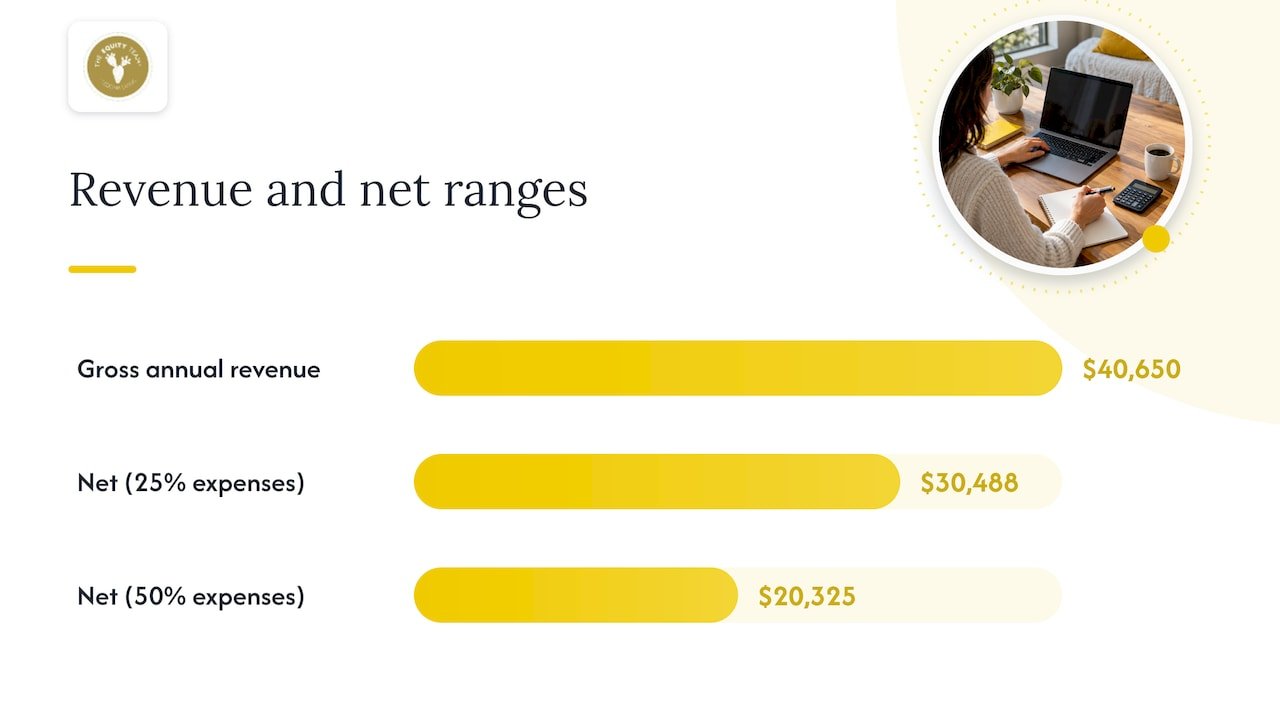
- Conservative underwriting, using a 41.7% occupancy and $267 ADR as benchmarks, suggests roughly $40,650 gross revenue annually before expenses.
- Financing costs are higher for investment loans, with additional expenses like short-term rental insurance and regulation compliance, impacting net income.
Table of Contents
- What the Cottonwood short-term rental market actually looks like
- Turning nightly rates into real revenue numbers
- When Cottonwood books up and when it goes quiet
- The rules you cannot skip before listing your property
- Where in Cottonwood your money works hardest
- A sample pro-forma you can adapt to your own numbers
- What it actually costs to finance and run one of these properties
- Running the property without losing your weekends
- What local agent experience adds to your underwriting
- My honest read on who should buy here
- How The Equity Team helps you buy right in Cottonwood
- FAQ
- Sources
What the Cottonwood short-term rental market actually looks like
Cottonwood sits in a funny kind of in-between spot. It is close enough to Sedona’s red rocks to borrow their gravitational pull, yet affordable enough that buyers who got priced out of Sedona proper often land here instead, almost like finding a quieter seat at a very popular show. That dynamic shapes everything about the local rental math.
Active listings in Cottonwood have grown steadily as more owners catch on to the proximity play. The Equity Team, which has tracked Verde Valley vacation rental performance closely, points to Cottonwood’s appreciation, amenities, and closeness to Sedona as the trio driving investor interest. That proximity effect is not just a nice story. It shows up directly in nightly rates, since guests willing to pay Sedona-adjacent prices will often choose a Cottonwood property if it saves them money without costing them the views or the hiking access.
Average daily rate in Cottonwood varies widely depending on how close a property sits to the river, the highway corridor, or Old Town, and whether it offers upgraded amenities like a hot tub or mountain-facing deck. Occupancy tends to run moderate rather than sky high, which matters more than it sounds. A property that books steadily at a modest rate often outperforms one that books occasionally at a premium rate, because empty nights do not pay the mortgage.
A few patterns show up consistently across the Cottonwood market:
- Supply has been expanding as more Sedona-priced-out buyers discover the area.
- ADR tracks closely with distance to Sedona and with standout features like river access or outdoor living space.
- Occupancy sits in a moderate, seasonally variable band rather than staying flat year round.
- RevPAR, the blended measure of rate and occupancy, is the number serious buyers should underwrite from, not ADR alone.
- Properties near the Verde River and Old Town tend to command the strongest combination of rate and booking frequency.
Buyers researching comparable Verde Valley performance often look to nearby Cornville as a reference point, where documented underwriting examples using a $267 ADR and 41.7% occupancy for strong-performing properties can be found. That comp is not a Cottonwood guarantee, but it is a useful conservative upper bound when Sedona-adjacent demand looks similar across both towns.
Turning nightly rates into real revenue numbers
The math behind any short-term rental is refreshingly simple, even if the inputs take some digging to pin down. Gross annual revenue equals average daily rate multiplied by occupancy rate multiplied by 365 nights. From there, you subtract operating expenses to land on net income, which is the number that actually pays your mortgage and fills your reserve account.
Here is how that formula plays out in practice:
- Start with your ADR. Pull a realistic figure from comparable Cottonwood or Verde Valley listings, not the highest-performing outlier in the neighborhood.
- Multiply by expected occupancy. Use a conservative figure in your first pass, then build an optimistic case separately.
- Multiply by 365 to get gross annual revenue.
- Subtract operating costs, typically cleaning, management, utilities, maintenance, and property taxes, which commonly eat somewhere between a quarter and nearly half of gross revenue depending on how much you self-manage.
- What remains is your net operating income, the figure lenders and smart buyers actually care about.
Pro Tip: Run your underwriting twice, once with a conservative occupancy figure and once with an optimistic one, and make your purchase decision based on whether the conservative case still pencils out.
Using the Cornville comp of $267 ADR at 41.7% occupancy as an illustrative example, a similarly performing Cottonwood property would generate roughly $40,650 in gross annual revenue before expenses. That is a comp, not a promise, but it gives you a reasonable starting point for a conservative pass. An optimistic case might assume slightly higher occupancy during peak months and taper off during the slow season, which is exactly why seasonality deserves its own line in your spreadsheet rather than a single blended annual average.
Expense buckets to plan for include cleaning fees passed through to guests, a management fee if you hire one out, routine maintenance, utilities that run higher than a standard rental because guests are not paying the electric bill directly, and property taxes that can shift depending on how the county classifies a short-term rental. None of these are optional line items, and skipping any one of them is how enthusiastic first-time buyers end up surprised at tax time.
When Cottonwood books up and when it goes quiet
Cottonwood’s calendar moves the way most of red rock country’s does: busy when the weather cooperates and Sedona’s trails are at their best, quieter when summer heat sends visitors looking for cooler ground or winter chill thins out the hiking crowd.
Spring and fall carry the heaviest demand, driven by comfortable temperatures and the same crowds that fill Sedona’s trailheads and galleries. Summer sees a dip as daytime heat climbs, though river access properties near the Verde River tend to hold up better than those without it, since cooling off becomes part of the appeal rather than an afterthought. Winter brings another lull, broken up by holiday travel and the occasional red rock photography crowd chasing snow on the buttes.
A few seasonal habits separate owners who stay booked from owners who watch their calendar sit empty:
- Raise rates ahead of spring and fall booking windows, when demand naturally outpaces supply.
- Drop rates or add incentives during summer, especially for properties without river access or strong air conditioning.
- Watch booking lead times closely, since Cottonwood guests often book closer to their travel date than Sedona guests do, which means slow early bookings do not always predict a slow month.
- Build a winter minimum-stay strategy rather than leaving the calendar wide open for one-night stays that cost more in turnover than they earn in revenue.
Booking lead time matters more than most new owners expect. A calendar that looks sparse 60 days out can fill in considerably by the two-week mark, so panicking into deep discounts too early is one of the more common mistakes among first-year Cottonwood hosts.
The rules you cannot skip before listing your property
Cottonwood takes short-term rental compliance seriously, and the city has built a specific ordinance around it. Before you ever post a listing, your property needs to be registered with the city, and that registration number must appear on every advertisement you publish, whether that is Airbnb, Vrbo, or your own website.
The ordinance lays out several requirements that are easy to overlook if you are coming from a market with lighter rules:
- Register the property with the City of Cottonwood before accepting your first booking.
- Obtain a Transaction Privilege Tax license, since short-term rental income is taxable at the state and local level.
- Display your registration number on every advertisement, a detail the city checks and enforces.
- Notify neighboring property owners that the home will operate as a short-term rental.
- Post emergency contact information on-site, visible within 15 feet of the primary entrance, so guests and neighbors know who to call if something goes wrong.
Skipping any of these steps is not a minor paperwork miss. The ordinance specifies that operating without proper registration or a TPT license can lead to suspension of your ability to operate, along with penalties that make the registration process look easy by comparison.
A short compliance checklist before you launch:
- Confirm your registration is active and your TPT number is displayed on every listing platform.
- Mail or deliver the required neighbor notification before your first guest arrives.
- Post emergency contact information at the entrance, not buried in a welcome binder.
- Keep your registration renewal date on a calendar reminder, since lapses trigger the same penalties as never registering at all.
A print-ready Cottonwood Airbnb rules checklist and house rules template walks through these steps in more detail, which is worth a look before you finalize your purchase timeline.
Where in Cottonwood your money works hardest
Location inside Cottonwood matters almost as much as being in Cottonwood at all. Properties near the Verde River tend to command premium rates because river access is the kind of feature guests search for specifically, not something they discover after booking. Old Town Cottonwood carries its own appeal for guests who want walkable dining and a bit of small-town charm layered on top of their red rock itinerary.
Proximity to Sedona itself remains the strongest demand driver across the board. The closer a property sits to the Cottonwood-Sedona corridor, the easier it becomes to capture guests who want Sedona’s scenery without Sedona’s price tag, a dynamic The Equity Team has written about as one of the clearest reasons investors target Cottonwood over pricier alternatives.
Property type matters too. Single-family homes with private outdoor space generally outperform condos or attached units, since STR guests in this market tend to be couples, families, or small groups who want a yard, a grill, or a hot tub as part of the experience. A few features consistently justify higher nightly rates:
- A private hot tub or pool, which remains one of the single strongest rate boosters in red rock markets.
- Outdoor living space with a view, even a modest deck, since guests are booking the scenery as much as the square footage.
- Updated kitchens and workspaces, which widen your guest pool to remote workers extending their stay.
- Walkability to Old Town dining, which reduces the friction of a rural location for guests without a rental car.
The trade-off is straightforward: river-adjacent and Old Town properties cost more upfront, but they also tend to support the ADR premiums that make the higher purchase price worth paying. A buyer stretching their budget for a landlocked property with no standout feature is often better served by a lower price point and more conservative rate expectations.
A sample pro-forma you can adapt to your own numbers
Numbers convince better than adjectives, so here is a worked example using illustrative figures modeled on the conservative Cornville comp The Equity Team uses for nearby Verde Valley underwriting. Treat every input as a placeholder for your own due diligence, not a market guarantee.
Assumptions: a Cottonwood property purchased for $450,000, financed with 25% down, an ADR of $267, and occupancy of 41.7%, matching the conservative comp from Cornville.
- Gross annual revenue: $267 ADR times 41.7% occupancy times 365 nights equals roughly $40,650.
- Operating expenses: cleaning, management at a typical 20% to 30% of revenue, utilities, maintenance, and property taxes, estimated here at 40% of gross revenue, or about $16,260.
- Net operating income: $40,650 minus $16,260 equals roughly $24,390.
- Cap rate: $24,390 divided by the $450,000 purchase price equals a cap rate of about 5.4%.
- Cash-on-cash return: against a $112,500 down payment, before debt service, that NOI represents roughly 21.7% of the cash invested, though actual cash-on-cash will be lower once mortgage payments are subtracted.
Pro Tip: A 5% swing in occupancy changes net operating income by several thousand dollars a year on a property this size, which is exactly why conservative underwriting beats optimistic guessing.
Sensitivity matters here more than the base case. Push ADR up to $300 with the same occupancy and gross revenue climbs past $45,600, meaningfully improving every metric below it. The lesson is not that Cottonwood guarantees a strong return. It is that small assumption changes move the outcome enough that guessing is not a strategy.
What it actually costs to finance and run one of these properties
Financing a Cottonwood short-term rental generally looks different from financing a primary residence, and buyers who assume otherwise often get an unpleasant surprise at the lending desk. Investment property loans typically carry stricter down payment requirements and higher interest rates than owner-occupied mortgages, since lenders view rental income as less certain than a steady paycheck. Some buyers use conventional investment loans, while others turn to DSCR loans that qualify the property based on its projected rental income rather than the buyer’s personal income.
Seasonal cash flow adds another wrinkle worth planning around, especially given how much Cottonwood’s booking calendar shifts between spring and summer. Guidance on seasonal financing structures built for owners with uneven revenue can be worth reviewing before you lock in a loan structure, since a mortgage payment that looks comfortable in April can feel tighter in August.
Insurance is its own category entirely. Standard homeowner’s policies typically will not cover short-term rental use, so buyers need a dedicated short-term rental or landlord policy, which usually costs more than standard coverage because insurers price in the higher guest turnover and liability exposure.
Recurring costs to build into your underwriting from day one:
- Mortgage principal and interest, sized to your actual loan terms, not a rough estimate.
- Short-term rental insurance, priced higher than standard homeowner’s coverage.
- Property taxes, which can shift once a county reclassifies a property as a rental.
- Utilities, typically higher than a long-term rental since the owner covers them in full.
- Routine maintenance and a repair reserve, especially important for properties with hot tubs or pools.
Running the property without losing your weekends
Once the purchase closes, the real decision is how hands-on you want to be. A message about a broken thermostat. Hiring a local manager costs more on paper but buys back your time and usually improves guest response speed, which matters for review scores and repeat bookings.
Turnover logistics deserve real planning rather than a shrug. Same-day turnovers between a checkout and a check-in require a reliable cleaning team on a tight schedule, and building a buffer day into your calendar during peak season can prevent the kind of rushed cleanings that generate bad reviews.
A few operational habits separate smooth-running properties from stressful ones:
- Set clear guest communication standards, including response time expectations, so guests are not left waiting during an emergency.
- Post emergency contact information on-site, satisfying both the city’s requirement and basic guest reassurance.
- Use a channel manager if you list on multiple platforms, to avoid double bookings.
- Build cleaning buffers into your calendar during peak months rather than scheduling back-to-back turnovers.
Pro Tip: If you are self-managing from out of town, a local co-host or cleaning partner is not a luxury, it is the difference between a five-star review and an empty weekend after a bad one.
Property management companies and co-hosting partners, including specialized property services groups that focus on guest operations, can handle the turnover and communication load for owners who would rather treat the property as an investment than a second job.
What local agent experience adds to your underwriting
Numbers tell part of the story, but local market experience catches the parts a spreadsheet misses. The Equity Team’s work across the Verde Valley, including the Cornville comp used throughout this guide, comes from direct underwriting of properties that actually operate as short-term rentals rather than theoretical modeling.
A few red flags worth checking before you fall in love with a listing’s photos:
- HOA restrictions that quietly ban short-term rentals, which can sink a deal after closing if missed during diligence.
- Septic or well systems that were not sized for guest turnover volume, a common surprise in rural Verde Valley properties.
- Properties advertised with inflated occupancy assumptions that do not match comparable listings nearby.
- Missing or expired registration history on a property being sold as an active short-term rental.
For a newly purchased Cottonwood property, a 60-day runway typically covers registration with the city, setting up your TPT license, building out your listing on each platform, lining up a cleaning vendor, and completing neighbor notification before your first guest checks in. Rushing that timeline to chase a booking window is how new owners end up cutting corners on compliance.
My honest read on who should buy here
Cottonwood makes the most sense for buyers who want Sedona’s draw without Sedona’s price tag and who are willing to underwrite conservatively rather than chase best-case projections. If you are the type who gets excited by an optimistic spreadsheet and skips the sensitivity analysis, this is not your market yet.
My practical advice is simple: run your numbers at conservative occupancy first, confirm the registration and TPT requirements before you ever list a nightly rate, and treat seasonality as a planning tool rather than a surprise. Buyers who do that tend to end up with a property that performs close to its pro-forma instead of one that disappoints by August.
If you want a second set of eyes on a specific Cottonwood property before you make an offer, that underwriting conversation is exactly the kind of work we do.
— Chad
How The Equity Team helps you buy right in Cottonwood
Buying a short-term rental in Cottonwood works best with someone who has already run these numbers for other buyers in the same towns. This agent group in Northern Arizona focuses specifically on short-term rental investment, so the underwriting conversation is encouraged to happen before an offer is written, not after occupancy assumptions turn out incorrect.

Services for Cottonwood and Verde Valley buyers include buyer representation focused on properties with real short-term rental potential, vacation rental comparative market analyses benchmarking specific properties against comparable active listings, and seller exit strategy conversations for owners looking to understand current property values.
If you are weighing a Cottonwood purchase or want to talk through your underwriting assumptions with our team, that conversation costs you nothing and often saves a lot more than it costs. You can also browse how to find the right short-term rental investment property for a broader look at sourcing deals across the Verde Valley.
FAQ
Which cities in the US are the most profitable for Airbnb investment?
Profitability varies widely by market and depends heavily on local occupancy, ADR, and regulatory stability rather than any single ranking. In Arizona’s Verde Valley, Cottonwood and nearby Cornville have shown strong performance when underwritten conservatively, with the Cornville comp of $267 ADR and 41.7% occupancy serving as one useful regional benchmark.
What is the 75-55 rule for Airbnb?
There is no widely recognized or official underwriting or municipal regulation rule tied to Airbnb with a fixed percentage like the “75-55 rule”. If you encountered this figure elsewhere, it is worth confirming the original source directly rather than relying on a secondhand summary, since definitions of informal rules like this vary by market.
Which city is the best to invest in Airbnb properties in 2026?
The best city depends on your budget, risk tolerance, and how closely you underwrite local ADR and occupancy data rather than a single national winner. For buyers focused on Sedona-adjacent demand, Cottonwood offers a lower entry price than Sedona itself while still capturing much of the same tourism draw.
What cities do not allow Airbnb?
Short-term rental rules vary by city and change often, so a complete list is not reliable to state here. Cottonwood does allow short-term rentals, but requires registration, a TPT license, and specific advertising disclosures before a property can legally operate.
How much can I realistically earn from a Cottonwood Airbnb?
Earnings depend on your property’s ADR and occupancy, but a conservative Verde Valley benchmark modeled on the Cornville comp of $267 ADR and 41.7% occupancy produces roughly $40,650 in gross annual revenue before expenses.