

There are four main kinds of short-term rental insurance: a standard homeowners policy, a landlord (dwelling fire) policy, a dedicated short-term rental policy, and an add-on layer such as umbrella liability. For a home that is rented to guests regularly, the dedicated commercial-style policy is usually the one built for the job. The other two tend to get awkward the moment a guest files a claim. Airbnb’s own protection is a helpful backstop, but it is not insurance, and Sedona owners learn that fact best before the first cracked red-rock-view window, not after.
TL;DR
- Standard homeowners and landlord policies may limit or deny claims once a home is rented short-term, so tell your carrier what you actually do with the house.
- A dedicated STR policy typically bundles building and contents, guest liability, lost rental income, and guest-caused damage in one place.
- Airbnb says its Host damage protection is not insurance and recommends personal insurance for damage it does not cover.
- Premiums depend on location, replacement cost, liability limits, amenities, deductible, and claims history, and nobody can quote you without a real quote.
- Insurance, taxes, and permits are one operating system. Get all three right before you buy, and again before you sell.
Table of Contents
- Why the policy on your fridge magnet is not the policy you need
- The main short-term rental insurance types, side by side
- What Airbnb covers, and what it leaves for you
- Sedona-specific things to ask your agent
- What shapes the price
- The other costs that sit next to insurance
- Our perspective: insurance is part of the price you pay
- Buying or selling a Sedona rental? Start with real numbers
- Choosing a policy: a short checklist
- FAQ
- Sources
Why the policy on your fridge magnet is not the policy you need
Sedona is a playground for the quirky and unexpected. Vortex seekers, jeep tours, hot tubs under a sky full of stars. Guests arrive with big plans, and big plans occasionally involve a slippery patio, a grill that gets too friendly with a deck, or a sudden monsoon that turns a wash into a river.
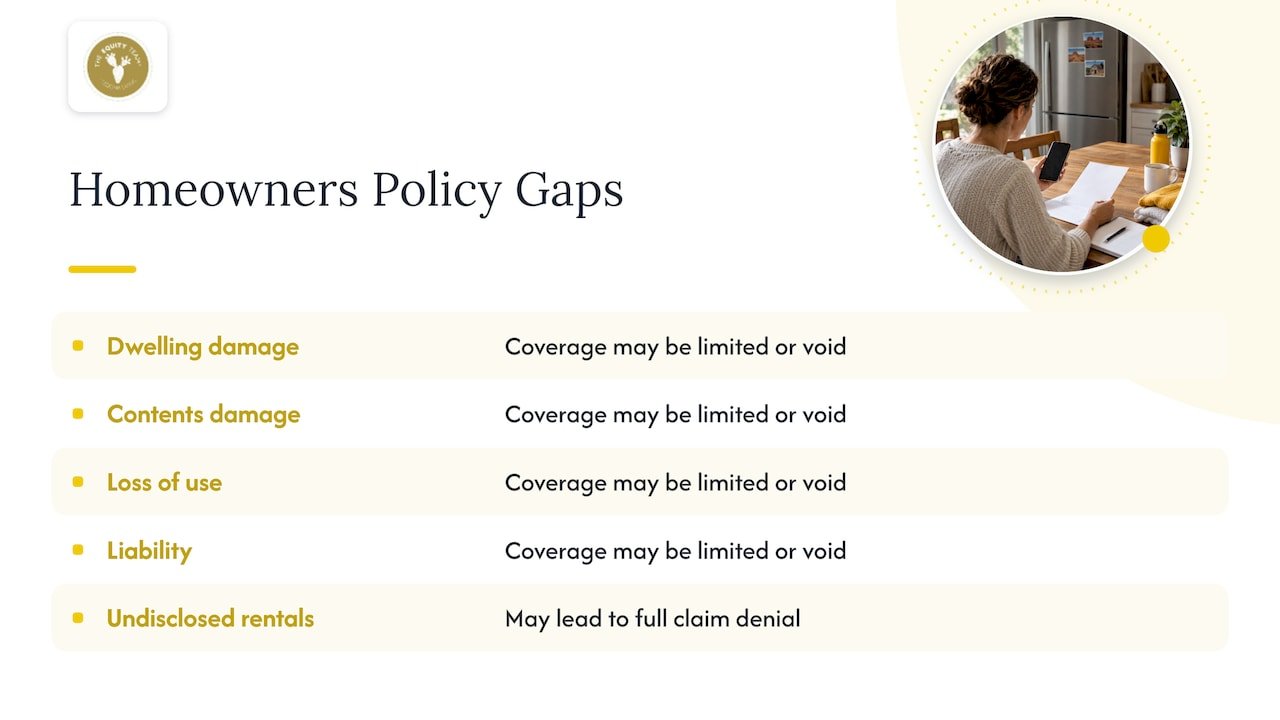
A regular homeowners policy was written for a family that lives in the house. Short-term rental use changes the risk picture: more strangers, more turnovers, more wear, and a business purpose. The Insurance Information Institute notes that standard homeowners policies may limit or void coverage for damage to the dwelling and its contents, loss of use, and liability when a property is used for short-term rentals. Translation: the policy that looked fine at closing may quietly wave goodbye at claim time.
There is also a disclosure issue. Carriers may check property-level loss history and rental activity, and failing to disclose rental use may lead to a full claim denial. Honesty is not just a virtue here. It is a coverage feature.
The main short-term rental insurance types, side by side
Here is the lay of the land. Policy wording varies by carrier and state, so treat this as a map, not a contract.
| Type | Built for | What it generally covers | Where it tends to fall short |
|---|---|---|---|
| Homeowners (HO) | Owner-occupied homes | Dwelling, belongings, personal liability | May limit or exclude rental use, guest-related liability, and lost rental income |
| Landlord / dwelling fire (DP) | Long-term tenants | Building, landlord liability | Often written with tenants in mind, not nightly guests; furnishings and business income may be thin |
| Dedicated STR policy | Homes rented nightly or weekly | Building and contents, guest liability, rental income, guest theft, vandalism, pet damage | Costs more than a basic policy; needs accurate disclosures |
| Umbrella or excess liability | Owners wanting higher limits | Extra liability above the underlying policy | Sits on top of another policy; does not replace it |
| Platform protection (AirCover) | Hosts booking through Airbnb | Certain guest-caused damage and a host liability program | Not insurance; does not insure the building or replace income |
Homeowners policies
These work for owners who occasionally rent a spare room or the whole place for a rare weekend. For a house that is booked most of the year, they are usually the wrong tool. Some carriers offer a short-term rental endorsement, which is an add-on that stretches a homeowners policy to cover limited renting. Ask for the endorsement wording in writing, including any cap on nights rented.
Landlord policies
Landlord coverage is designed for a lease with a tenant who lives there for months. It can be a decent bridge for a mid-term furnished rental. For a nightly Sedona cabin with a hot tub and a four-person hiking-boot pile at the door, ask the carrier directly whether guest stays are within the policy’s definition of rental use.
Dedicated short-term rental policies
This is the category most full-time hosts end up in. According to one insurance-industry guide, a dedicated STR policy is a commercial policy that replaces homeowners or landlord coverage, with replacement-cost building and contents coverage, liability limits such as $1 million per occurrence and $2 million aggregate, lost rental income, and coverage for guest theft, vandalism, and pet damage. Limits vary by carrier, so read the declarations page rather than the brochure.
Umbrella and excess liability
Sedona homes with pools, spas, fire pits, steep driveways, or rim-adjacent decks are not shy about liability exposure. An umbrella policy adds a higher ceiling above your underlying liability limit. Many carriers require specific underlying limits first, and some exclude short-term rental use entirely, so confirm it applies to a rental and not just your primary home.
What Airbnb covers, and what it leaves for you
Hosts often ask whether insurance for Airbnb is just something the platform handles. It handles some of it, not all of it.
Airbnb states that Host damage protection provides up to $3 million for certain guest-caused damage, but it is not insurance, not all damage is included, and the company recommends personal insurance for property damage it does not protect. A separate host liability insurance program carries $1 million in coverage, per the same help page. Both are subject to the terms Airbnb publishes, which can change, so read the current page before relying on them.
What this means in practice:
- Building and structure. A kitchen fire, a burst pipe, or a tree limb through the roof is a property policy matter, not a platform matter.
- Lost income. One guide points out that AirCover does not replace lost income after a fire. If the house is out of service for three months in October, your mortgage does not pause.
- Direct bookings and other platforms. Protection that applies to an Airbnb booking does not follow a guest who booked on another site or by text message.
- Your own liability. Platform programs and your own liability policy are not the same document. Know which one answers first, and where your deductible sits.
Sedona-specific things to ask your agent
Sedona is not a copy-paste market, and insurers know it. Here is where local detail changes the conversation.
Wildfire and flood
The surrounding Coconino National Forest, the creek corridors, and the monsoon season each add a different flavor of risk. Standard property policies typically exclude flood, so ask separately about flood coverage if the home sits near a wash or Oak Creek. Ask about wildfire pricing and any underwriting limits for homes near wildland edges.
Hot tubs, pools, and fire pits
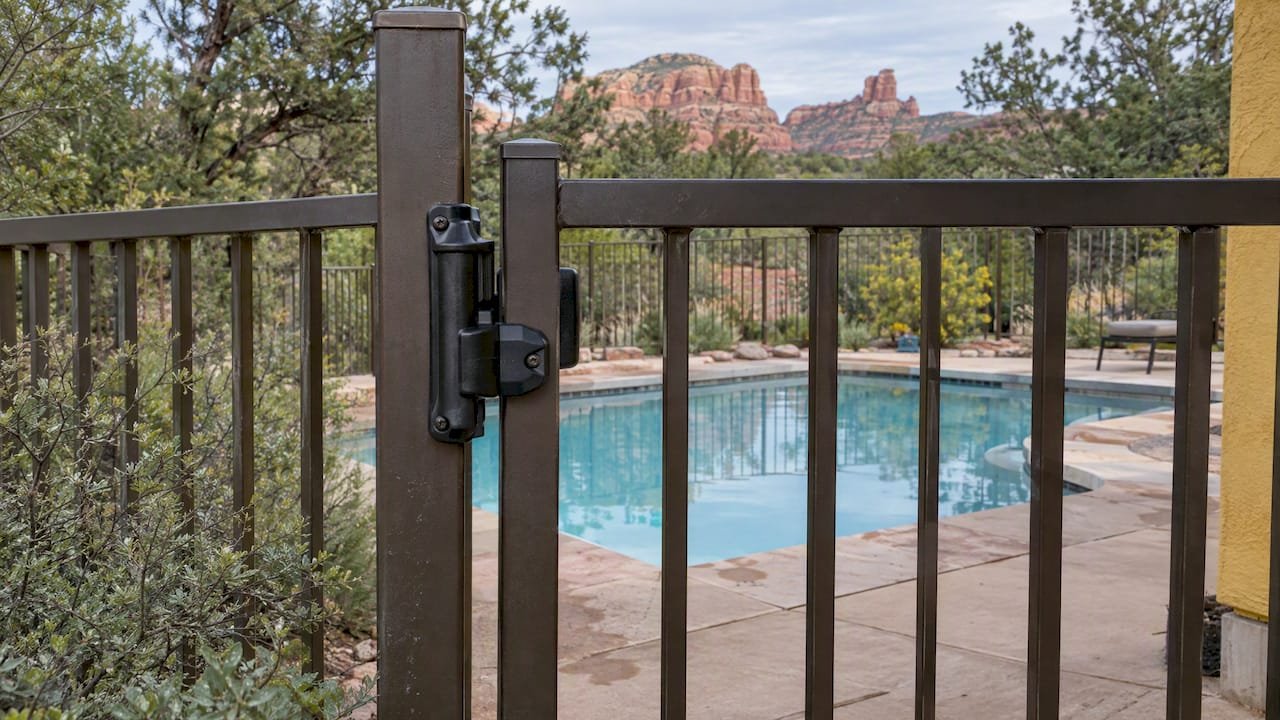
Amenities are the fun part of a Sedona stay and the expensive part of an insurance quote. Carriers may ask about fencing, covers, self-latching gates, and fire-pit placement. Pool owners should also read about vacation rental pool costs in the context of total revenue before locking in a coverage plan, since a pool changes both income and liability. Be ready to describe each amenity in detail.
City rules
Sedona requires a city permit for short-term rentals under its city code, and the permit rules include a minimum liability coverage requirement that the city can ask you to prove. Check the current amount and documentation deadlines with the City of Sedona before you buy a policy, so your limits clear the bar with room to spare. Our Arizona Airbnb checklist walks through the compliance steps that surround it, and the Sedona occupancy limits guide is worth reading because the guest count you advertise should match what your policy assumes.
Entity structure
Some owners hold the property in an LLC. Your insurer needs to know who owns the home and who operates the rental, and the policy should list the right named insureds. Our piece on an Arizona Airbnb LLC covers the structure side. Tell your insurance agent, and your attorney, the whole story.
What shapes the price
Nobody can give you an honest premium without running a quote, and that is not evasion. Insurance guides consistently list the same drivers: location and catastrophe exposure, building and contents replacement cost, liability limits, amenities, deductible, claims history, and construction.
The direction of travel is not especially gentle either. A news report on vacation home insurance found that average premiums per policy rose in all four U.S. regions between 2018 and 2024, from 18.3% in the Northeast to 43.3% in the West. If your pro forma still uses a premium from three years ago, update it.
A few practical levers:
- Raise the deductible only to an amount you could write a check for without flinching.
- Describe the property accurately. Roof age, wiring, plumbing, and heating updates change underwriting.
- Avoid small claims. A pile of minor claims can push premiums up, and multiple claims can raise your premium. Pay for tiny repairs out of pocket when it makes sense.
- Model it in your numbers. A good short-term rental analysis treats insurance as a line item next to taxes, utilities, and management, not an afterthought.
The other costs that sit next to insurance
A Sedona owner’s budget has a few more tenants than just insurance. They each deserve a line before you buy.
Lodging taxes
The Arizona Department of Revenue says a short-term residential rental is a stay of fewer than 30 days, and that its income is subject to Arizona transaction privilege tax under A.R.S. § 42-5070 and the Model City Tax Code. For stays under 30 days, the state transient lodging classification and the city Hotels classification apply, and an additional city tax on transient lodging may apply. When a marketplace collects and remits the tax for a booking, owners still report the income. Direct bookings are the owner’s to report. Our guides to Arizona Airbnb taxes and Sedona rental property taxes and the 30-day rule go deeper on how it works locally.
Maintenance
Maintenance is where good intentions meet hot-tub filters. A sensible way to plan is by rhythm: tasks every turnover, seasonal tasks, and annual tasks, as vacation rental maintenance guides commonly organize them. We do not publish a single Sedona number here, because costs swing with the age of the home, the amenities, and whether you self-manage. Ask your manager or contractors for written quotes, then build a reserve.
Cost segregation
If your accountant is discussing depreciation, see our overview of cost segregation for Arizona Airbnbs. Insured replacement values and tax depreciation are different numbers for different purposes, but your advisor should see both.
Our perspective: insurance is part of the price you pay
We work only on short-term rental real estate in Sedona, so insurance comes up in nearly every deal. Here is how we think about it.
First, a buyer should get an insurance quote early, ideally while the home is still under contract and the inspection period is open. A quote changes the numbers. A house with a pool, a spa, and a canyon-edge deck might still be a great investment, but the carrier may price it very differently than the listing description suggests.
Second, an owner should read the policy before they need it. The definitions page is not exciting, but it is where the story ends if a claim goes sideways. If the policy says nothing about nightly rentals, ask in writing.
Third, sellers benefit from a tidy file. Buyers of high-performing rentals look at the insurance history, the permit, and the tax filings. Tidy documents tend to make for smoother negotiations, and we help owners put that package together before listing. If an exit is on your mind, our rental exit strategy conversation is a good place to start.
Most of all, we treat insurance as a business expense that supports revenue. A rental that is properly covered can recover from a bad month. A rental that is not covered may not.
— Chad
Buying or selling a Sedona rental? Start with real numbers
Insurance, taxes, and permits all feed into what a Sedona rental is worth. If you are weighing a purchase, our team can help you underwrite the property with realistic operating costs. If you are thinking about selling, we prepare a Sedona vacation rental CMA and a prep consultation that look at the revenue and the paperwork together.

Prefer to start with a broader look at the market? Read about finding the right short-term rental investment, or contact us to talk through your situation.
Choosing a policy: a short checklist
- Confirm in writing that the policy allows nightly or weekly guest stays and states any limit on nights rented.
- Check whether building and contents are valued at replacement cost, and whether furnishings are included.
- Look at liability limits against what Sedona’s permit rules require, plus a margin.
- Ask whether lost rental income is covered, for how long, and after which type of loss.
- Ask about guest theft, vandalism, and pet damage and what the sublimits are.
- Ask separately about flood, wildfire, and any exclusions for pools, hot tubs, or fire features.
- Decide how your policy works alongside the platform protection you rely on, and keep a copy of both.
- Review everything every year, and again after renovations or a change in management.
FAQ
Does Airbnb insurance replace my own policy?
No. Airbnb says its Host damage protection is not insurance and that not all damage is included, and it recommends personal insurance for damage it does not protect. The host liability program is a separate offering with its own terms. Treat both as a layer on top of your own coverage.
Can I use a regular homeowners policy for a vacation rental?
Sometimes, but only if the policy or an endorsement clearly allows it. Standard homeowners policies may limit or void coverage for damage, loss of use, and liability when a home is used for short-term rentals. Ask your carrier for written confirmation, and switch to a dedicated STR policy if the home is rented regularly.
What does a dedicated short-term rental policy usually include?
Typically, building and contents at replacement cost, guest liability, lost rental income, and coverage for guest theft, vandalism, and pet damage. Liability limits such as $1 million per occurrence and $2 million aggregate are commonly cited. Exact terms vary by carrier, so compare declarations pages.
Do Sedona rental owners pay lodging tax?
Yes, short stays under 30 days are subject to Arizona transaction privilege tax, and a city transient lodging tax may also apply. When a marketplace collects the tax for a booking, you still report the income. Check the Arizona Department of Revenue page for how to file, or ask your tax professional.
How much does short-term rental insurance cost?
It depends on location, replacement cost, liability limits, amenities, deductible, claims history, and construction. Premiums have been climbing, particularly in the West. The only reliable number comes from a real quote on your specific property.
Sources
- Short-Term Rentals and Homeowners Insurance (Insurance Information Institute)
- Airbnb Help: Host damage protection and liability insurance
- Short-Term Lodging (Arizona Department of Revenue)
- Short Term Rental Insurance: The 3 Layers Explained
- Short-Term Rental Insurance: Why Standard Policies Fail
- Vacation Home Insurance Costs Are Eating Into Rental Yields
- Vacation Rental Maintenance Guide
- Why Multiple Claims Raise Your Insurance Premiums
- Short Term Rental Analysis Investors Can Use