
Wire fraud in a Sedona real estate deal usually looks like a polite email, sent days before closing, with “updated” wiring instructions. The fix is almost boring: never act on wiring instructions from an email, and confirm every account detail by phone, using a number you wrote down at the start of escrow. Red rocks are dramatic. A closing should not be.
This guide covers how the scam works, why Sedona deals (especially short-term rental purchases closed from out of state) make tempting targets, and exactly what to do before and after you wire.
TL;DR
- Scammers sit inside hacked email accounts, learn the timeline of a deal, then send fake wiring instructions right when money is due.
- Write down the phone numbers of your agent and escrow officer at the start of escrow. Call them, and only them, before any wire.
- Check the actual email address, not the display name. One Arizona buyer lost $79,000 over an “rn” that looked like an “m.”
- If money has already gone, call your bank for a wire recall right away, then file with the FBI’s IC3.
- Arizona owners can sign up for a free deed fraud alert through the state.
Table of Contents
- Why real estate wire fraud is growing
- How the scam actually works
- The call-first routine that stops it
- Who pays when it goes wrong
- Sedona-specific moments that invite scammers
- Deed fraud: the cousin of wire fraud
- Spotting red flags before the wire
- If the money already left
- Our perspective: what we tell clients
- Working with an agent who treats closing safety as part of the job
- FAQ
- Sources
Why real estate wire fraud is growing
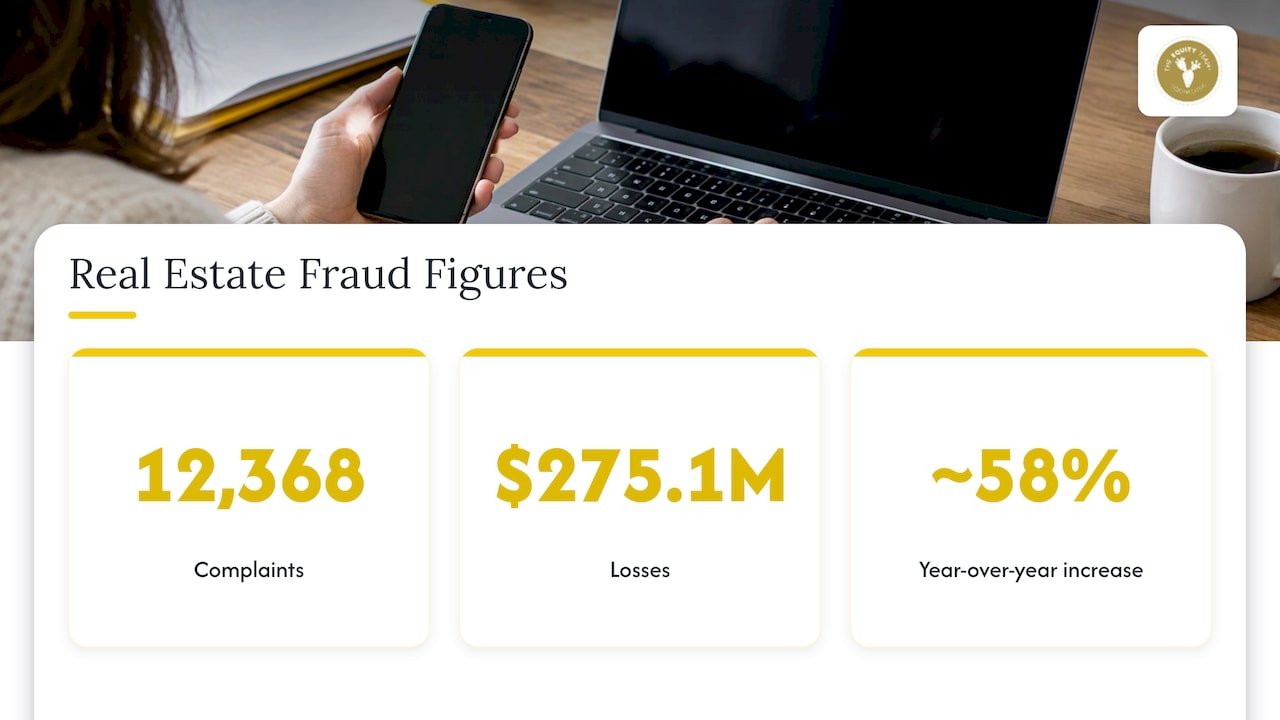
The numbers are not subtle. According to the 2025 FBI Internet Crime Report, real estate fraud produced 12,368 complaints and $275.1 million in losses across the United States. A HousingWire summary of the report puts the same figures in context for housing professionals. Losses jumped about 58% from the year before, according to a breakdown of the IC3 data.
Why real estate? Because a home purchase has everything a thief loves: a huge sum, a firm deadline, and a cast of people (buyer, seller, agents, lender, title company, escrow officer) who all email each other constantly. FinCEN’s analysis of business email compromise in the real estate sector explains that high-value, time-sensitive communication among many parties is exactly what makes the sector a primary target.
Sedona adds its own flavor. Plenty of buyers here are investors purchasing a vacation rental from another state, never meeting anyone in person, signing electronically, and wiring a large down payment. Remote and fast is great for a deal. It is also the exact setting scammers like.
How the scam actually works
Forget the movie image of a hoodie-wearing hacker cracking a bank. The typical scheme is quieter and more patient.
Step 1: The quiet listener
A criminal gains access to an email account, often an agent’s, a title company’s or a buyer’s. Then nothing happens. FinCEN describes scammers who sit inside compromised accounts for long periods to learn the language, habits and timeline of a transaction. The CFPB likewise notes that fraudsters watch for the exact moment money is about to change hands.
Step 2: The perfect-looking email
A few days before closing, the buyer gets a message that looks exactly like the escrow officer’s usual note. Same signature, same tone, same thread. The only change: “our wiring instructions have been updated.” Industry reporting says criminals now lean on AI too. The IC3 received over 22,000 complaints that referenced AI-driven tools in 2025, which helps scammers write flawless emails and even clone voices.
Step 3: The lookalike address
Often the display name is right and the address is a hair off. In an Arizona Court of Appeals case discussed by the Arizona Association of REALTORS®, a buyer lost $79,000 after an imposter used an address with “rn” in place of “m”. Neither the buyer nor the escrow company caught it. The funds were never recovered and the sale did not close.
The lesson is a little funny and a little painful: two letters squeezed together can pass for one, and the money does not care about your eyesight.
The call-first routine that stops it
The best defense is a habit, set up on day one of escrow, not a gadget.
- Collect names and numbers early. The CFPB advises identifying your settlement agent and your agent by name and verifying their primary phone numbers before closing. Get them from the contract, the title company’s own website, or a face-to-face meeting, not from a random email.
- Treat emailed wiring changes as alarms. If an email arrives with wiring instructions, the CFPB guidance is to ignore it and call your trusted contact on the number you already verified. Never use phone numbers or links inside the email.
- Read the real address. Expand the sender field. Look for swapped letters, extra words, odd domains. Then call anyway.
- Be suspicious of urgency. “Please wire today or we lose the deal” is the scammer’s favorite sentence. A real escrow officer will happily wait ten minutes while you call.
- Confirm after sending, too. Call again once the wire goes out to confirm the receiving office saw it arrive.
Arizona title companies preach the same message. Lawyers Title of Arizona, for example, runs a “call before you wire” page built on the same two steps: get phone numbers when escrow opens, then call them before sending funds. The Arizona Department of Real Estate’s Buyer Advisory includes a wire fraud warning too, telling buyers to be wary of emailed wiring instructions.
A quick sanity table
| Situation | Safe move | Risky move |
|---|---|---|
| Email with new wiring instructions | Call the escrow officer on the number you saved | Reply to the email to ask if it is real |
| Sender name looks right | Check the full address character by character | Trust the display name |
| Message says “wire today” | Slow down, call, confirm | Rush to beat the clock |
| Phone number in the email signature | Ignore it | Call it for “verification” |
| Voice message from your “agent” | Call back on the saved number | Act on the voicemail |
That last row matters more every year. If voices can be cloned, a familiar voice alone proves nothing. A callback to a number you already trust does.
Who pays when it goes wrong
People assume the bank or the title company will simply cover a loss. Sometimes responsibility is shared, sometimes it is not. Arizona real estate attorney K. Michelle Lind, writing for the Arizona Association of REALTORS®, notes that liability is often split among the parties. She describes an Arizona case where an escrow company was found fully liable for wiring funds to a fraudulent account because it never phoned the sellers to verify last-minute changes to instructions.
That is a hopeful story, but not a plan. Litigation takes time, and the outcome depends on the facts. Anyone who has lost money in a transaction should talk with a real estate attorney licensed in Arizona about their specific situation. The cheaper plan is a phone call before the wire.
Sedona-specific moments that invite scammers
Remote closings on short-term rentals
Out-of-state investors buying Sedona vacation rentals often never set foot in the title office. That makes email the main channel, and email is the scammer’s playground. We have written a full guide for short-term rental investors closing Arizona remotely, including how to keep wire instructions out of the inbox altogether.
Big down payments and earnest money
Sedona prices mean the numbers are big. Earnest money, down payment and closing costs can all be wired, so each one is a target. Every wire gets its own verification call, even if the first one went fine.
Tight timelines
Scammers like deadlines. Knowing the rhythm of escrow helps you spot when a request is out of place. Our breakdown of the 30 to 45 day Arizona escrow timeline shows when money legitimately moves, and our Sedona home purchase timeline maps the whole path. If a wire request shows up at a strange point in that calendar, call.
Sellers get targeted too
Buyers lose money most often, but sellers are not safe. Scammers can pose as a seller to redirect proceeds, or as a lender to request a payoff. Sellers should verify any payoff or proceeds instructions the same way: by phone, with a number from the title company’s own documents.
Deed fraud: the cousin of wire fraud
Wire fraud steals money in motion. Deed fraud tries to steal the property itself, often by impersonating an owner on vacant land or a rental that nobody checks on daily. A tired fraudster might even list a home that is not theirs. Real estate agents in Arizona have seen imposters posing as landowners in attempts to sell property, and the Arizona Department of Real Estate offers a free tool for owners.
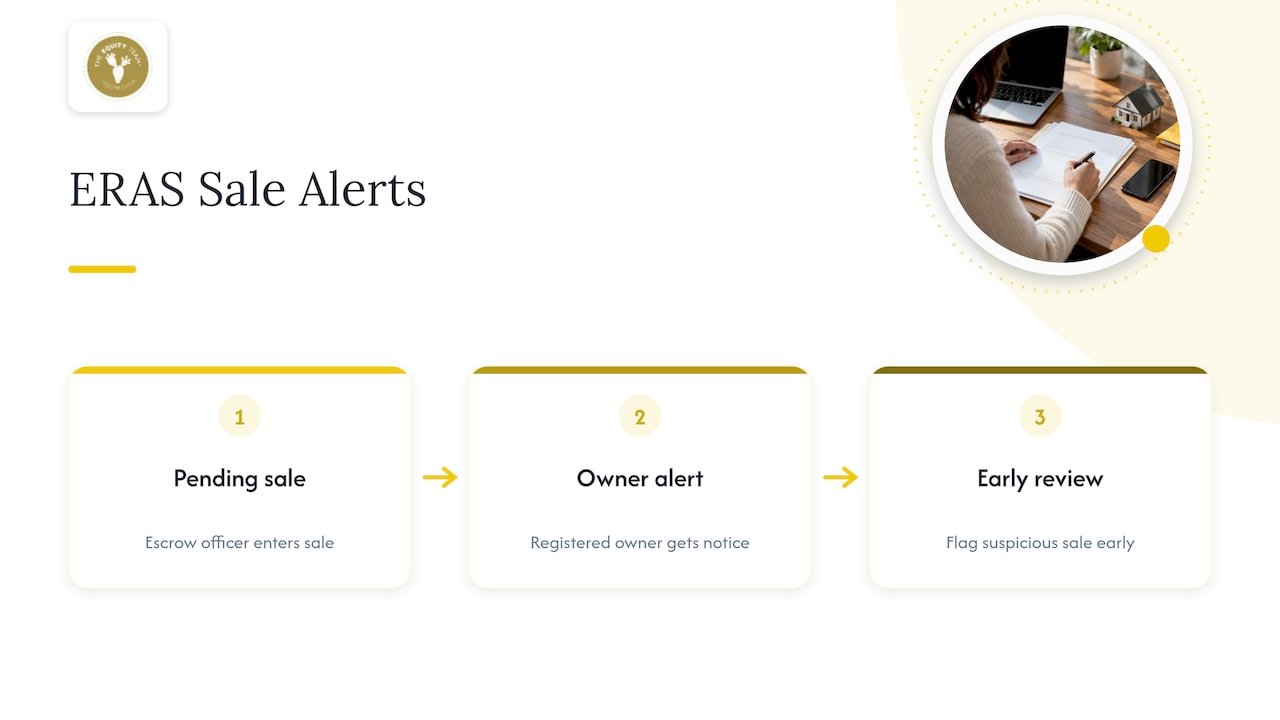
The Early Real Estate Sales Alert System (ERAS) notifies registered owners when an escrow officer enters a pending sale for their address or parcel number, so a suspicious sale can be flagged early. The state describes the service as voluntary and provided “as is,” so treat it as one layer of protection rather than a guarantee. Owners of Sedona rentals who live elsewhere are exactly who should sign up.
Also worth knowing: title problems that are not fraud at all can still derail a sale. Our Sedona home sale title issue examples walk through common ones.
Spotting red flags before the wire
Fraud rarely begins with a wire request. It begins with a small thing that feels slightly off: a buyer who is oddly pushy, an “investor” who wants to skip steps, a contact who avoids a phone call. People who work cold outreach and distressed deals every day have catalogued the warning signs that show up in early seller and buyer conversations, and many of those instincts carry over to a Sedona closing: pressure, vagueness and refusal to use a verifiable channel.
The same goes for the professionals around you. A good agent explains how wire instructions will be delivered, tells you who to call, and never texts you account numbers. Our guide to red flags to avoid in a Sedona real estate agent covers what a careful process looks like. Disclosures are part of that process, too, so see the Sedona property disclosure requirements.
If the money already left
Speed is everything. The CFPB’s guidance says to contact your bank or wire-transfer company immediately and ask for a wire recall, then file a complaint with the FBI’s Internet Crime Complaint Center at ic3.gov so the funds can potentially be tracked and frozen.
A sensible order of operations:
- Call your bank’s fraud or wire department. Say “wire fraud, request a recall.” Do not wait for a callback window.
- Call your escrow officer and agent, using verified numbers, so the file is flagged.
- File at ic3.gov with the account details, email headers and timeline.
- Stop using the compromised email account and change passwords from a clean device.
- Speak with a real estate attorney in Arizona about your options.
No one can promise a recovery. The earlier the report, the better the odds of freezing the funds, which is why hesitation costs so much.
Our perspective: what we tell clients
We work only on Sedona short-term rental and high-performing home deals, which means many of our buyers are out-of-state investors and many of our sellers are owners who manage from afar. That is precisely the profile scammers hope for.
So we keep it simple. At the start of every deal, we tell clients who the escrow officer is and how to reach them by phone. We tell them that no one on our team will ever change wiring instructions by email, and that if anything claiming to be us does, it is fake. We would much rather get a “is this real?” call at 9 p.m. than a different kind of call a week later.
We also tell clients the unglamorous truth: closings are not where cleverness pays off. Calm repetition does. Verify, call, wait, wire. If a closing feels like a thriller, something is wrong.
— Chad
Working with an agent who treats closing safety as part of the job
If you are buying or selling a Sedona rental and want someone to walk the escrow process with you, Equity Team represents buyers and sellers who focus on short-term rental performance. Sellers curious about value can start with a Sedona vacation rental CMA, and buyers can begin with our guide to buying a home in Sedona. Either way, the first conversation covers how money will move and who you will call to confirm it.
FAQ
How does wire fraud occur in a real estate deal?
A criminal gets into someone’s email, watches the transaction, and sends fake wiring instructions that look like they come from the escrow officer or agent. The buyer wires the money to the criminal’s account instead. Because the message arrives inside a real conversation, it can look entirely legitimate.
How can I avoid wire fraud when buying in Sedona?
Save your agent’s and escrow officer’s phone numbers at the start of escrow, and call them to confirm any wiring instructions before sending money. Never rely on phone numbers, links or attachments in an email about wiring. Check the sender’s full email address, and be wary of any message that pushes you to act fast.
What should I do if I think I sent money to a scammer?
Call your bank right away and request a wire recall, then file a complaint at ic3.gov. Notify your escrow officer and agent using verified phone numbers. Time matters most, so do these things before anything else.
Can I protect my Arizona property from deed fraud?
Yes, in part. Arizona owners can register with the Department of Real Estate’s Early Real Estate Sales Alert System to be notified when an escrow officer enters a pending sale for their property. It is voluntary and not a guarantee, so keep an eye on your property records and mail as well.
Sources
- 2025 FBI Internet Crime Report (IC3)
- FBI: Real estate fraud losses hit $275M in 2025 (HousingWire)
- Property fraud losses rose 58% in a year (How Scams Work)
- FinCEN analysis of business email compromise in the real estate sector
- Wire Fraud Liability: Real Estate Tales From the Courtroom (Arizona Association of REALTORS®)
- Mortgage closing scams: how to protect yourself (CFPB)
- Buying a home? Beware of mortgage closing scams (CFPB)
- AZRE Early Real Estate Sales Alert System
- Arizona Department of Real Estate Buyer Advisory
- Lawyers Title of Arizona: Wire Fraud
- azfamily.com local news