

Sedona property disclosure requirements mandate that sellers reveal all known material facts about a property using the Seller’s Property Disclosure Statement (SPDS) and other legal disclosures to comply with Arizona law. The SPDS is a comprehensive 10-page form covering six major categories: structural and mechanical systems, environmental hazards, property history, utilities, HOA information, and other material facts. Arizona does not have a single state-mandated form, but the SPDS is the recognized industry standard across Sedona and the rest of the state. Buyers, sellers, and investors who understand these obligations protect themselves from costly surprises and post-closing legal battles.
What must sellers disclose in Sedona?
The SPDS is the backbone of every Sedona real estate disclosure. Arizona law requires sellers to disclose all known material defects, meaning any fact that would affect a reasonable buyer’s decision to purchase or the price they would pay. The definition of “material fact” is broad on purpose. Sellers cannot cherry-pick what feels relevant.

The six core categories of the SPDS
The SPDS walks sellers through six structured sections. Each one targets a specific area of potential concern:
- Structural and mechanical systems: Foundation condition, roof age and history, HVAC, plumbing, electrical, and any known repairs or failures.
- Environmental hazards: Radon, asbestos, lead-based paint, underground storage tanks, and soil contamination.
- Property history: Prior flooding, fire damage, pest infestations, and any known disputes with neighbors.
- Utilities: Water source (municipal, well, or hauled), sewer or septic system type, and service providers.
- HOA information: Whether an HOA exists, fees, rules, and any pending assessments or litigation.
- Other material facts: Anything that does not fit neatly into the above categories but could still affect value or desirability.
Federal and special disclosure requirements
For homes built before 1978, federal law adds a layer on top of the SPDS. Sellers must deliver a lead-based paint disclosure with the EPA pamphlet attached. Non-compliance carries EPA fines up to $10,000 per violation. That is a penalty worth taking seriously.
Sellers must also provide a five-year insurance claims history obtained directly from their insurance provider. This covers claims made during their ownership or the prior five years, whichever is shorter. Buyers use this history to spot recurring problems like water intrusion or fire damage that a fresh coat of paint might hide.
Pro Tip: Order your insurance claims history report before listing. It takes time to obtain, and surprises on this document during escrow can stall or kill a deal.
| Disclosure Type | Trigger | Deadline |
|---|---|---|
| SPDS | All residential resale transactions | Delivered per contract terms |
| Lead-based paint | Homes built before 1978 | Before or at contract signing |
| Insurance claims history | All transactions | Delivered with SPDS |
| HOA documents | HOA-governed properties | Within 10 days of contract |
| Affidavit of Disclosure | Rural unsubdivided land (5 or fewer parcels) | 7 days before closing |
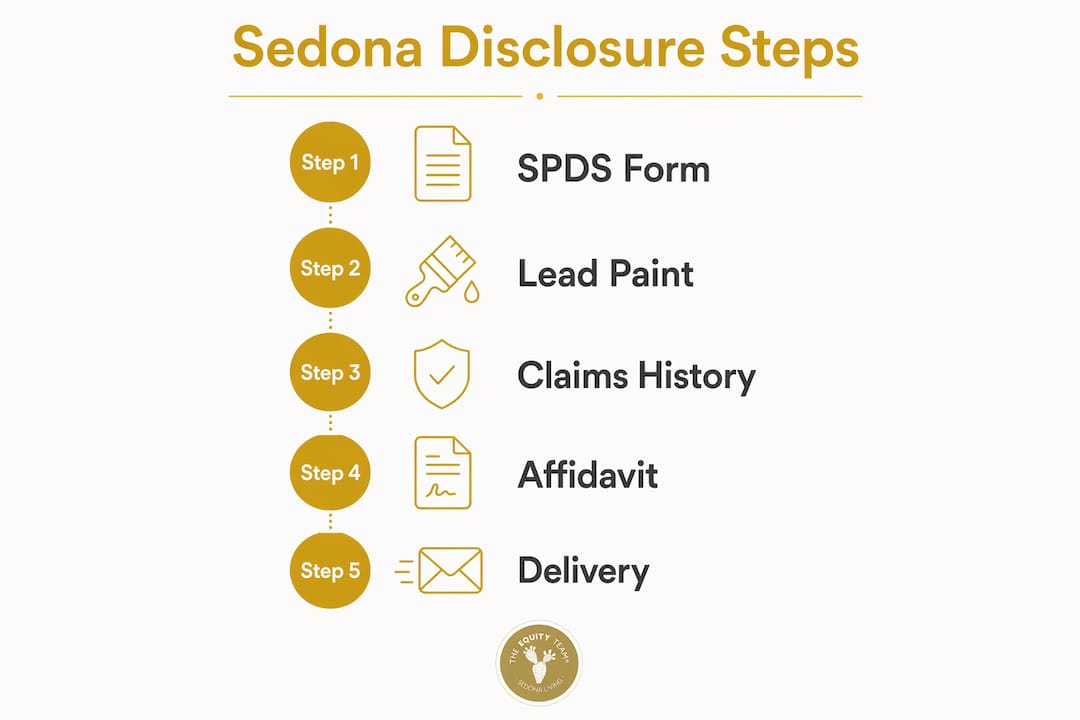
How do sellers complete and deliver disclosure documents correctly?
Getting the paperwork right matters as much as the content itself. Late or incomplete disclosures give buyers the right to cancel the contract, which is a headache nobody wants after weeks of negotiation.
Here is the step-by-step process that keeps Sedona sellers on solid ground:
- Complete the SPDS before listing. Pre-listing completion reduces stress and gives buyers full information from day one. Sellers who wait until after an offer is accepted scramble under pressure and make mistakes.
- Answer every question. Blank boxes on the SPDS can be treated as “yes” by Arizona courts. If a question does not apply, write “N/A” with a brief explanation rather than leaving it empty.
- Attach supporting documents. Permits, inspection reports, repair receipts, and HOA financials all strengthen the disclosure. They show buyers the full picture and reduce the chance of a dispute later.
- Use electronic signatures correctly. Arizona accepts electronic signatures on disclosure documents. Both parties must agree to electronic delivery, and the timestamp matters for deadline compliance.
- Deliver HOA documents promptly. HOA packets must be delivered within 10 days of contract execution under the standard Arizona Residential Resale Contract. Buyers have a review period after receipt, so late delivery pushes the entire timeline back.
- File the Affidavit of Disclosure if required. For rural or unsubdivided land, this affidavit must be delivered at least 7 days before closing and recorded with the deed. Missing this step creates real legal exposure.
Pro Tip: Add notes to any SPDS question that needs context. A short explanation like “roof replaced in 2021, permit on file” is far more reassuring to a buyer than a bare “yes.”
The Sedona home purchase timeline has specific windows for each disclosure type. Sellers who map these deadlines to the contract calendar avoid the most common procedural errors.
What seller mistakes cause the most problems in Sedona?
Sellers make the same errors repeatedly, and the consequences range from contract cancellations to post-closing lawsuits. Knowing the pitfalls in advance is half the battle.
“Many lawsuits arise from sellers failing to disclose known defects, even minor or repaired ones. Full transparency is not optional. It is the only legally safe path.” — Arizona disclosure professionals
The most common mistakes include:
- Assuming “as-is” means no disclosure. Arizona law is clear: as-is status does not exempt sellers from disclosing known defects. Selling as-is only means the seller will not make repairs. It does not erase the obligation to tell buyers what is wrong.
- Leaving checkboxes blank. Courts have treated blank answers as affirmative responses. Every unanswered question is a potential liability.
- Skipping the insurance claims history. Sellers who omit prior water damage or fire claims face post-closing claims from buyers who discover the history later.
- Ignoring the rural land affidavit. Properties outside city limits in unincorporated Yavapai County often trigger the Affidavit of Disclosure requirement. Sellers who skip it face rescission rights and recording complications.
- Failing to disclose repaired defects. Arizona courts do not accept ignorance as a defense when sellers deliberately avoided reviewing prior inspection reports. Disclosure duty applies to genuinely known facts, and courts look hard at what sellers should have known.
The top real estate agent red flags in Sedona often include agents who downplay disclosure obligations. A good agent pushes sellers to disclose more, not less. Sellers who work with agents cutting corners on disclosures inherit the legal risk themselves.
Non-disclosure can lead to both compensatory and punitive damages after closing. That is a far worse outcome than any awkward conversation during escrow.
How can buyers and investors use disclosures to make smarter decisions?
A completed SPDS is one of the most useful documents a buyer receives. Most buyers skim it. Savvy investors read every line.
- Cross-reference the SPDS with the inspection report. Discrepancies between what the seller disclosed and what the inspector finds are red flags worth negotiating over.
- Request third-party disclosure reports. Environmental risk reports identify FEMA flood zones, superfund sites, and soil concerns that sellers may not personally know about. These reports add a layer of protection beyond seller knowledge.
- Ask about the insurance claims history in detail. A single water damage claim five years ago is very different from three claims in two years. The pattern tells the real story.
- Use the HOA documents strategically. Pending litigation or large special assessments buried in HOA financials can change the math on an investment property significantly.
- Time your review carefully. Buyers have a contractual inspection period after receiving disclosures. Use the full period. Rushing this review to please a seller is one of the most common investment mistakes in the Sedona market.
Third-party government data reports help buyers and sellers identify risks that neither party may personally know about. That added layer of protection is especially valuable for investors buying properties in Sedona’s more remote red rock corridors.
What are the special disclosure rules for Sedona rural lands?
Sedona’s geography creates a quirky legal wrinkle. Properties outside city limits in unincorporated areas often fall under Arizona Revised Statutes § 33-422, which requires a formal Affidavit of Disclosure for land sales involving five or fewer parcels of unsubdivided land.
This affidavit is not optional and not a formality. It must be delivered to the buyer at least 7 days before closing and recorded with the deed at the county recorder’s office. Buyers who do not receive it on time have the right to rescind the transaction.
| Affidavit Requirement | Detail |
|---|---|
| Applicable properties | Unsubdivided land, 5 or fewer parcels, outside city limits |
| Delivery deadline | At least 7 days before closing |
| Recording requirement | Must be recorded with the deed at closing |
| Buyer rescission right | Triggered if affidavit is not delivered on time |
| Content covered | Water supply, access, septic, flood zones, legal encumbrances |
The affidavit covers water supply type (well, hauled, or municipal), road access and legal right of way, septic or wastewater system details, FEMA flood zone status, and any known legal encumbrances on the title. For investors eyeing Sedona’s rural parcels as short-term rental sites, this document is the first thing to request. Missing it creates title complications that follow the property long after the sale closes.
Key Takeaways
Accurate and timely disclosure is the single most effective way for Sedona sellers to protect themselves from post-closing legal claims while giving buyers the confidence to close.
| Point | Details |
|---|---|
| SPDS is the standard | The 10-page Seller’s Property Disclosure Statement covers six categories and is required for all Arizona residential resales. |
| As-is does not mean no disclosure | Sellers must disclose known defects regardless of as-is status under Arizona law. |
| Blank boxes create liability | Arizona courts can treat unanswered SPDS questions as affirmative responses, so every field needs an answer. |
| Rural land has extra rules | Properties outside city limits with five or fewer parcels require an Affidavit of Disclosure delivered 7 days before closing. |
| Buyers should read every line | Cross-referencing the SPDS with inspection reports and third-party environmental data reveals the full picture of a property’s condition. |
Why I think sellers underestimate disclosure as a selling tool
Most sellers treat the SPDS like a tax form. They fill it out because they have to, rush through it, and hand it over without a second thought. That is a missed opportunity.
Transparent disclosures build buyer trust faster than any staging or marketing effort. When a buyer sees a seller who has already pulled permits, attached repair receipts, and written clear notes on every SPDS question, the message is unmistakable: this seller has nothing to hide. That confidence reduces the chance of a buyer getting cold feet during the inspection period, which is the most common cause of contract cancellations in the current Sedona market.
I have seen sellers lose deals not because of what they disclosed, but because of how they disclosed it. A vague “yes” to a water intrusion question with no supporting documentation sends buyers into a panic. The same answer with a plumber’s report, a permit, and a photo of the repaired area closes deals. The content is the same. The presentation changes everything.
Non-disclosure is never worth the gamble. Punitive damages after closing are a real outcome in Arizona, and courts look hard at what sellers knew or should have known. The cost of a thorough disclosure is a few hours of careful paperwork. The cost of skipping it can be years of litigation.
Pre-listing disclosure preparation is the single habit that separates smooth Sedona transactions from messy ones. Sellers who complete the SPDS before the first showing walk into negotiations with confidence. Buyers who receive complete disclosures up front make faster, firmer decisions. Everyone wins, and the red rocks get to stay serene.
— Chad
Equity Team knows Sedona disclosures inside and out
Sedona’s real estate market is vibrant, quirky, and full of opportunity. Getting the disclosure process right is what separates a clean closing from a costly headache.

Equity Team is Sedona’s first real estate team specialized in short-term rental investments, representing buyers and sellers in the top 10% of the rental market. Whether you are preparing to list a property or evaluating your next short-term rental investment, the team brings deep local knowledge of Arizona disclosure law, Sedona market conditions, and the specific quirks of rural land transactions. Reach out to Equity Team at OwnInAZ to get expert guidance before you sign anything.
FAQ
What is the SPDS in Arizona real estate?
The Seller’s Property Disclosure Statement (SPDS) is a 10-page standard form covering six categories of known property conditions, required for all Arizona residential resale transactions.
Does selling a Sedona home as-is eliminate disclosure requirements?
No. Arizona law requires sellers to disclose all known material defects regardless of as-is status. As-is only means the seller will not make repairs before closing.
When must disclosures be delivered to the buyer in Arizona?
The SPDS must be delivered per the terms of the Arizona Residential Resale Contract. Late delivery gives buyers the right to cancel the contract, so completing disclosures before listing is the safest approach.
What is the Affidavit of Disclosure and who needs it?
The Affidavit of Disclosure under ARS § 33-422 is required for sales of five or fewer unsubdivided parcels outside city limits. It must be delivered at least 7 days before closing and recorded with the deed.
Can buyers use third-party reports to supplement seller disclosures?
Yes. Third-party environmental reports identify flood zones, superfund sites, and soil risks that sellers may not personally know about, giving buyers a fuller picture of property condition and risk.