

A residential sale leaseback converts your home equity into cash while letting you stay on as a tenant under a negotiated lease. For Sedona homeowners sitting on serious property value, the sedona home sale leaseback option is one of the more clever financial moves available right now. You sell the house, pocket the proceeds, replace your mortgage with rent payments, and keep waking up to those red rocks every morning. No boxes, no moving trucks, no frantic Zillow searches at midnight. This guide walks through exactly how it works, what it costs, and what to watch out for before you sign anything.
How does the Sedona home sale leaseback process work?
The sale leaseback process in Sedona follows a clear sequence, though the details matter enormously. In Arizona, you can sell your home and continue living there temporarily under a leaseback agreement, which makes it a practical tool for homeowners who need liquidity but are not ready to relocate.
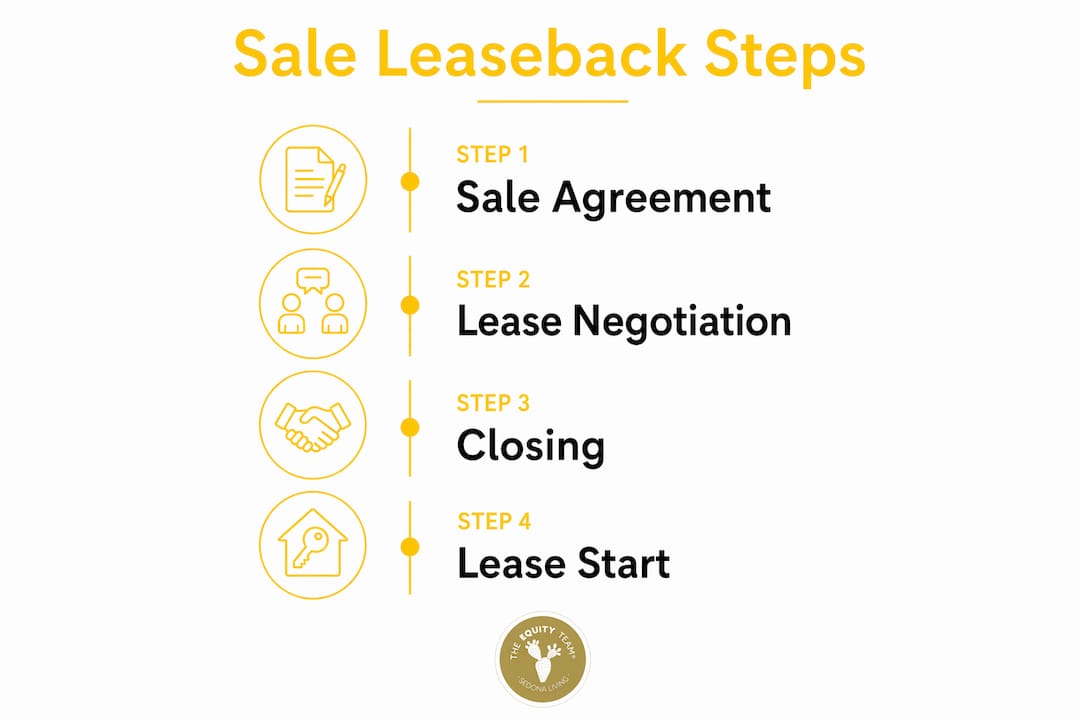
Here is how the process typically unfolds:
- List and negotiate the sale. You find a buyer willing to offer leaseback terms as part of the deal. Not every buyer will agree to this, so working with an agent who understands the Sedona market and leaseback structures is critical. Equity Team specializes in exactly this kind of transaction.
- Close the sale and receive proceeds. Escrow closes under standard Arizona real estate law. You receive the sale proceeds, your mortgage is paid off, and legal ownership transfers to the buyer. The Sedona home purchase timeline typically runs 30 to 45 days from contract to close.
- Negotiate lease terms. Before or during escrow, you and the buyer agree on rent amount, lease duration, maintenance responsibilities, and any extension or purchase options. These terms belong in a formal lease agreement, not a handshake.
- Move into tenant status. Once the sale closes, you become the tenant. Rent replaces your old mortgage payment, and the buyer becomes your landlord.
Pro Tip: Get the lease agreement reviewed by an Arizona real estate attorney before closing. Verbal agreements about rent or lease length are unenforceable once the deed transfers.
| Step | What happens |
|---|---|
| Sale agreement | Buyer agrees to leaseback terms as a condition of purchase |
| Escrow and close | Proceeds paid out, mortgage retired, title transfers |
| Lease execution | Formal lease signed with rent, duration, and responsibilities defined |
| Tenant occupancy | Seller becomes tenant, buyer becomes landlord |

What are the financial and tax implications of a Sedona sale leaseback?
This is where the quirky charm of a sale leaseback runs into some very serious IRS territory. The financial upside is real: accessing equity versus ongoing rent payments gives homeowners immediate liquidity and removes mortgage obligations. That clarity can feel liberating, especially for retirees or homeowners carrying high-interest debt.
The tax picture, though, deserves careful attention.
- True sale versus disguised financing. The IRS can reclassify a leaseback as financing if the structure looks more like a loan than a genuine sale. This changes everything: gain recognition, depreciation, and deduction treatment all shift.
- Depreciation and gain recognition. If the IRS treats the deal as a true lease, rent counts as an operating expense. If reclassified as financing, the seller continues depreciation and lease payments split into interest and principal components, creating a multi-year accounting headache.
- Equity-building features are red flags. Lease terms that include bargain purchase options or equity-sharing arrangements can trigger IRS recharacterization from sale to financing. Avoid these unless your tax counsel specifically approves them.
- Comparison to alternatives. A HELOC keeps you as the owner but adds debt. An Arizona 1031 Exchange defers capital gains on investment property sales but requires strict timelines and replacement property rules. A sale leaseback gives you clean cash but ends your ownership stake entirely.
Homeowners should treat leaseback agreements as tax documents, not just real estate contracts, to ensure IRS compliance regarding ownership and rental terms.
The bottom line: talk to a CPA who understands real estate transactions before you agree to any leaseback structure. The financial benefits are genuine, but the tax exposure is real if the paperwork is sloppy.
What local Sedona regulations affect sale leasebacks?
Sedona is a spectacular place to own property, and also a place with some genuinely specific rules that any leaseback participant needs to understand. The red rock views attract millions of visitors, which is exactly why the city takes short-term rental regulation seriously.
Sedona STR regulations require licensing, a 24/7 responsible party designation, and enforcement of noise and occupancy limits. Though Arizona state law prevents Sedona from banning short-term rentals outright, these rules shape how buyers manage rental properties after a leaseback term ends. If your buyer plans to convert the home into a vacation rental once your lease expires, they need to be ready to comply immediately.
Here is what to watch for during lease negotiations:
- STR licensing requirements. Any buyer intending to operate a short-term rental must obtain a Sedona STR license before listing the property on Airbnb or Vrbo. This process takes time, and delays can affect their investment timeline.
- 24/7 responsible party rule. Sedona requires a designated contact available around the clock for any STR property. This is a real operational commitment, not a formality.
- Occupancy and noise limits. Sedona enforces occupancy caps and noise ordinances. Buyers who underestimate these requirements face fines and license revocation.
- Lease terms and conversion timing. Your lease should clearly define what happens at expiration. If the buyer plans to convert to an STR, you want adequate notice and a defined move-out timeline.
For a deeper look at how Sedona’s STR rules have evolved, the regulatory picture has shifted meaningfully in recent years. Understanding those changes protects both sellers and buyers in any leaseback negotiation.
| Factor | Impact on leaseback |
|---|---|
| STR licensing | Buyer must obtain license before rental use begins |
| 24/7 responsible party | Buyer needs operational infrastructure in place |
| Occupancy limits | Affects buyer’s rental income projections |
| Lease expiration notice | Seller needs defined timeline for transition |
How to choose the right sale leaseback partner in Sedona
Choosing the wrong buyer for a leaseback deal is like picking the wrong hiking trail in Sedona: the scenery looks fine at first, and then you realize you are three miles from the trailhead with no water. The stakes are real.
Here is how to evaluate a leaseback buyer and structure an agreement that actually protects you:
- Check the buyer’s track record. Ask for references from previous leaseback transactions. A buyer who has done this before will have a process. A buyer who has not will be learning on your dime.
- Demand transparent lease terms upfront. Selecting a buyer with transparent terms and involving tax counsel early are the two most cited factors in avoiding leaseback pitfalls. If a buyer is vague about rent amounts or lease duration during negotiations, that vagueness will not improve after closing.
- Verify the purchase price and rent are both at fair market value. Appraisals must support both the purchase price and fair market rental to anchor tax and valuation defenses. A below-market purchase price paired with above-market rent is a classic recharacterization trigger.
- Review extension rights and purchase options carefully. A purchase option in your lease sounds appealing, but it can cause the IRS to treat the entire transaction as financing rather than a sale. Your tax counsel needs to weigh in before you agree to any buyback language.
- Get legal and tax counsel involved before signing anything. This is not optional. Proper lease terms, rent schedules, and transfer of risks must be documented to survive IRS scrutiny and avoid costly audits.
Pro Tip: Ask the buyer directly: “Have you done a sale leaseback in Arizona before?” Their answer, and how they answer it, tells you more than any contract clause.
For homeowners exploring seller financing structures alongside leaseback options, understanding how these arrangements overlap can open up additional negotiating flexibility.
What are common challenges with the sale leaseback option?
Even a well-structured leaseback can run into turbulence. Knowing the common pitfalls ahead of time is the best way to avoid them.
- Rent payment shock. Your new rent may be higher than your old mortgage payment, especially in a market like Sedona where property values are strong. Budget carefully before agreeing to lease terms.
- Maintenance and insurance confusion. Once you are a tenant, the buyer owns the property. Clarify in writing who handles repairs, landscaping, and insurance. Ambiguity here causes disputes.
- Tax document errors. Misclassifying the transaction or failing to report the sale correctly can trigger an audit. Keep every document from the sale and lease, and share them with your CPA at tax time.
- Lease expiration surprises. Some homeowners reach the end of their lease term without a clear next step. Negotiate a defined extension option or move-out timeline before you close the sale.
- Equity loss without a plan. A sale leaseback does not build equity or income appreciation after the sale. If you spend the proceeds without a reinvestment strategy, you trade a long-term asset for short-term cash. That trade can make sense, but it needs to be intentional.
Key takeaways
A Sedona home sale leaseback works best when the purchase price, rent, and lease terms are all documented at fair market value, reviewed by tax counsel, and aligned with local STR regulations before closing.
| Point | Details |
|---|---|
| Core structure | Sell your home, receive cash, and lease it back to remain as a tenant under negotiated terms. |
| Tax risk | IRS can reclassify the deal as financing if lease terms include equity-sharing or bargain purchase options. |
| Sedona STR rules | Buyers planning short-term rental use must obtain a license and designate a 24/7 responsible party immediately. |
| Partner selection | Choose buyers with leaseback experience, transparent terms, and fair market valuations for both sale and rent. |
| Common pitfall | Rent may exceed your old mortgage payment; budget and plan your equity reinvestment before signing. |
Why I think sale leasebacks are underused in Sedona
I have watched Sedona homeowners sit on enormous equity while stressing about their next move, and it always strikes me as a solvable problem. A sale leaseback is not the right tool for everyone, but for the homeowner who needs liquidity without the chaos of an immediate relocation, it is genuinely underrated.
What I have seen work well: sellers who treat the lease negotiation with the same seriousness as the sale negotiation. The buyers who offer leaseback terms are often investors with a longer game in mind, and that is fine. But you need to know what their end game is before you hand over the deed. Are they planning to convert to a vacation rental? Do they want to flip the property in two years? Those intentions should shape your lease terms.
What I have seen go sideways: sellers who agreed to above-market rent because they were so relieved to stay in place. The financial relief of unlocking equity evaporates quickly if your monthly rent is unsustainable. Run the numbers honestly before you fall in love with the idea of staying put.
Sedona’s market is strong, the red rocks are not going anywhere, and the right leaseback deal can genuinely change a homeowner’s financial picture. Just do not skip the tax counsel and do not rush the lease negotiation. The view will still be there when you get the paperwork right.
— Chad
Explore Sedona’s rental market with Equity Team

Equity Team is the first STR-specialized real estate team in Northern Arizona, and the Sedona market is our home turf. If you have unlocked equity through a sale leaseback and are wondering where it goes next, Sedona’s short-term rental market is worth a serious look. Equity Team represents clients operating in the top 10% of the rental market, which means we know which properties perform and which ones just look pretty on Instagram. Whether you are finding the right STR investment or exploring Sedona’s current rental climate, Equity Team can help you put that equity to work.
FAQ
What is a Sedona home sale leaseback option?
A sale leaseback is a transaction where you sell your home to a buyer and immediately lease it back, remaining as a tenant under agreed terms. It converts your home equity into cash without requiring you to move out right away.
How does leaseback financing differ from a HELOC?
A HELOC keeps you as the owner and adds debt against your equity. A sale leaseback transfers ownership entirely and gives you cash proceeds, replacing your mortgage with rent payments and removing the property from your balance sheet.
What are the IRS risks of a home sale leaseback?
The IRS can reclassify a sale leaseback as disguised financing if the lease includes equity-sharing or bargain purchase options. Reclassification changes how rent, depreciation, and gain recognition are reported, often creating multi-year tax corrections.
Do Sedona short-term rental rules affect my leaseback deal?
Yes. If your buyer plans to operate a short-term rental after your lease ends, they must obtain a Sedona STR license and designate a 24/7 responsible party before listing the property. These requirements should be factored into your lease expiration timeline.
Can I buy my home back after a sale leaseback?
A purchase option in your lease can allow this, but it carries IRS recharacterization risk. The IRS may treat the entire transaction as financing rather than a true sale, which changes your tax treatment significantly. Always consult a tax professional before adding buyback language to a leaseback agreement.