
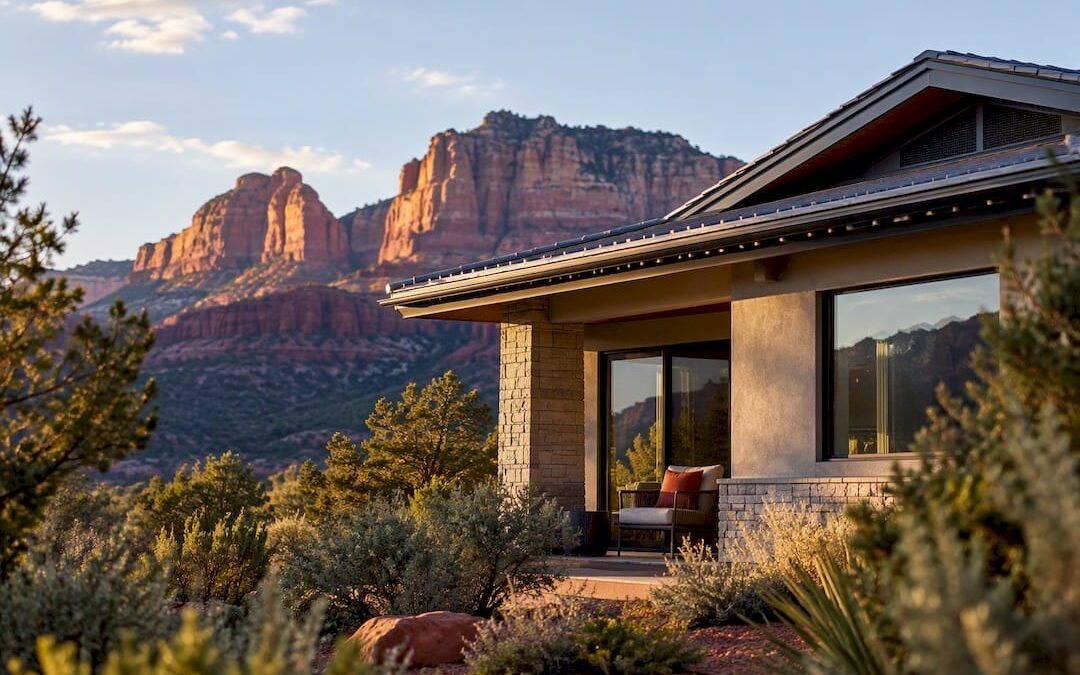
Yes, Sedona’s fire code and Wildland-Urban Interface rules commonly require sprinklers, ignition-resistant upgrades, and specific alarm supervision that Airbnb hosts must address. Sedona Fire District’s WUI classification drives strict rules for construction, and major renovations or a remote location can trigger a full sprinkler retrofit. Start by confirming which jurisdiction covers your parcel, verifying your sprinklers and alarms meet current standards, and posting your permit and emergency contact information inside the unit.
TL;DR:
- Sedona’s fire code mandates ignition-resistant construction, spark arresters, and defensible space for all short-term rental properties in WUI zones.
- Sprinkler systems are required if additions push the home’s total area past 3,600 square feet, or if major roof replacements or access issues occur.
- Permits and inspections must be completed before renovation work begins, with plans reviewed for compliance and potential upgrades if systems are outdated.
- Confirm your property’s jurisdiction, meet current standards, and document all compliance measures to avoid costly retrofits or permit denials.
- Keeping a single folder with permits, inspection records, photos, and insurance proof streamlines reviews and protects against compliance surprises.
Table of Contents
- What Does Sedona’s Fire Code Actually Require of Short-Term Rentals?
- When Do You Need a Fire Sprinkler System?
- What Happens During Permitting and Inspection?
- How Do You Get Your Rental Fire-Code Ready?
- Which Agency Actually Regulates Your Property?
- Sedona-Specific Notes on ADUs, HOAs, and Renovation Triggers
- Why This Matters Beyond Code Compliance
- How Equity Team Helps Sedona Hosts Navigate Compliance
- Sources
- FAQ
What Does Sedona’s Fire Code Actually Require of Short-Term Rentals?
Nearly every property in Sedona sits inside a Wildland-Urban Interface (WUI) zone, and that single fact shapes almost everything else in this article. The red rock canyons that make Sedona photogenic also make it flammable, and Sedona Fire District treats that risk as a baseline design constraint rather than an exception.
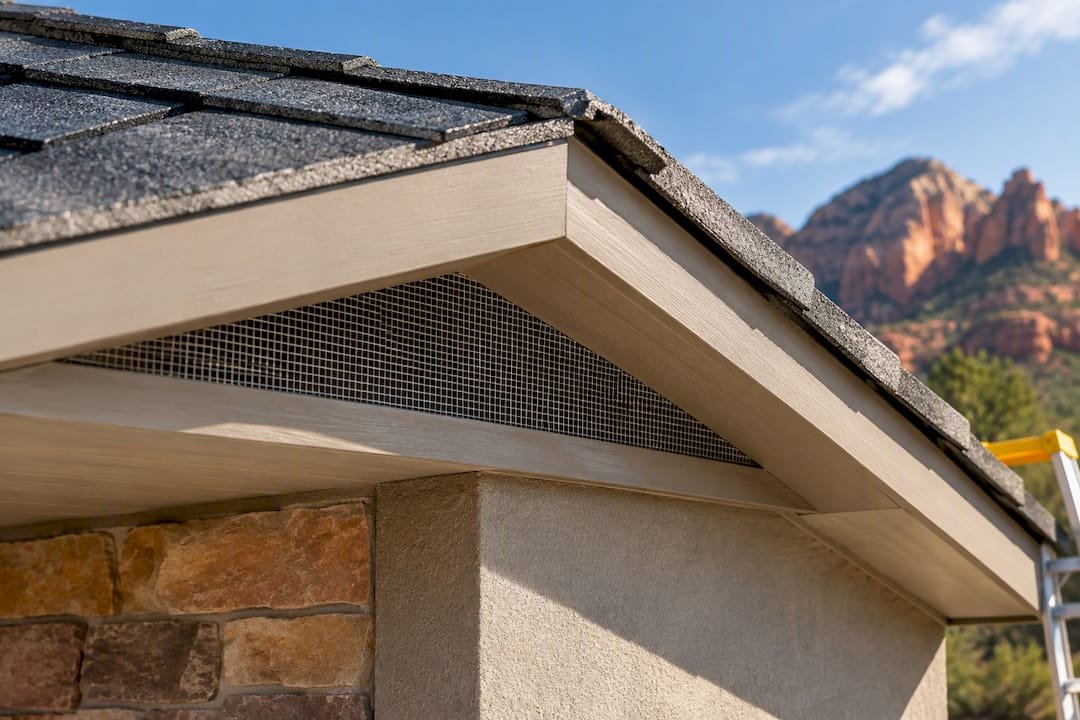
WUI classification means your rental is held to Class 1 ignition-resistant construction standards. That covers roofing materials, vent screening, exterior wall assemblies, and decking, all chosen to resist wind-blown embers rather than just direct flame. If your rental has an open eave, a wood shake roof, or unscreened attic vents, a fire district inspector will flag it during any permitted work, even if the original construction predates current rules.
Chimneys and wood stoves need spark arresters with screening openings no larger than half an inch, a small detail that trips up more properties than you’d expect. Defensible-space and spark-arrester problems are among the most common items inspectors catch, and they’re also some of the cheapest to fix.
Sedona Fire District’s WUI amendments require:
- Class 1 ignition-resistant roofing, siding, and decking materials
- Spark arresters on all chimneys and flues, with openings capped at half an inch
- Ember-resistant vent screening on attics and crawl spaces
- Defensible space clearance around the structure
Layered on top of all that is a major shift: Sedona Fire District has adopted the 2024 International Fire Code with local amendments, effective May 1, 2026. The practical consequence for hosts is alarm supervision. Any new or altered suppression system now generally needs to be electrically supervised by a listed fire alarm control unit meeting NFPA 72 monitoring standards. If your sprinkler system was installed before this update, don’t assume it still qualifies. Older residential systems frequently need a monitoring upgrade to stay compliant.
When Do You Need a Fire Sprinkler System?
Sedona doesn’t require sprinklers in every home, but the triggers are specific, and they catch a lot of well-meaning renovators off guard. CRR Policy 1319 and its companion, CRR Policy 1342, spell out exactly when a project crosses that line.
- Gross area threshold: Any addition or alteration that brings the structure’s gross floor area to 3,600 square feet or more requires an automatic sprinkler system throughout.
- Roof replacement: Replacing a significant portion of the roof structure counts as a full alteration, triggering the same sprinkler requirement.
- Distance and access triggers: Properties located beyond certain distances from a fire station, beyond acceptable hydrant distance, or with obstructed apparatus access (locked gates, low water crossings, narrow drives) can trigger sprinkler requirements independent of square footage.
Additions that significantly increase the home’s gross floor area, major roof replacements after damage, or properties located far along difficult access roads are common scenarios where Sedona hosts face unexpected sprinkler retrofit requirements. The district’s stated approach is to apply these triggers conservatively, favoring fire containment over case-by-case leniency.
What Happens During Permitting and Inspection?
Any renovation touching these triggers has to go through a formal plan review before a shovel hits the ground. Submissions typically include stamped construction drawings, sprinkler and alarm system layouts if applicable, and site plans showing access and hydrant locations. One detail that surprises first-time filers: the plans you submit become the reviewing agency’s property once accepted, not a document you keep exclusive control over.
The sequence runs in a predictable order:
- Plan review by the fire district or city building department
- Permit issuance once plans are approved
- Field inspections during construction at key milestones
- Final sign-off before the space can be occupied or listed
Skipping this sequence gets expensive fast. Contractors who start work without a permit risk a stop-work order on the spot, and Sedona Fire District can report unpermitted work to the Arizona Registrar of Contractors. If you get caught after the fact, the fix isn’t just a fine. After-the-fact permits generally cost double the standard fee, and the district can still deny or revoke a permit if the completed work doesn’t meet code, which sometimes means undoing finished construction.
How Do You Get Your Rental Fire-Code Ready?
Compliance isn’t a mystery once you know the order of operations. Here’s a sequence that keeps you off the district’s radar for the wrong reasons.
- Confirm your WUI status and access distances. Use the fire district’s WUI maps or call directly to check hydrant proximity and road-mile distance from the nearest station.
- Pull your sprinkler and alarm paperwork. If your system predates the 2024 IFC adoption, confirm whether it needs an electrical supervision upgrade to meet current monitoring rules.
- Handle the cheap fixes now. Install compliant spark arresters, clear 30 feet of defensible space around the structure, and photograph everything as proof.
- Post required materials inside the unit. Your short-term rental permit and emergency contact information need to be visibly posted, per Sedona’s municipal code.
- Call the Fire Marshal before you submit renovation plans. A five-minute conversation before drawings go in can save you from an after-the-fact permit penalty later.
Pro Tip: Keep a single folder, physical or digital, with your permits, inspection results, insurance proof, and dated photos of your spark arresters and defensible space. If a complaint or compliance review ever lands on your desk, having everything in one place turns a stressful week into a quick email.
Which Agency Actually Regulates Your Property?
Not every Sedona-area address falls under Sedona Fire District. Some parcels near the edges of town sit inside neighboring fire districts, and jurisdiction determines who reviews your plans and who shows up for enforcement.
Start with your parcel or assessor record, then cross-check it against the fire district’s own WUI maps. The City of Sedona’s short-term rental permitting pages cover the municipal side, but fire code enforcement runs through the district itself.
- Fire Marshal or Community Risk Reduction Division: primary contact for sprinkler triggers, WUI questions, and plan review
- City short-term rental permit office: handles STR permitting, posting rules, and municipal code compliance
- What to have ready: your parcel ID, any existing plan drawings, and a clear description of the work you’re proposing
For anything borderline, ask for a written interpretation rather than relying on a verbal answer. It’s the difference between a documented ruling and a conversation nobody remembers the same way six months later.
Sedona-Specific Notes on ADUs, HOAs, and Renovation Triggers
Local experience turns up patterns that generic code summaries miss. Two show up constantly with Sedona STR owners: accessory dwelling units and homeowners association overlays, both of which interact with fire code in ways that catch people off guard. If you’re weighing whether an ADU can legally operate as a rental, Equity Team’s ADU breakdown walks through how WUI triggers apply to those smaller structures, and HOA-governed properties carry their own layer covered in this HOA compliance guide.
For the documents themselves, read in this order:
- CRR Policy 1319 first, for the core sprinkler-trigger logic
- CRR Policy 1342 next, for how that logic applies specifically to additions and alterations
- The 2024 IFC adoption packet last, for the alarm supervision changes layered on top
The sequence that keeps hosts out of trouble: check jurisdiction, gather your documents, consult the Fire Marshal, then proceed with permits. Skipping straight to permits without that groundwork is how projects stall.
Why This Matters Beyond Code Compliance
Wildfire risk shapes occupancy patterns and resale value in Sedona in ways insurance underwriters and future buyers both notice. A compliance gap discovered mid-season doesn’t just risk a fine. It risks a listing suspension during your highest-revenue months. Owners who consult the Fire Marshal before renovating spend less on retrofits and walk into a resale conversation with documentation instead of question marks.
— Chad
How Equity Team Helps Sedona Hosts Navigate Compliance
A dedicated real estate team focused on short-term rental performance means fire code compliance can be an important part of conversations with buyers and sellers. It’s part of the valuation. A property with unresolved sprinkler triggers or an outdated alarm system doesn’t just cost more to fix. It changes what a buyer should be willing to pay and what a seller can realistically ask.

If you’re preparing to sell a Sedona vacation rental, our Sedona vacation rental CMA factors in renovation history and compliance status alongside comps, so you’re not blindsided by a buyer’s inspector flagging something you didn’t know was an issue. If you’re buying, we can flag WUI triggers and permit history on a property before you’re locked into a purchase contract. Bring your parcel ID and any renovation plans to a consultation, and we’ll help you map out what compliance actually costs before it becomes a surprise. Reach out through Owninaz to start that conversation.
Sources
- Sedona Fire District amendments to the 2018 IWUIC (WUI amendments)
- 5.25.050 Use regulations | Sedona City Code
FAQ
Is Airbnb Allowed in Sedona?
Yes, short-term rentals are legal in Sedona under the city’s permitting system, but operators must comply with municipal use regulations, including safety, insurance, and posting requirements. Fire code compliance sits alongside the permit itself as a condition of legal operation.
What Insurance Do Sedona Short-Term Rentals Need?
Sedona requires owners or hosting platforms to carry at least $500,000 in liability insurance for short-term rental properties. Proof must be produced within 10 calendar days if the city requests it, and wildfire-specific coverage is worth reviewing given the WUI designation covering most of Sedona.
Why Is Yellow Not Allowed in Sedona, AZ?
Sedona’s design review guidelines restrict bright or reflective exterior colors, including certain shades of yellow, to preserve the muted red rock aesthetic the city is known for. This is a City of Sedona design standard rather than a fire code rule, though exterior material choices can still intersect with WUI ignition-resistance requirements.
What Is the Secret 7 in Sedona?
There’s no verified, citable definition of a “Secret 7” tied to Sedona fire code, city code, or short-term rental regulation. Treat that phrase as local folklore rather than a documented rule, and rely on the actual code sections and fire district policies cited throughout this guide instead.
When Is a Fire Sprinkler Retrofit Required in Sedona?
A sprinkler retrofit is generally required when an addition brings a structure’s gross area to 3,600 square feet or more, when 50% or more of the roof is replaced, or when the property sits beyond acceptable hydrant distance or fire station access. Hosts planning any of these projects should confirm with the Fire Marshal before submitting plans.