
Cost segregation typically pays off for Arizona Airbnb owners who furnish a property well, add a pool or outdoor kitchen, and hold a depreciable basis above roughly $350,000. Arizona requires an add-back for federal bonus depreciation, so the state tax benefit is spread over several years even though the federal deduction occurs primarily in year one. Run a property-specific estimate and loop in a CPA before you claim anything on a return.
TL;DR:
- Cost segregation offers the most benefit for Arizona Airbnb owners with properties above $350,000 and significant outdoor or furniture investments, especially if held for three or more years.
- A defensible study requires detailed component analysis, proper cost sourcing, and alignment with IRS guidance, not just a percentage of the purchase price.
- Arizona’s partial conformance to bonus depreciation spreads state tax benefits over years, with most savings still realized at the federal level due to its 2.5% flat income tax rate.
- Owners should verify local licensing, transaction privilege tax obligations, and city-specific lodging rules before claiming depreciation or listing on platforms like Airbnb.
- A current, well-supported cost segregation study can be valuable for owners wanting to optimize tax benefits or evaluate property worth for buying, selling, or repositioning.
Table of Contents
- What cost segregation is and why short-term rentals get bigger allocations
- How an engineering-based cost segregation study works
- Arizona-specific tax and compliance implications for Airbnb owners
- Who benefits and a representative Arizona Airbnb example
- How to choose a defensible cost segregation provider
- Look-back studies and filing mechanics for existing owners
- Local expertise: Arizona STR knowledge that shapes the numbers
- Where the real risk and reward sit for Arizona hosts
- An alternative route: buying, valuing, or exiting a Sedona short-term rental
- Sources
- FAQ
What cost segregation is and why short-term rentals get bigger allocations
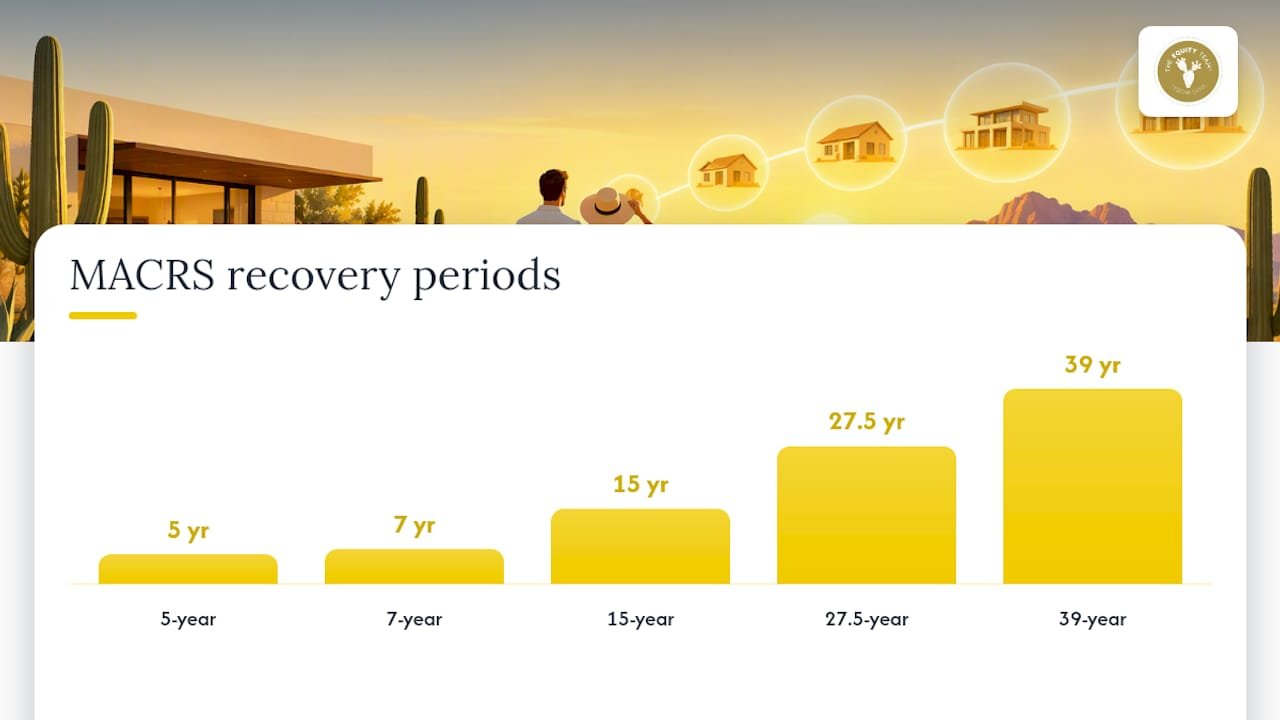
A typical rental home gets depreciated over 27.5 years, and a commercial building over 39. Cost segregation breaks that single number into pieces: some components qualify for 5-year, 7-year, or 15-year schedules instead, which front-loads deductions instead of spreading them out evenly.
Short-term rentals tend to produce bigger allocations than long-term rentals because Airbnb guests expect more stuff. A furnished home with a pool, hot tub, outdoor kitchen, and a garage full of beach chairs and mountain bikes has far more equipment and land improvements than a house rented to a single long-term tenant.
- Furniture, fixtures, and equipment (FF&E) like beds, appliances, and electronics usually depreciate over 5 or 7 years.
- Pools, outdoor kitchens, landscaping, and irrigation often qualify as 15-year land improvements.
- Guest-focused amenities, from smart locks to game rooms, add further short-life assets that a standard depreciation schedule would otherwise bury inside the building’s 27.5-year clock.
There’s also a rule that makes this reclassification useful rather than just interesting on paper. Under IRS guidance on passive activity rules, a rental where the average guest stay is seven days or less can avoid classification as a passive rental activity. Paired with material participation, that opens the door to using the resulting losses against other income, not just against future rental income.
How an engineering-based cost segregation study works
A defensible study is not a percentage pulled from thin air. It’s a documented, component-by-component analysis that holds up if the IRS ever asks questions.
Documents you’ll need to gather:
- Closing or HUD statement showing the purchase price and land allocation
- Renovation and furnishing invoices, especially for pools, decks, or outdoor kitchens
- Architectural plans or floor plans, if available
- Current photos of the interior, exterior, and any outdoor amenities
The process generally runs in four steps:
- Asset inventory: every component of the property gets cataloged, from HVAC units to patio pavers.
- Cost allocation: each component gets a cost basis using recognized construction-cost data, not a rough guess.
- MACRS classification: components get sorted into their correct 5, 7, 15, or 27.5/39-year categories.
- Report writing: the findings are compiled into a document that shows the math, not just the conclusion.
Pro Tip: Ask any provider for a sample report before you sign anything. A defensible study shows its work, component by component, with cost sources cited.
The deliverable should give your CPA a component-level depreciation table plus backup documentation tracing every cost back to a real source. A recent Forbes explainer on cost segregation notes that engineering-based methodology, aligned with the IRS Audit Techniques Guide, is what separates a defensible study from one that invites scrutiny.
Arizona-specific tax and compliance implications for Airbnb owners
Arizona does not fully conform to federal bonus depreciation. The state requires an add-back for bonus depreciation claimed under Section 168(k), which means the accelerated federal deduction gets spread out over subsequent years for state tax purposes instead of hitting all at once. Your federal Year 1 savings stay intact. The Arizona portion just arrives on a slower schedule, detailed further in this breakdown of bonus depreciation for Sedona STR investors.
Statistic Callout: Arizona’s flat state income tax rate is 2.5%, which means most of the value from accelerated depreciation still accrues at the federal level even after the state add-back.
Beyond depreciation, Airbnb hosts in Arizona have separate compliance obligations tied to the state’s transaction privilege tax rules for short-term lodging:
- Business codes matter: transient lodging generally falls under code 025, with some cities applying additional hotel classifications.
- Online lodging marketplaces like Airbnb often remit TPT on your behalf using a separate deduction code, but you remain liable if that remittance is incomplete.
- Direct bookings require you to file and remit TPT yourself, and seasonal or year-round licensing requirements differ by city.
- City-level licenses are separate from ADOR registration, and cities like Sedona, Scottsdale, and Phoenix each set their own additional lodging tax rates.
Verify your city’s specific licensing rules and confirm whether your listing needs a TPT number displayed in its advertising, since requirements vary by jurisdiction, as detailed in this Arizona Airbnb tax guide.
Who benefits and a representative Arizona Airbnb example
Cost segregation tends to make financial sense when a few conditions line up together. A purchase basis above roughly $350,000, meaningful investment in furnishings or outdoor amenities, a planned hold of three years or more, and the ability to actually use the resulting losses, either through material participation or real estate professional status, all point toward a worthwhile study.
Here’s a modeled example based on typical Arizona reclassification patterns, useful for illustration only and not a guarantee of your own results:
That 23% to 30% reclassification range shows up consistently in Arizona market examples, with Scottsdale and Phoenix properties carrying heavier allocations when they include pools, outdoor kitchens, and hardscaping.
- A quick flip within a year or two rarely justifies the study cost, since depreciation recapture on sale can offset much of the benefit.
- A low-basis property with minimal furnishing or outdoor work won’t generate enough reclassified value to matter.
- A fully passive investor with no other income to offset may see limited practical use, even with a strong study.
How to choose a defensible cost segregation provider
Not every provider produces work that survives scrutiny. The engineering method matters more than the price tag.
What a defensible provider should offer:
- An engineering-based methodology, not a flat percentage applied to your purchase price.
- Alignment with the IRS Audit Techniques Guide, the same framework examiners use to evaluate studies.
- Component-level cost citations, tracing each classification back to a real construction-cost source.
- A CPA-ready report your accountant can use directly, without translation or guesswork.
Before hiring anyone, ask to see sample pages from a completed report, which construction-cost databases they rely on, whether they support Form 3115 filings for existing properties, and whether their report comes with any kind of audit-defense guarantee.
Pro Tip: A flat-percentage allocation with no component detail is the biggest red flag in this industry. If a provider can’t show you the math, walk away.
Other warning signs include a refusal to provide sample backup documentation, no willingness to connect you with a referring CPA, and pricing that seems disconnected from the complexity of your property.
Look-back studies and filing mechanics for existing owners
If you already own the property and missed claiming accelerated depreciation in prior years, a look-back study can still capture that value.
- A look-back study analyzes the property as if the cost segregation had been done at purchase, even years later.
- IRS Form 3115, combined with the Section 481(a) adjustment, lets you claim the missed depreciation as a single catch-up deduction in the current year.
- No amended returns are required, which makes this a cleaner path than reopening old filings.
- Coordinate timing with your CPA early, since the catch-up deduction needs component-level backup just like a new study would.
Local expertise: Arizona STR knowledge that shapes the numbers
Reclassification percentages don’t happen in a vacuum. A Sedona property with red-rock views and a private pool carries a different amenity mix than a Phoenix condo near downtown, and that mix drives the study’s outcome.
That vantage point offers useful context for owners weighing whether their amenity package and occupancy pattern justify a cost segregation study.
- Occupancy and seasonality shift how much value guest-focused amenities add, detailed in this Arizona Airbnb occupancy breakdown.
- Sedona-specific property types, from red-rock view homes to creekside cabins, carry their own depreciation quirks, covered in this Sedona vacation home depreciation guide.
Where the real risk and reward sit for Arizona hosts
Cost segregation rewards owners who treat it as one piece of a bigger financial picture, not a shortcut. The Arizona add-back trips up people who expect state savings to mirror the federal number, and it doesn’t. Reviewing a rent roll or income analysis, like the approach outlined in this rent-roll analysis guide, helps confirm whether you’ll actually have income or gains to offset before you spend money on a study.
Three immediate steps: gather your closing documents and renovation invoices, request a property-specific savings estimate from a qualified provider, and schedule a conversation with your CPA before filing anything.
— Chad
An alternative route: buying, valuing, or exiting a Sedona short-term rental
If a cost segregation estimate reveals that your Sedona or Northern Arizona property carries the right basis and amenity mix, the next question often becomes what the property itself is worth and whether it’s time to buy, sell, or reposition. That’s where a specialized real estate team focused on short-term rentals in Sedona can assist.

- Buyer representation for investors seeking properties with the basis and amenities suitable for cost segregation studies.
- Sedona vacation rental CMA to understand current market value before making a move.
- Seller preparation consultation for owners preparing to list a short-term rental property.
- Sedona rental exit strategy and valuation conversation for owners weighing whether to hold, refinance, or sell.
| Situation | Service to consider |
|---|---|
| Buying an STR with strong reclassification potential | Buyer representation |
| Wondering what a Sedona rental is worth today | Sedona vacation rental CMA |
| Preparing to list a top-performing property | Seller prep consultation |
Start with a Sedona vacation rental CMA to see where your property stands.
This article is general information, not a substitute for advice from a qualified financial advisor. Consult a qualified financial professional about your own circumstances before acting on anything here.
Sources
- Transaction Privilege Tax: Short-term lodging (Arizona Department of Revenue)
- Publication 925, Passive Activity and At-Risk Rules
- Cost segregation in Arizona | Cost Seg Smart
FAQ
Where can I find a cost segregation study in Arizona?
Providers offering engineering-based studies serve Arizona property owners remotely and on-site, and your CPA can often refer one directly. Look for firms whose methodology aligns with the IRS Audit Techniques Guide and who provide component-level backup documentation.
What are the Airbnb laws in Arizona?
Arizona requires short-term rental hosts to register for transaction privilege tax and follow ADOR’s transient lodging rules, and many cities layer on their own business licensing and lodging tax requirements. Specific rules vary by city, so check both state and local requirements before listing a property, as outlined in this Arizona Airbnb compliance checklist.
What does Airbnb cost segregation involve?
It means identifying which parts of a furnished short-term rental, like furniture, appliances, pools, and outdoor kitchens, qualify for faster 5, 7, or 15-year depreciation instead of the standard 27.5-year residential schedule. Because Airbnb properties tend to carry more furnishings and amenities than a typical long-term rental, the reclassified share of the property’s value is often larger.
What is the tax loophole for Airbnb?
There isn’t a loophole, but there’s a legitimate rule worth understanding: rentals averaging seven days or less per guest stay can avoid passive activity classification under IRS guidance, which combined with material participation can allow rental losses to offset other income. That’s a specific set of conditions, not a shortcut, and it depends on meeting the participation requirements every year.