
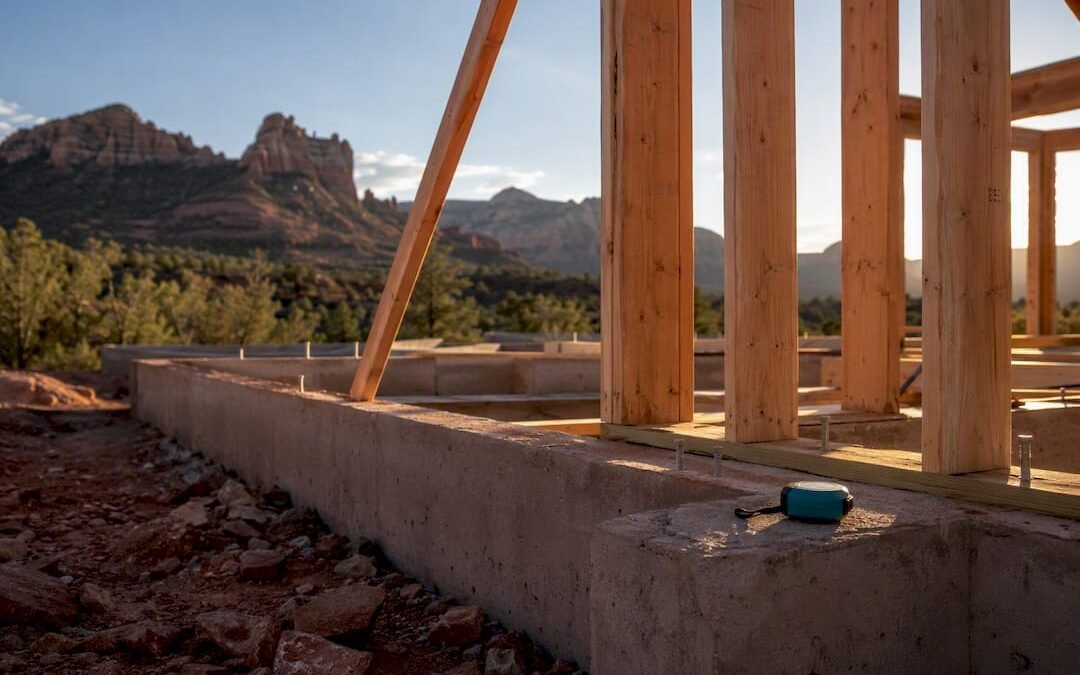
New construction in Sedona can absolutely work as a short-term rental, but only for the right buyer. If you have patience for a 14 to 22 month build, cash reserves for hillside contingencies, and the discipline to confirm permit and HOA eligibility before you sign anything, the numbers can pencil out nicely. Skip that homework and you risk owning a beautiful house you legally can’t rent.
TL;DR:
- New construction in Sedona can be profitable for Airbnb if the buyer has patience for a 14 to 22 month build and confirms permit and HOA eligibility beforehand.
- Properties with unobstructed red-rock views typically outperform average revenue figures and tend to sell faster, especially in desirable neighborhoods like Uptown or Chapel Area.
- Owners must obtain a city permit costing $210 annually per unit, a state TPT license, and ensure ADU or casita use complies with regulations, especially after September 2024.
- Sedona’s new builds are usually custom or small planned communities, with hillside foundation work and utilities often exceeding initial budgets, and supply limited by national forest boundaries.
- Successful underwriting requires focusing on local micro-market comps, stress-testing occupancy and ADR, and factoring in permit delays and higher expenses to avoid overestimating revenue potential.
Table of Contents
- Is New Construction Sedona Airbnb Investing Worth It Right Now?
- What Permits and Taxes Apply to a New Sedona Airbnb?
- How Does New Construction in Sedona Actually Work?
- How Do You Underwrite a New-Construction Airbnb in Sedona?
- What Should Buyers Verify Before Closing on a New-Build STR?
- What Do Sellers Need to Package for STR Investor Buyers?
- Chad’s Perspective: What We See in Sedona’s New-Build Market
- How Equity Team Helps You Buy or Sell a New-Construction Sedona Airbnb
- Where to Verify Permits, Market Data, and HOA Rules
- Sources
- FAQ
Is New Construction Sedona Airbnb Investing Worth It Right Now?
The market is telling an interesting story right now, and it’s not the one most listings suggest; comparing such dynamics with Smoky Mountain Cabin Rentals, Chalet Rentals & More can provide useful high-level insights into destination and neighborhood selection considerations. Sedona has 4,339 active short-term rental listings generating an average annual revenue of $47.6K, with an average daily rate of $371 and 53% occupancy. That works out to a RevPAR of roughly $197. Translation: fewer bookings, but each one pays better. That’s a market rewarding quality over quantity.
Seasonality drives this hard. Spring and fall shoulder seasons, when the red rocks are at their most photogenic and the heat hasn’t arrived, tend to carry the year. Summer sags. Winter is a mixed bag depending on snow and holiday travel. Underwrite around the swings, not the annual average, or you’ll be caught short when a slow February collides with a mortgage payment.
Here’s what actually moves the needle for new builds specifically:
- Neighborhood matters more than the city-wide average. Uptown, Chapel Area, the Village of Oak Creek, and West Sedona each have distinct guest profiles, price points, and occupancy patterns.
- Red-rock views change the math substantially. Homes with unobstructed views can outperform on annual revenue and typically sell faster, according to the Sedona real estate investment guide from Builds and Buys.
- A citywide average is a starting point, not a forecast. New construction almost always sits in a specific micro-market with its own comp set.
Statistic to remember: the citywide $47.6K average revenue figure is a blend of decades-old cabins and brand-new builds. A new-construction property in a strong view corridor can land well above that number, or well below it if the location is wrong.
What Permits and Taxes Apply to a New Sedona Airbnb?
Every advertised unit in Sedona needs its own short-term rental permit under City Code Chapter 5.25, and the city doesn’t treat “the house” as one unit if there’s a detached casita involved. Main house plus casita means two permits, two fees, two compliance obligations. The permit runs $210 a year and must be renewed annually through the city’s MUNIRevs system.
Before you list anything, you also need a state Transaction Privilege Tax (TPT) license. Between city, county, and state tax lines, the combined tax burden on gross rental revenue in Sedona is significant and should be factored into financial planning. That’s a real number to build into your pro forma, not an afterthought.
Enforcement has tightened. Sedona officials updated the rules to require annual renewals, ban special-events advertising for STRs, and lean on a complaint hotline tied to noise and safety issues. A pattern of complaints can lead to permit denial or revocation, which is a brutal outcome for a buyer who just closed on new construction.

The ADU rule deserves its own callout: any accessory dwelling unit that received its certificate of occupancy on or after September 14, 2024, cannot be used as a short-term rental unless the primary residence on the same lot is owner-occupied. If your investment plan depends on renting both the main house and a casita as two separate income streams, verify the CO date before you get attached to the floor plan.
Pro Tip: Pull the property’s permit history and CO dates yourself from city records before you rely on anything a builder or seller tells you verbally. A verbal assurance doesn’t hold up when the complaint hotline gets a call.
- City STR permit required per unit, $210 annual fee, renewed yearly
- State TPT license required before you can legally advertise or rent
- Combined tax lines often approach 20% of gross revenue
- Post-September 2024 ADUs need an owner-occupied primary residence to qualify as STRs
- HOA CC&Rs can override city approval entirely, so check both
How Does New Construction in Sedona Actually Work?
There’s no production tract builder pumping out subdivisions here. Sedona new construction means custom builds on individual lots or small planned communities, and there are only a couple of those active at any given time, currently Hillside Vista Estates and Sky Ridge Estates. That scarcity is part of the appeal and part of the headache.
Build timelines commonly take over a year from groundbreaking to final certificate of occupancy, with hillside lots presenting additional challenges not typically encountered on flat lots. Foundation work on sloped terrain, longer utility runs, and architectural review requirements tied to HOA design standards all add real dollars to a budget that looked clean on paper. Negotiate finish allowances and change-order language into your builder contract up front, because site-related surprises on view lots are closer to the rule than the exception.
The upside to all this friction: Sedona is boxed in by national forest and a state park, which permanently caps how much new inventory can ever exist. That structural scarcity is a big part of why view-lot properties hold a long-term premium over comparable inventory elsewhere in the Verde Valley.
- No large-scale tract development; expect custom or small planned communities only
- 14 to 22 month typical build timeline from groundbreaking to CO
- Hillside foundation and utility work routinely exceeds flat-lot budgets
- National forest boundaries make new supply permanently finite
How Do You Underwrite a New-Construction Airbnb in Sedona?
Skip the citywide average and build your own comp set. The smarter approach, and one Sedona market data itself points to, starts with a single address and works outward.
- Narrow to the exact neighborhood. Filter comps to your specific micro-market, not “Sedona” broadly.
- Match bedroom count, price tier, and amenities. A three-bedroom view home doesn’t compare to a two-bedroom in-town condo.
- Apply the local baseline, then adjust. Start with the citywide ADR near $371 and occupancy near 53%, then weight up or down based on your comp set’s actual performance.
- Stress-test occupancy down 10% and 25%. If the deal only works at peak occupancy, it’s not a deal, it’s a bet.
- Stress-test ADR down 5% and 15%. Rate compression during a soft season should never break your debt coverage.
- Layer in carry costs and permit delay scenarios. A three-month permitting delay on a construction loan can quietly erase a year of projected profit.
Don’t forget the expense side of the ledger: property tax, the $210 STR permit, TPT remittance, higher-than-standard insurance for short-term rental use, and a contingency line for builder finish allowances that always seem to run over. A detailed valuation walkthrough can help you sanity-check your own math against real comparable sales.
The number that should anchor every model: RevPAR near $197 citywide. If your projected new-construction property can’t beat that once you’ve weighted for view quality and neighborhood, you’re paying a new-construction premium for average performance.
What Should Buyers Verify Before Closing on a New-Build STR?
Get everything in writing. That’s the whole philosophy, and it applies to every item on this list.
- Confirm the property qualifies for a City of Sedona STR permit and TPT license, ideally with written confirmation from the city, not just a verbal nod from the listing agent.
- Request the HOA’s CC&Rs directly and get a written statement on short-term rental allowances. Never assume the previous owner’s rental history means the HOA formally permits it.
- Verify ADU or casita status against the September 14, 2024 cutoff, and confirm whether each structure carries its own valid permit.
- Ask the builder for a septic or utility capacity report, a finish allowance breakdown for guest-ready furnishings, and contract language with real penalties for delays that push back your first bookable date.
Pro Tip: A friendly HOA board today doesn’t bind the next one. Get the STR allowance in writing and, where possible, recorded, not just relayed secondhand.
What Do Sellers Need to Package for STR Investor Buyers?
Investor buyers move faster and pay more when uncertainty disappears before they ever tour the property. A Sedona vacation rental CMA paired with a one-address revenue projection does more to justify your asking price than any amount of staging.
- Provide documented permit eligibility and, if applicable, written HOA confirmation that short-term rental use is allowed.
- Disclose any builder warranties, service agreements, or known site issues rather than letting a buyer’s inspector find them first.
- Highlight verified view corridors, trail proximity, guest parking, and clean guest access paths since these are the features STR buyers actually pay a premium for.
Chad’s Perspective: What We See in Sedona’s New-Build Market
Here’s the thing most buyers miss: the house is rarely the risk. The paperwork is. As Sedona’s short-term rental specialized team, Equity Team has walked clients through new-construction deals where the finish quality was flawless and the STR use was blocked entirely by an HOA nobody read closely enough. If you’re weighing a new build right now, request a one-address comp before you write an offer, not after.
— Chad
How Equity Team Helps You Buy or Sell a New-Construction Sedona Airbnb
Sedona’s new-construction market moves fast, and permit and HOA eligibility can make or break a deal that looks perfect on paper. This real estate group in Sedona focuses specifically on short-term rental investors, so recommendations are filtered through what actually rents, not just what shows well.

Whether you’re buying, Equity Team’s buyer representation walks you through permit checks, HOA verification, and neighborhood-level comps before you’re under contract. Whether you’re selling, a Sedona vacation rental CMA packages your revenue history and documentation the way investor buyers actually evaluate deals. Not sure whether to hold, sell, or refinance your current rental? A rental exit strategy conversation lays out your real options with current market data behind it. If you’re weighing a new build, start with a one-address comp: request your Sedona vacation rental CMA and know your numbers before you write an offer.
Where to Verify Permits, Market Data, and HOA Rules
- City of Sedona Land Development Code, Chapter 5.25 for permit and TPT requirements
- AirDNA’s Sedona market overview for current ADR, occupancy, and revenue data
- Sedona short-term rental law summary for HOA and per-unit permit context
Sources
- Sedona, AZ Short-Term Rental Data (2026) | AirDNA
- Sedona Land Development Code / Short-term rental rules (City Code Chapter 5.25)
- Sedona, AZ Short-Term Rental Laws (2026): Airbnb & Permits — ShortRentalRules
- Sedona Arizona Real Estate Market Report — August 2026
FAQ
Can You Airbnb a New-Construction Home in Sedona?
Yes, if the property gets a City of Sedona STR permit, the owner holds a state TPT license, and the HOA’s CC&Rs don’t restrict short-term rentals.
How Much Does a Sedona Short-Term Rental Permit Cost?
The city permit fee is $210 annually per advertised unit, renewed each year, plus a required state TPT license.
Can I Rent Out a Casita or ADU as an Airbnb in Sedona?
Only if it received its certificate of occupancy before September 14, 2024, or if the primary residence on the same lot is owner-occupied; each unit also needs its own permit.
What Is the Average Airbnb Revenue in Sedona?
Sedona’s citywide average is $47.6K annually with a 53% occupancy rate and $371 ADR, though new-construction homes in strong view locations often outperform that average.
How Long Does It Take to Build a New Home in Sedona?
Most new construction takes 14 to 22 months from groundbreaking to certificate of occupancy, with hillside and view lots often running toward the longer end due to foundation and utility work.
Does Equity Team Help With New-Construction Airbnb Purchases in Sedona?
Yes, Equity Team represents both buyers and sellers of Sedona short-term rental properties, including new construction, and offers a Sedona vacation rental CMA to model expected revenue before you commit.