

Short answer: plan on nothing moving automatically. The Arizona tax license does not transfer to a new owner, the Sedona permit should be treated the same way, and future bookings only carry over through a carefully timed handoff. A buyer starts their own paperwork, and a seller who plans the handoff keeps guests happy and the closing clean. We are the Sedona agents who specialize in short-term rentals, so this is the checklist we run through with owners before a rental goes under contract.
TL;DR
- Arizona transaction privilege tax (TPT) licenses are issued to a specific person and cannot be passed to a buyer. The buyer applies for a new one, and the seller notifies the state of the sale.
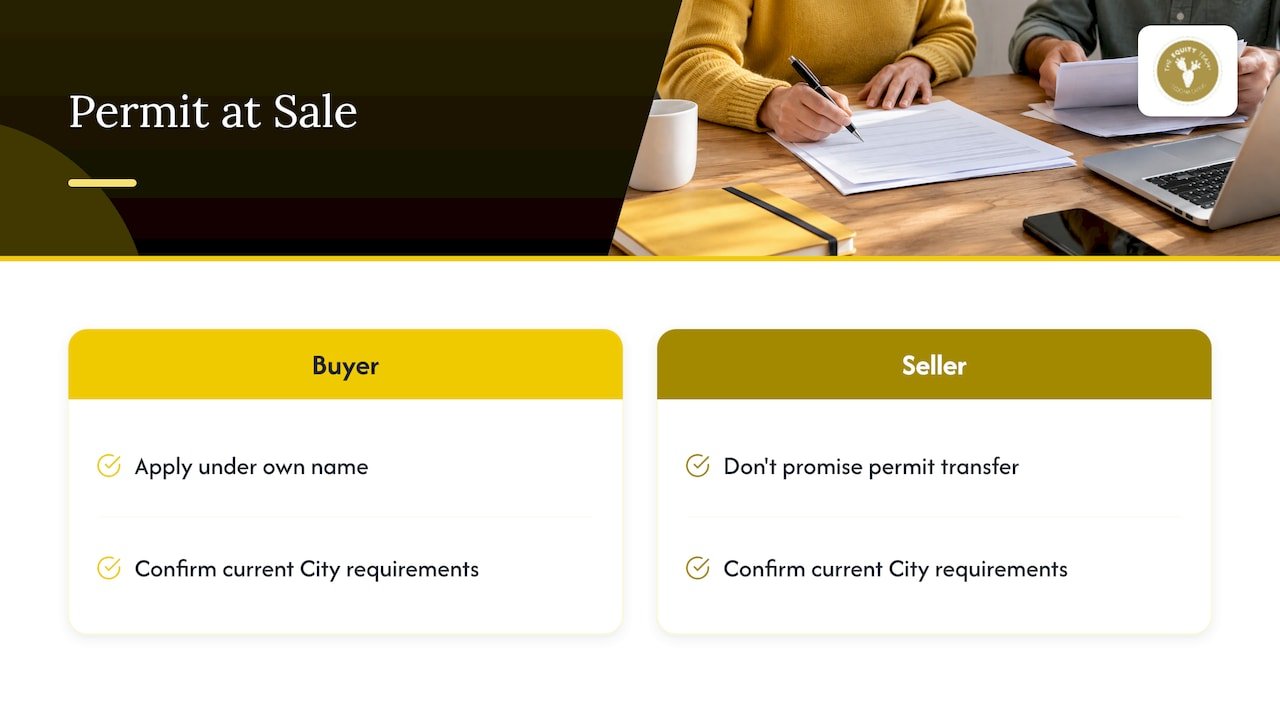
- Treat the Sedona STR permit as the buyer’s own to obtain, not a perk of the deed. Budget time for that before the buyer plans to take guests.
- Existing reservations can be honored through a co-host handoff, but the account, payouts and liability stay with the seller until the details are written into the contract.
- Start the handoff roughly 30 to 45 days before closing, and settle payouts, deposits and cancellations in the purchase agreement.
- An occupied rental sells best with a clear plan. Our team can build one with you before you list.
Table of Contents
- Why a Sedona rental does not simply “transfer”
- The Arizona tax license: the part with a clear answer
- The Sedona STR permit: plan on starting fresh
- What happens to future bookings
- A handoff timeline for an occupied rental
- What the purchase contract should cover
- Should the seller keep taking bookings before listing?
- Selling an occupied Sedona rental with us
- FAQ
- Sources
Why a Sedona rental does not simply “transfer”
A listing with a full calendar and a pile of five-star reviews looks like a business changing hands. Legally, it is two things: a house, and a set of licenses and accounts that belong to the person running the rental. The house goes to the buyer at closing. The licenses and the account history generally stay behind with the seller.
That is not a flaw in the deal. It is just how the pieces are built, and it is why sellers who plan ahead get cleaner closings and buyers who plan ahead get open for business faster. Sedona is a funny little place on this front: the red rocks are timeless, but the paperwork has a way of changing every few years.
The Arizona tax license: the part with a clear answer
Any short-term rental host in Arizona collects and pays tax on lodging, and that runs through a TPT license. The state’s own business guide says that a change in ownership requires a new TPT license because the licenses are not transferable. The Arizona Department of Revenue’s Publication 622 tells the new owner to use the Arizona Joint Tax Application for a new license after an ownership change.
The administrative rules say the same thing in more detail. Under the Department’s rulemaking, effective October 1, 2019, a TPT license is issued to a specific person and is not transferred to a new owner when a business is sold. The new owner has to apply for a new license before engaging in business. The seller, in turn, has to notify the Department in writing of the sale date and surrender the license.
What that means in practice:
- Buyers: file the Joint Tax Application early enough that the new license is in hand before the first guest arrives under your ownership.
- Sellers: put the written notice and license surrender on your closing to-do list. It is easy to forget, and it ends your reporting responsibility cleanly.
The Sedona STR permit: plan on starting fresh
Sedona runs its own local permit system on top of the state tax license. Our Sedona Airbnb permit guide explains the one-permit-per-unit, renew-every-year structure. Our occupancy permit and inspection guide covers what the city expects to see at the property, and the fire code guide covers the supervised alarm requirement.
The working assumption we give every buyer and seller is that the permit is tied to the owner running the rental, not to the address as a prize that comes with the keys. A buyer should plan to apply under their own name, and a seller should not promise a buyer a “permitted rental” as if the permit were a fixture like the water heater. Before anyone relies on a specific rule, confirm the current requirements and fees with the City of Sedona directly, because the city has changed its short-term rental rules before. We keep a running summary of Sedona’s short-term rental restriction changes for exactly that reason.
Location matters just as much as paperwork. Whether a property can operate as a rental at all depends on its zoning and, in many neighborhoods, its HOA. If you are weighing a purchase, read how Sedona’s STR zoning laws work for investors and what a vacation rental zone is before you fall in love with the hot tub.
What happens to future bookings
This is where most sellers get nervous. Guests booked for March do not care who owns the house. They care that the door code works.
Platform accounts are personal. There is no “sell my listing” button. What platforms do offer is co-hosting: an Airbnb listing can have up to 10 co-hosts, and when the primary host designation later changes, existing reservations stay in place. According to an operator guide on transferring existing Airbnb bookings, the guest then sees the new primary host’s name, and the new host handles check-ins and messages.
Two details from that same guide belong in every purchase agreement:
- Payouts do not follow automatically. Money keeps going to the original account’s bank until someone updates it. Decide in writing who receives what, and how forwarded funds are settled.
- It is not a legal transfer. The account on file is still the seller’s, so the seller remains on the hook for the listing terms until existing bookings clear. The contract should say how that liability is handled.
One more rule that sounds obvious and gets ignored: never hand over your login. Sharing account passwords violates the platform’s terms of service, and it can put the whole account at risk. The co-host route exists so nobody has to.
A handoff timeline for an occupied rental
One turnkey-sale walkthrough lays out a sequence that matches how we like to see these deals run. Treat the day counts as a practical rhythm, not a legal requirement.
| When | What happens |
|---|---|
| 30 to 45 days before closing | Seller adds the buyer as a full-access co-host |
| 15 to 30 days out | Buyer’s permissions increase and the buyer starts handling guest messages |
| 7 to 14 days out | Each confirmed guest is messaged through the platform to confirm the stay is honored |
| Closing day | Primary host designation moves to the buyer; reservations stay as booked |
A few things make this timeline work in Sedona:
- Open with the permit and tax question. The buyer’s own TPT license should be in place so they are not collecting guest payments without one.
- Keep every message on the platform. It protects both sides and keeps a record.
- Walk the property together. Alarms, occupancy postings and inspection items should be sorted before the buyer takes on the guests.
- Do not relist too fast. If the buyer plans a new listing at the same address, ask whether the old listing should be fully deactivated first, so the platform does not see a duplicate.
What the purchase contract should cover
The contract is where all of the above becomes enforceable. We are agents, not attorneys, so have a real estate attorney review the final language. These are the topics we make sure are on the table in an occupied-rental sale:
- Which bookings are honored. A list of future reservations with dates, guest names and amounts paid.
- Deposits and prepaid stays. Who holds the money, who refunds a cancellation, and who owns the revenue for a stay that straddles closing day.
- Payout routing. The date the buyer updates the bank details, and what happens to any money that lands in the seller’s account in the meantime. A hosting consultant warns that skipping this makes for an uncomfortable conversation within the first couple of weeks after closing.
- Cancellation responsibility. If a guest cancels after closing, who absorbs the platform’s penalty or refund?
- Permits and licenses. The seller’s TPT surrender and the buyer’s new application, with a clear statement that none of it is being conveyed as part of the sale.
- Personal property. Furniture, linens and smart-lock equipment either convey or they do not, in writing.
- Reviews and listing content. Photos and descriptions a seller wants to leave for the buyer should be addressed too.
Sedona buyers are often paying for performance, so they also deserve a fair look at the numbers. Our piece on benchmarking Sedona Airbnb income at resale shows how we frame occupancy and revenue when pricing a rental.
Should the seller keep taking bookings before listing?
Usually yes, and it often helps. A calendar full of future guests shows demand. But every booking past the expected closing date becomes a promise someone has to keep. That is why we like to line up the sale timeline and the booking calendar before the sign goes in the yard. Block dates you cannot honor, and leave open the ones a buyer can take on gracefully.
If you are still deciding whether to sell at all, our rental exit strategy conversation is a good place to start. It is built for owners who want to know what the property is worth as an operating rental and when to bring it to market.
Our take
We hear the same thing from rental owners again and again: “I thought the permit came with the house.” It does not, and the sooner everyone knows that, the better the deal goes. The buyer’s job is to get licensed on their own timeline. The seller’s job is to give them a calendar worth inheriting and a handoff that does not wobble.
Because we work only with short-term rental investors in Sedona, we plan the deal backward from the guests. We map the reservations, the payout date, the license steps and the closing date on one page, so no one is surprised in week two. A sale of an occupied rental is not harder than a normal sale. It just has more moving parts, and a team that lives in those parts every day keeps them moving in the same direction.
Chad
Selling an occupied Sedona rental with us
If you own a Sedona vacation rental and are thinking about selling, start with our Sedona vacation rental CMA and seller prep consultation. It looks at your property as the rental it is, not as a generic house, so the pricing conversation and the booking calendar line up from the start.

Buying instead? Our buyer representation is built around finding a Sedona rental that can perform, and getting you through licensing and handoff without losing a booking season.
FAQ
Does my Arizona TPT license transfer when I sell?
No. Arizona’s rules provide that the license is issued to a specific person and does not pass to a new owner. The buyer applies for a new license, and the seller notifies the Department of Revenue in writing of the sale date and surrenders their own.
Can I transfer my Sedona STR permit to the buyer?
Plan on the buyer applying for their own permit rather than inheriting yours. Confirm the current requirements and fees with the City of Sedona before you set a closing date, and see our Sedona permit guide for how the system is structured.
Can I sell my Sedona rental with guests already booked?
Yes. A co-host handoff lets the buyer take over guest communication before closing, and existing reservations stay in place when the primary host changes. The contract should spell out payouts, deposits and who handles cancellations.
Do the Airbnb payouts go to the new owner automatically?
No. Payouts continue to the original account’s bank until the details are updated. Put the update date and the settlement of any forwarded funds in the purchase agreement.
Sources
- Arizona Department of Revenue, Publication 622: Business Basics
- Arizona Department of Revenue, Notice of Exempt Rulemaking, Title 15, Chapter 5
- Transfer Airbnb Existing Bookings: 2026 Operator Guide
- How to Sell a Turnkey Airbnb Without Killing the Reservations