
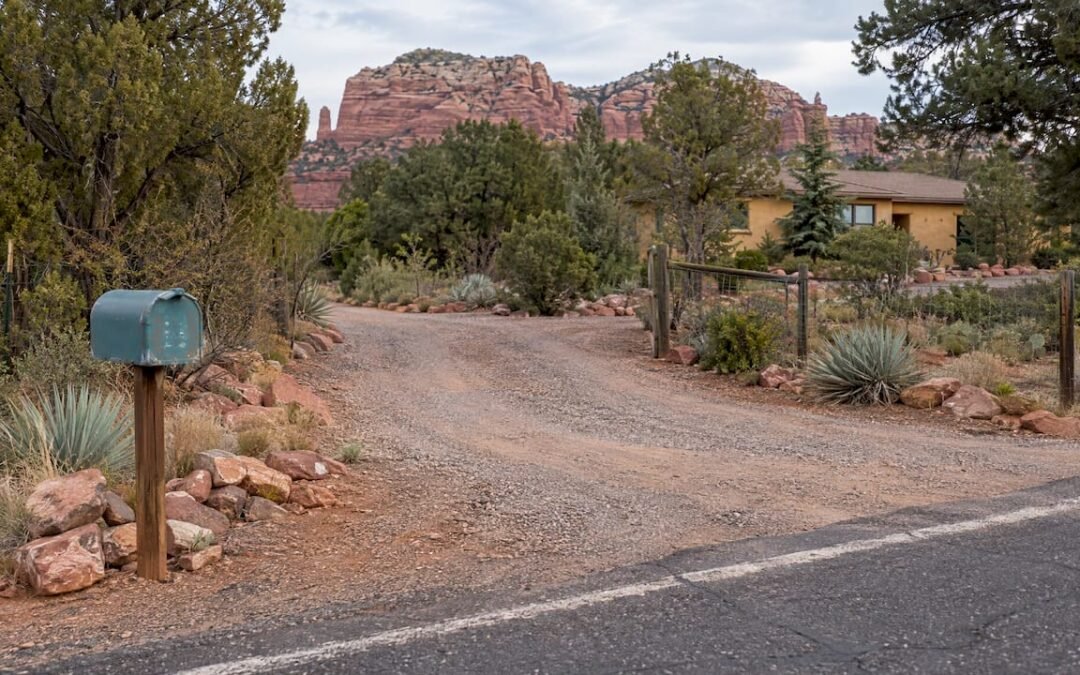
A Sedona red rock view can make a buyer forget to ask one very boring question: who owns the dirt between the front door and the public road? A private road agreement answers it. It is a written deal among the owners who share a private road, and it says who maintains the road, who pays and how decisions get made. For a short-term rental, where guests in rental cars arrive after dark and after a storm, that paper matters as much as the hot tub. The Equity Team works only on Sedona short-term rental purchases and sales, so this is a document we read before a contract is signed, not after.
TL;DR
- A private road agreement is a recorded or written arrangement that spells out upkeep, cost-sharing and decisions for a road no government maintains.
- Two things matter for a purchase: a legal right to cross the land to a public road, and a durable plan to keep the road passable.
- Arizona’s standard purchase contracts build in deadlines for the seller’s road documents and the title commitment, so the review window is short.
- A missing or messy agreement can stall a loan, delay a closing and unsettle a short-term rental business plan.
- Sellers who gather the road paperwork before listing remove one of the most common mid-escrow surprises.
Table of Contents
- What a private road agreement actually is
- Why short-term rental buyers should care more than most
- How a buyer confirms legal access
- Why lenders care about the road
- When the agreement is missing, vague or disputed
- A worked example
- For sellers: get ahead of it
- Perspective
- Working with the Equity Team on a road-served property
- FAQ
- Sources
What a private road agreement actually is
Picture a lane that climbs off a county road toward four or five homes with views worth bragging about. No city crew grades it, and no county truck plows it. The owners do, or somebody has to. A private road agreement is the document that says how.
Typically it covers three things:
- Maintenance duties: grading, drainage, gravel or paving, and clearing after storms.
- Cost-sharing: whether costs split evenly per lot, by use, or some other way, and how a neighbor who skips the bill is handled.
- Decision-making: who can call for repairs, how much owners must agree on, and how a gate, a sign or an upgrade gets approved.
It is related to, but not the same as, an easement. An easement is the legal right to cross someone else’s land. The agreement is the practical rulebook for keeping that crossing usable. A property can have one without the other, and that gap is where trouble starts.
Why short-term rental buyers should care more than most
A homeowner who lives on a bumpy lane can shrug at it. A rental owner cannot. Guests judge the stay from the minute the GPS says “turn here,” and a washed-out lane becomes a cancelled booking, a refund and a review that lingers.
There is also a legal side. A booking should never send guests over a road the owner has no right to use. That makes the question of recorded access a revenue question, not a technicality. Add the city’s rules on top, and the picture gets fuller.
Sedona’s Land Development Code says in Section 1.4.E that it does not revoke private easements or covenants, yet where the code is stricter than a private agreement, the code governs. The same section says the city is not obliged to enforce private agreements unless it is a party and chooses to. Put plainly: if neighbors disagree about a road deal, City Hall will not usually referee. The owners, and their documents, carry the weight.
How a buyer confirms legal access
Start with the facts, not the driveway’s appearance. A road that has always been used is not the same as a road the owner has a right to use.
Read the title commitment, all of it
A title commitment is the title company’s preview of what will be insured and what will not. Schedule B lists exceptions, which can include easements, encumbrances and liens. The Sedona buyer advisory tells buyers to receive and review every document listed there, and to put questions to the title or escrow officer, legal counsel or a surveyor. A road agreement, a recorded access easement or a reference to maintenance obligations often hides in that list.
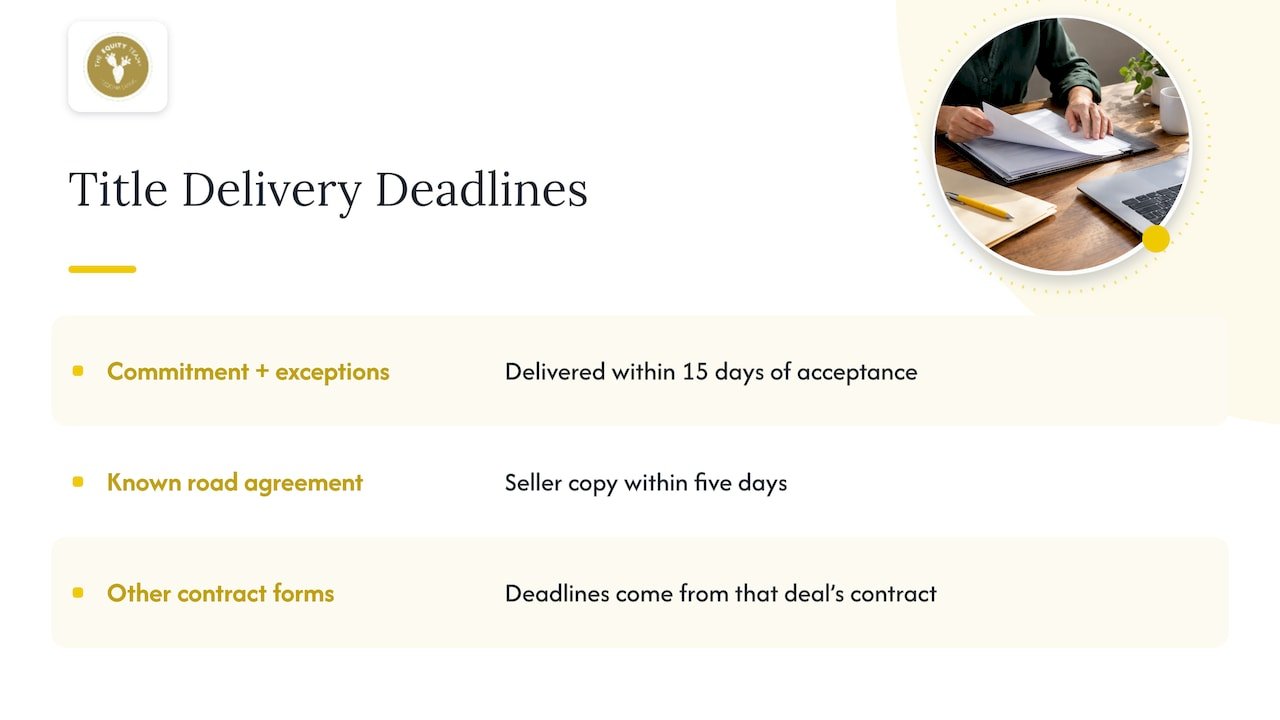
Under the Arizona Association of Realtors’ vacant land purchase contract (February 2026 form), the escrow company delivers the title commitment with complete copies of exception documents within 15 days after contract acceptance, and the seller gives the buyer a copy of any known road maintenance agreement within five days. Those are the contract’s clocks for that form. Homes use a different form, so the deadlines on a particular deal come from its own contract. Either way, the habit is the same: calendar the delivery dates and read the documents the day they arrive.
Look for “permanent legal access”
The Arizona Department of Real Estate’s property buyer’s checklist notes that a Disclosure Report provides information on water supply and permanent legal access. It also says that when a subdivider cannot produce a Public Report for a parcel under 160 acres in a split of more than five parcels, the subdivision is likely illegal. Rural and hillside parcels around the Verde Valley are where this tends to come up, and it is worth asking about whenever a lot looks like it was carved from something larger.
A short checklist for the review
- Is the road recorded? Find the recorded easement or plat that gives the parcel a path to a public road.
- Is there a maintenance agreement? If so, is it recorded, signed by all the owners, and current?
- Who pays, and how much? Look for dues, assessments, reserve funds and any unpaid balances.
- Who decides? Check voting thresholds, gate rules and whether short-term rental use is addressed.
- Who plows and grades? A lane with a contractor on retainer is a different animal from a lane with a handshake.
- What do the CC&Rs say? Covenants may add rules on rentals that sit beside the road terms.
Our short-term rental due diligence checklist walks through the broader list, and the guide to Sedona property disclosure requirements explains what sellers must put on the table.
Why lenders care about the road
Financing is where a missing agreement stops being abstract. A rural Arizona lender’s explainer describes two questions underwriting asks: does the owner hold a recorded legal right to cross land between the property and a public road, and is there a durable arrangement that keeps the road passable? The same page says most conventional loan guidelines want a recorded road maintenance agreement when a private road serves the property, and that a missing one usually stalls a loan while owners gather signatures, draft and record the document.
That can take real time, and neighbors do not always sign on the buyer’s schedule. For a buyer with a purchase contract running, the practical lesson is to ask for the road documents at the very start of the deal and to tell the lender about the private road early. Some alternatives, such as a recorded declaration or a road district that covers maintenance, may satisfy a guideline, and a different loan product is sometimes the answer. Those calls belong to the lender and the title officer, and the sooner they see the file, the more options remain.
When the agreement is missing, vague or disputed
Three situations come up again and again.
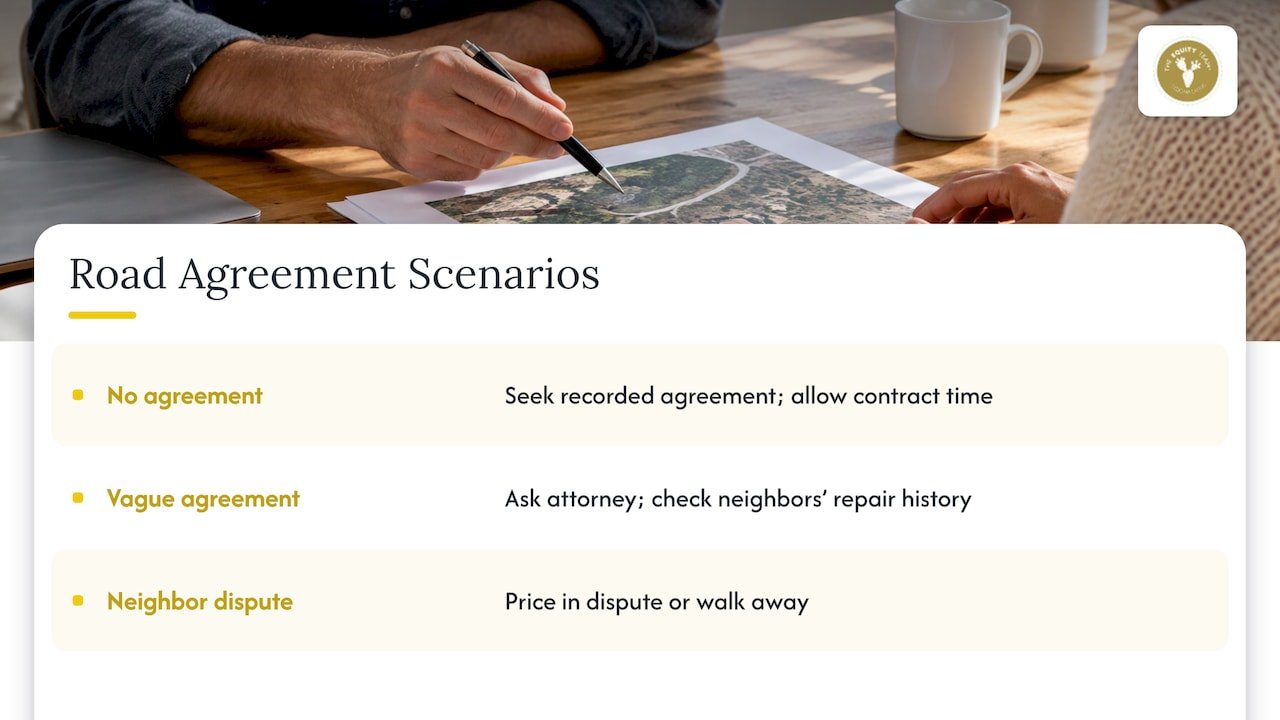
No agreement at all. The owners have been getting by on goodwill. A buyer can ask the seller to help organize a written, recorded agreement before closing, or can negotiate time in the contract to do so. Each neighbor’s signature is needed, so earlier is better.
An agreement exists but is vague. It may say “owners shall share costs” with no formula, no vote rule and no process for emergencies. A real estate attorney can say whether it is workable. A buyer can also ask neighbors how things have gone in practice: who handled the last big repair, and was it smooth?
Neighbors are arguing. An active dispute over road dues is a red flag worth pricing in or walking away from. Since the city generally steps back from private disputes, resolution runs through the owners, their documents and, if it comes to it, attorneys.
In each case, the contract’s inspection and due diligence period is the buyer’s friend. Our explainer on investment property contingencies shows how to keep an exit open while the road questions get answered.
A worked example
Say a buyer is eyeing a four-bedroom Sedona home with a hot tub, a view of Cathedral Rock and a quarter mile of private lane. The numbers on the rental projection look great. Here is how the road review might go.
- The title commitment arrives. Schedule B lists a recorded access easement and a road maintenance agreement from years back.
- The agreement splits costs among six lots, but the contractor named in it no longer operates, and nobody has updated the dues.
- A call to the title officer confirms the documents are recorded. The lender asks for the agreement and sees it is signed by the owners of record.
- The buyer asks the seller for the last two years of road repair invoices, learns that one washout cost the owners together, and builds that into the operating budget.
- The buyer plans a guest arrival note that spells out the lane, gate code and where to turn, so the rental runs smoothly from day one.
No drama, no cancelled escrow. The paper was read, the costs were counted and the rental plan fit the road. That is the whole trick.
For sellers: get ahead of it
A seller who knows the home sits on a private road can make a buyer’s life easier, and that tends to help a sale. Before listing:
- Pull the recorded road agreement and easement, and confirm they match what the neighbors actually do.
- Gather recent road invoices and the current dues status.
- Note any gate, shared-driveway or turnaround arrangements.
- Answer disclosure questions candidly. Our guide to Sedona home sale title issues shows how small paperwork gaps become big escrow delays.
Under the Arizona purchase contract form cited above, a seller gives the buyer any known road maintenance agreement within five days of acceptance. Having it in hand on day one beats scrambling on day four. For rental owners planning to sell, our rental exit strategy conversation is a good place to line up the paperwork alongside the numbers, and the steps in preparing a Sedona rental for sale cover the rest of the pre-listing list.
Perspective
Chasing views is the fun part of Sedona. Reading the road paperwork is the part that protects the investment. We built our team around short-term rental purchases and sales in Sedona, so we look at a property the way a rental operator does: how do guests get there, who keeps the road open, and could the paperwork surprise a lender?
That is why we pull the title commitment details early, ask for the road documents the moment they exist, and talk through what they mean for the booking calendar and the closing timeline. A road that is well documented and well kept is quietly one of the best amenities a rental can have.
For sellers, the same thinking works in reverse. A clean, organized file lets the property’s performance shine and keeps the buyer’s attention on the good stuff.
Chad
Working with the Equity Team on a road-served property
The Equity Team represents buyers and sellers of Sedona short-term rentals and high-performing homes. For buyers, that means a representation process built around rental performance and the due diligence a private road calls for. For sellers, we offer a Sedona vacation rental CMA and a seller prep consultation, which is a natural moment to sort the road paperwork before a listing goes live.
If a property is on a private lane, or a listing is about to be, start at the vacation rental seller page, or reach us through owninaz.com.

Buyers who want to see the sequence from offer to keys can also read our Sedona home purchase timeline, which shows where the road review fits.
FAQ
Does a private road agreement have to be recorded?
Lenders look for a recorded agreement when a private road serves a property, according to an Arizona rural-financing explainer. Recording also puts future owners on notice of the terms. A title officer or real estate attorney can confirm what is recorded against a specific parcel.
Will the City of Sedona enforce a private road agreement?
Generally not. The Sedona Land Development Code says the city is not obligated to enforce private easements or agreements unless it is a party and chooses to. Where the code is stricter than a private agreement, the code controls.
How soon will a buyer see the road documents?
It depends on the contract. The February 2026 Arizona Association of Realtors vacant land form calls for a known road maintenance agreement from the seller within five days of acceptance and the title commitment with exception documents within 15 days. Check the dates in the actual contract and mark them on a calendar.
Can a missing agreement delay a loan?
Yes. A rural Arizona lender’s explainer says a missing agreement usually stalls a loan while owners gather signatures, draft and record one. Raising the road question at the start of escrow gives the lender and title officer time to find a path.
Who should review the documents?
The Sedona buyer advisory points buyers to the title or escrow officer, legal counsel or a surveyor with questions about exception documents. We add the rental lens: how the road terms affect guest access and operating costs.
Sources
- Arizona Department of Real Estate: Property Buyer’s Checklist
- Sedona Buyer Advisory
- Sedona Land Development Code, Section 1.4.E
- Arizona Association of Realtors Vacant Land Purchase Contract, February 2026
- Private Roads and Easements in Rural Arizona Financing