

Sedona tourism in 2026 looks steady and a little spicier than last year: hotel revenue and rates are climbing, short-term rental occupancy is up, spring and fall still pack the town, and about 200 new hotel rooms are on the way. Red rocks, it turns out, are not going out of style. For short-term rental owners, buyers and sellers, the real story is in the details: which months pay, which numbers to trust, and what a single wildfire summer can do to a calendar.
Below is a plain-English tour of the evidence, with the sources linked so you can check our homework.
TL;DR
- Sedona’s lodging market has stabilized after the post-pandemic roller coaster, and early-2026 figures were up year over year.
- Spring (March to May) and fall (September to November) remain the headline seasons, with winter and summer quieter and more affordable for guests.
- Short-term rental averages hide huge spreads between properties, so a neighborhood-level comparison beats any town-wide number.
- New hotel rooms are coming, which makes a property’s design, location and pricing strategy matter even more.
- A wildfire summer showed how fast a closed highway can ripple through local revenue.
Table of Contents
- The big picture: a market that found its footing
- The hotel numbers
- Short-term rental demand: the averages and why they wiggle
- Seasons: when Sedona is packed and when it naps
- Events: the reasons people book
- The wildfire lesson
- What is coming: about 200 new hotel rooms
- Reading the trends beyond Sedona
- What the trends mean for owners, buyers and sellers
- Our perspective
- Thinking of buying or selling a Sedona rental?
- FAQ
- Sources
The big picture: a market that found its footing
After years of pandemic-era whiplash, Sedona’s lodging market has calmed down. A March 2026 analysis from the hospitality consultancy HVS says the market stabilized after post-pandemic volatility, with early-2026 revenue per available room improving over the prior year according to local operators and CoStar data.
HVS also lists who is showing up: regional drive-market travelers, national leisure visitors, international guests, and people chasing outdoor recreation, wellness, arts and shopping. That is a wonderfully mixed crowd. Some come for a sunrise hike, some for a crystal shop, and some, apparently, just to stand near a vortex and see how they feel.
The same HVS piece offers a useful reality check: several regional destinations saw visitation drop roughly 5% to 10% in 2025. Sedona’s pricing power held up better than the dip might suggest, which is part of why investors keep circling.
The hotel numbers
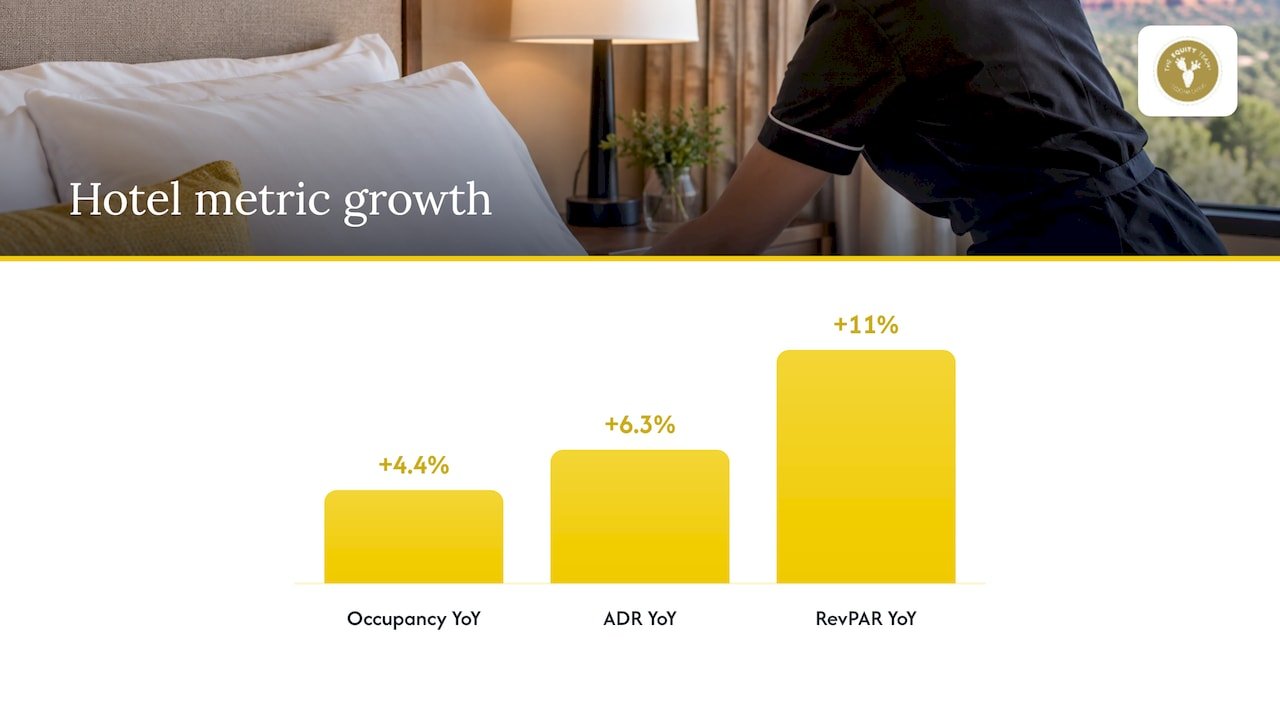
Hotels are the easiest place to take the town’s temperature, because the reporting is regular. A September 2026 report on Arizona and Nevada travel markets, citing January 2026 data, put Sedona’s hotel revenue at $11.53 million, up 7.7% year over year. The same report listed:
| January 2026 hotel metric | Figure | Change vs. last year |
|---|---|---|
| Occupancy | 57.1% | up 4.4% |
| Average daily rate (ADR) | $295 | up 6.3% |
| Revenue per available room (RevPAR) | $168 | up 11% |
The visitor profile in that report is just as telling. January visitors stayed an average of 2.1 days, 81% of visits were overnight, more than a third were repeat visitors, and Arizona residents made up 52.9% of the month’s visitors.
Translation: Sedona is a short-hop, repeat-visit town. People drive up from Phoenix and Tucson, fall in love, and come back. That is good news for any owner whose home is easy to book for a long weekend.
One January data point is not a year, of course. It is a snapshot of the slowest part of the calendar, which makes the growth in it all the more interesting.
Short-term rental demand: the averages and why they wiggle
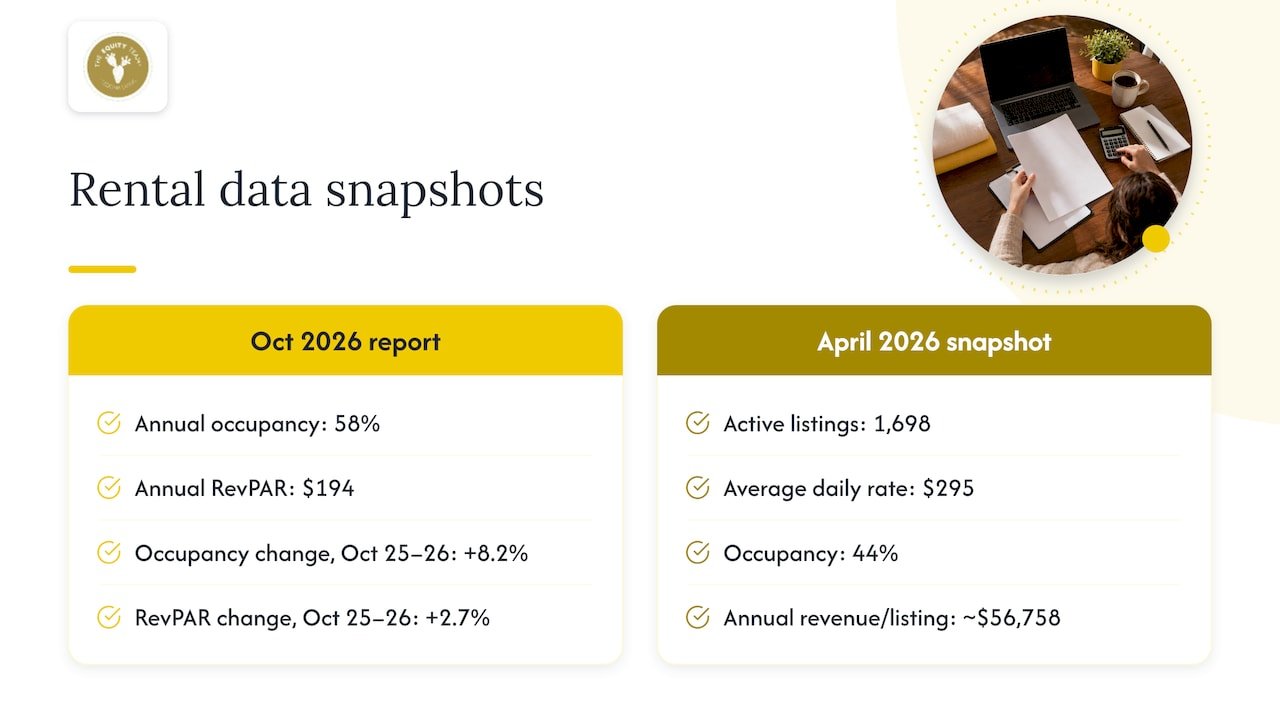
On the vacation rental side, a short-term rental analytics firm reported 58% average annual occupancy and $194 annual RevPAR for Sedona, with occupancy up 8.2% and RevPAR up 2.7% from October 2025 to October 2026. Growing occupancy with slower rate growth often means more guests are finding a bed at a price they like.
Another rental data snapshot from April 2026 estimated 1,698 active listings, a $295 average daily rate, 44% occupancy and about $56,758 in annual revenue per listing, using trailing twelve months of data. Notice that its occupancy figure differs from the 58% above. Different data sets count different listings and different periods, which is exactly why a smart buyer never leans on one number.
Both sources say the same thing about averages: they hide wide variation. The first recommends neighborhood-level metrics, filters and property-specific comparisons, and treats its market score as a starting point rather than an investment decision. That is sound advice, and it is the reason we build every valuation around comparable properties instead of town-wide headlines. If you want the full occupancy breakdown, our Sedona STR occupancy data analysis goes deeper, and the Sedona Airbnb market trends investor guide covers the broader picture.
Seasons: when Sedona is packed and when it naps
Sedona has a rhythm, and it is not subtle.
Spring and fall are the stars. U.S. News Travel names March through May as the best overall time to visit, with September through November another favorable window for outdoor activities. It also notes that room rates run high in those seasons, while winter can bring cheaper rooms.
Summer is the quiet one. Arizona’s Family reported in May 2026 that Sedona sees fewer visitors and lower business revenue in summer than in its busier months, though the upside is lighter traffic and a calmer visit. Think of it as the town catching its breath between the spring rush and the fall rush.
The Airbnb calendar agrees, mostly. An analytics roundup of Airbnb stays over the 12 months to October 2026 counted 86,215 stays, with March the busiest month (11.5% of stays) and August the quietest (6.2%).
The April rental snapshot adds a twist worth knowing: average monthly revenue of $5,883 in July versus $3,176 in January, a gap of roughly $2,700. In other words, the quietest guest month is not necessarily the weakest revenue month, because rates and the mix of guests shift through the year. Seasonality is real, but it is not a simple on-off switch, and that is where pricing strategy earns its keep. Our Sedona peak rental season guide maps it out month by month.
Events: the reasons people book
Sedona does not need much help drawing a crowd, but its fall festivals certainly give the calendar some sparkle. A local lodge’s events listing lists the October Yoga Festival, the Arts Festival, the Plein Air Festival, Wings & Wheels and Fest of Fall, plus recurring First Friday gallery openings. Visit Sedona describes the Sedona Arts Festival as a two-day event with 100 juried artists, live music and food.
These events tend to repeat each autumn, so the practical move for owners is to check the official events calendar for the current year’s dates and plan minimum stays and pricing around them. Festival weekends and spring break weeks are where a well-run rental tends to stretch its legs.
The wildfire lesson
Not every trend is charming. The Pocket Fire burned more than 27,000 acres in summer 2026, closed State Route 89A for nearly a month, and hit businesses that rely on summer visitors. It was reported fully contained on July 30, although some trails and recreation sites stayed closed afterward.
For owners, the lesson is practical rather than gloomy: Sedona’s single most important road can change a month’s bookings quickly. Flexible cancellation language, clear guest communication and a booking mix that is not entirely dependent on one season all help. A summer already known as the quiet season simply has less cushion when something goes sideways.
What is coming: about 200 new hotel rooms
Supply is moving, too. An October 2026 presentation to the local lodging council said about 200 hotel rooms are coming online: 36 at Ambiente Creekside, 70 at Senoa Resort and 100 at The Darling, with more rooms discussed.
More rooms mean more choice for guests, and that tends to reward the homes that offer what a hotel room cannot: space, privacy, a view worth framing, a hot tub under a ridiculous number of stars. Properties that are merely fine will feel the competition first. Our guide to Sedona vacation rental amenity must-haves lays out what guests pay extra for, and why Sedona attracts high-end guests in 2026 explains who they are.
Reading the trends beyond Sedona
Tourism-driven property markets everywhere face the same questions: how much of the demand is durable, and how much depends on one season or one type of traveler? A look at tourism trends and property markets in another famous holiday destination shows how international buyers weigh the same factors Sedona buyers do. Sedona’s own twist is the drive-market loyalty and the repeat visitors noted above.
On the operating side, owners who want less reliance on booking platforms can read about capturing bookings with a direct website, an idea that pairs well with a market full of repeat guests. Our own vacation rental revenue management playbook covers the pricing side.
What the trends mean for owners, buyers and sellers
If you own a rental. The market’s direction is encouraging, but your result depends on your property, not the town average. Compare your calendar and rates with true neighbors, plan for the summer lull, and decide early how you will handle peak weekends. Rental analytics firms themselves advise accounting for seasonal demand, property size and amenities, regulatory requirements and property-specific cash flow, and verifying current rules with local authorities. Short-term rental rules can change, so confirm them with the town before you buy, list or change how you operate.
If you are buying. Spring and fall demand supports strong peak pricing, but a good purchase is one that works across the whole year. Study monthly revenue, not just annual, and look at what the property offers that new hotel rooms cannot. Our guide to finding the right short-term rental investment walks through the steps, and the Sedona home purchase timeline shows what to expect once you have picked one.
If you are selling. A market with rising occupancy and rates is a market buyers are watching. The way to capture it is a valuation that reflects how your specific home performs, with its own bookings, season and amenities. Our Sedona Airbnb valuation guide shows how the numbers get crunched, and why Sedona sells to out-of-state buyers in 2026 explains who is likely to be reading your listing.
Our perspective
Every year someone asks whether Sedona tourism has peaked. Every year the red rocks carry on being red, and the visitors carry on arriving. What changes is the gap between homes that earn well and homes that merely exist.
We are a team of agents in Sedona focused on short-term rental investment, and we were the first agents in Northern Arizona to specialize in it. We represent clients who operate rentals in the top 10% of the market, and what we see in the data is a market that rewards specifics: the right neighborhood, the right amenities, the right pricing through the quiet months.
That is why we lean on comparable properties and a proper comparative market analysis instead of a town-wide average. Town-wide numbers are fun at parties. A property-level analysis is what you want when you are signing a contract or setting a list price.
Whether you are buying your top-performing property or selling for top dollar, our advice is the same: know your numbers, know your season, and let someone who lives and breathes Sedona STRs walk you through it.
Chad
Thinking of buying or selling a Sedona rental?
If these trends have you doing mental math, we can turn it into real numbers. We offer buyer and seller representation, a Sedona vacation rental CMA and a seller prep consultation, all built around short-term rental performance. Start with our vacation rental CMA and seller prep page, or if you are weighing an exit, our rental exit strategy and valuation conversation is a good first stop.

Buyers can also explore how we work on our main site, and see our luxury rental investing guide for why high occupancy still needs local comparables.
FAQ
When is the best time to visit Sedona?
U.S. News Travel points to March through May as the best overall window, with September through November also great for outdoor activities. Those seasons come with higher room rates. Winter can offer cheaper rooms, and summer brings fewer visitors and lighter traffic.
Is Sedona tourism growing in 2026?
Early-2026 indicators point up. January hotel revenue rose 7.7% year over year, and one analytics firm reported short-term rental occupancy up 8.2% between October 2025 and October 2026. A single month or metric is not the whole story, so look at several sources.
What is the busiest month for Sedona short-term rentals?
One analysis of Airbnb stays over the 12 months to October 2026 found March the busiest month, with 11.5% of stays, and August the quietest at 6.2%. Revenue patterns can differ from stay counts, so check monthly revenue for your own property type.
Will new hotels hurt Sedona vacation rentals?
About 200 hotel rooms are slated to come online, which adds choice for guests. Homes that offer space, privacy, views and strong amenities give travelers something a hotel room does not. A property-level analysis shows where a specific home stands.
Sources
- HVS: Sedona’s Lodging Market: Resilience and Pricing Power
- Arizona and Nevada Travel Markets Diverge
- Sedona, AZ Short-Term Rental Occupancy (2026)
- Sedona, AZ Airbnb Market Data, Statistics, and Occupancy
- U.S. News Travel: Best Times to Visit Sedona
- Arizona’s Family: Tourism season kicks off in the High Country
- Sedona Tourism Statistics: 86,215 Airbnb Stays
- What’s happening in Sedona
- Sedona Arts Festival, Visit Sedona Events Calendar
- Pocket Fire fully contained over a month after scorching 27K acres
- October 2026 Lodging Council slide deck
- Trends Mallorca Immobilien 2026
- Cómo captar reservas con tu web propia en 2026