

A financed home purchase in Arizona typically takes 30 to 45 days from contract acceptance to close of escrow, while cash deals often wrap up in just 7 to 21 days. The gap between those two numbers comes down to three things: how fast your lender clears the loan, whether the title comes back clean, and how efficiently the inspection and BINSR process moves. Sedona’s short-term rental buyers, take note: your timeline hinges on the same rules, with a few extra details.
TL;DR:
- Financed escrow in Arizona typically takes 30 to 45 days, but delays mainly happen from appraisal issues, title defects, or slow lender approvals.
- Missing contract deadlines, especially the 10-day inspection window, can lead to waivers of important rights or delays if not carefully managed.
- Speeding up closing requires prompt delivery of earnest money, fast inspection scheduling, and immediate review of the Closing Disclosure; delays often stem from lien or appraisal problems.
- Cash deals in smaller markets and investor transactions can close in under two weeks when title is clear, skipping lender-related steps entirely.
- Remote closings and STR-specific issues in Sedona demand strict wire verification and early scheduling to prevent common delays.
Table of Contents
- What Is the Arizona Escrow Timeline, Step by Step?
- What Contract Deadlines Actually Control the Schedule?
- What Causes Escrow Delays, and How Do You Dodge Them?
- Who Handles What: Escrow Officer vs. Title Company
- A Practical Checklist for Buyers and Sellers
- Sedona STR and Remote Closing Notes From Equity Team
- A Local Agent’s Take on Realistic Timelines
- How Equity Team Keeps Sedona Closings on Track
- Sources
- FAQ
What Is the Arizona Escrow Timeline, Step by Step?
Escrow in Arizona doesn’t move in one smooth line. It moves in bursts, tied to contract deadlines, lender milestones, and paperwork that has to land in the right order. Here’s how a typical financed transaction breaks down.
- Days 0 to 3: The contract gets accepted, escrow opens with a title company or escrow office, and the escrow officer begins the title search. Earnest money is deposited, usually within three business days of acceptance under the AAR contract’s standard terms.
- Days 1 to 10: The buyer schedules inspections and, if problems turn up, drafts and submits a Buyer’s Inspection Notice and Seller’s Response (BINSR). The seller then has to respond within the 10-day inspection window Arizona’s standard contract defaults to.
- Days 10 to 25: The appraisal happens, the lender moves through underwriting, and the title company issues its title commitment. If the property sits in an HOA, this is also when HOA documents get reviewed and any red flags surface.
- Days 25 to 35: The lender issues a clear to close, and the Closing Disclosure goes out to the buyer. Federal rules require it land in the buyer’s hands at least three business days before signing, a detail that trips up more closings than almost anything else.
- Days 30 to 45 and beyond: Final signing happens, funds get wired, the deed records at the county, and escrow officially closes.
Cash buyers and investors skip most of the middle stretch. Without a lender in the mix, deals can close in under two weeks when title comes back clean, which is common in smaller Arizona markets and in investor cash deals where speed matters more than financing terms.
What Contract Deadlines Actually Control the Schedule?
The AAR purchase contract runs on a set of built-in deadlines, and missing one of them can waive rights you didn’t mean to give up. Here’s what typically applies:
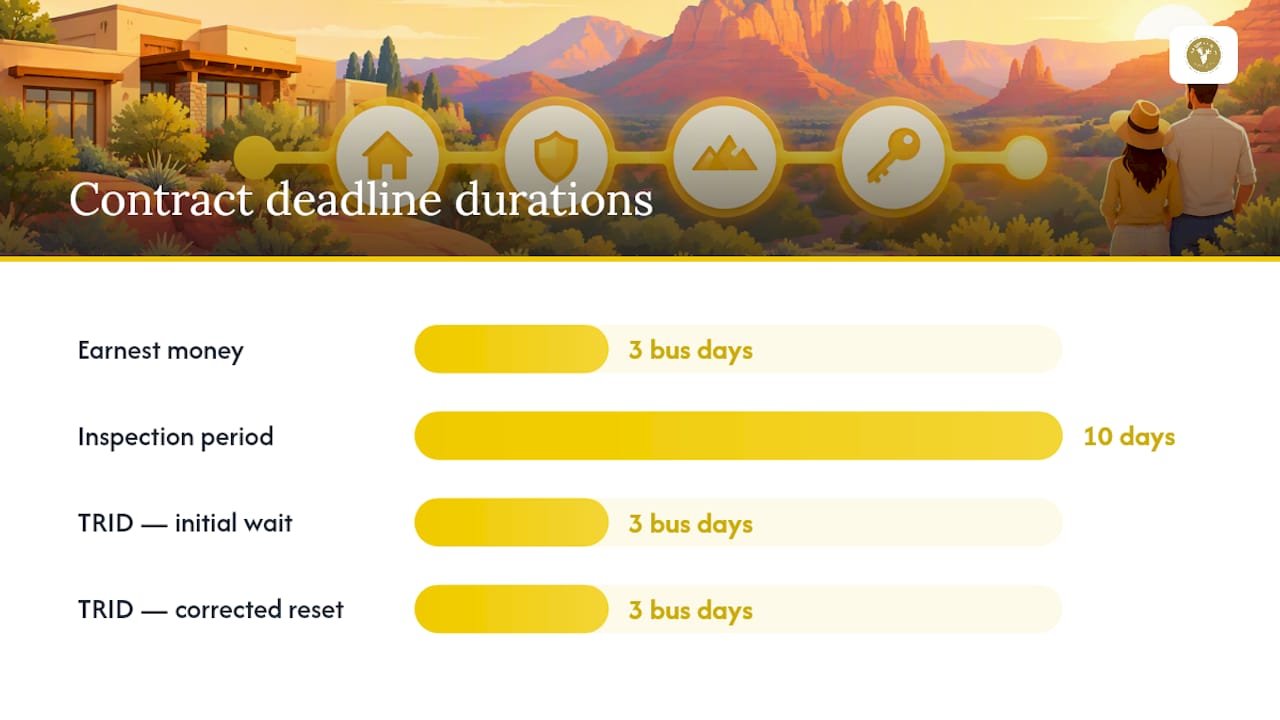
- Earnest money: Due within 3 business days of contract acceptance, per the standard AAR terms.
- Seller’s Property Disclosure Statement (SPDS): Also delivered on a short, negotiable window near the start of escrow.
- Inspection period: 10 days by default, though buyers and sellers can negotiate a different number in the contract.
- BINSR submission: Must happen inside that same 10 day window, since the notice and the seller’s response both live inside it.
- HOA document review: A separate, time-limited period where buyers can cancel if the HOA’s paperwork reveals financial or legal problems with the community.
Pro Tip: Treat the 10 day inspection period as five days, not ten. Practitioners who wait until day 8 or 9 to submit a BINSR often run out of time to negotiate repairs before the clock runs out entirely.
On the lender side, TRID rules require the Closing Disclosure to reach the buyer at least three business days before signing. If the lender issues a corrected disclosure that changes the APR or the loan product itself, that resets the clock and adds another three-day wait.
What Causes Escrow Delays, and How Do You Dodge Them?
Most delays trace back to a small handful of repeat offenders.
- Low appraisals force a renegotiation or a buyer scrambling to cover the gap in cash, both of which eat days.
- Title defects, like an old lien or a missing document in the chain of title, need curative work that can stretch a clean 30-day timeline into 45 or more.
- Wire fraud attempts target the final funding stage, when scammers impersonate escrow officers and redirect wire instructions.
- Scheduling gaps, like waiting too long to book an inspector or ignoring lender document requests, quietly stack delays that no one notices until closing day is suddenly at risk.
Pro Tip: Never trust wiring instructions sent by email alone. Call your escrow officer directly, using a number you already had on file, before sending a single dollar.
Who Handles What: Escrow Officer vs. Title Company
Arizona runs on an escrow-based closing system rather than attorney-led closings, which means the escrow officer functions as the transaction’s air traffic controller. Knowing who does what saves you from calling the wrong person at the wrong time.
- Escrow officer: Holds and disburses funds, prepares the settlement statement, and coordinates signatures and recording with the county.
- Title company: Runs the title search, issues the title commitment and title insurance policy, and flags curative issues like liens or ownership gaps.
- Lender: Handles underwriting, appraisal coordination, and the Closing Disclosure.
- Agent: Manages deadlines, negotiations, and keeps everyone talking to each other on schedule.
Signing itself can happen in person or through remote online notarization, depending on the title company’s setup, and recording happens once the county receives the signed deed, which is what actually marks close of escrow.
A Practical Checklist for Buyers and Sellers
- Buyers: Deliver earnest money immediately, schedule inspections within the first 48 to 72 hours, submit loan documents fast, review the Closing Disclosure the moment it lands, and confirm insurance and wiring details ahead of signing.
- Sellers: Deliver the SPDS promptly, respond to the BINSR within the negotiated window, gather payoff and lien information early, and plan possession logistics before the final walkthrough.
- Both parties: Use verified wiring instructions confirmed by phone, bring valid ID to signing, and ask about remote signing options if travel or scheduling is tight.
Sedona STR and Remote Closing Notes From Equity Team
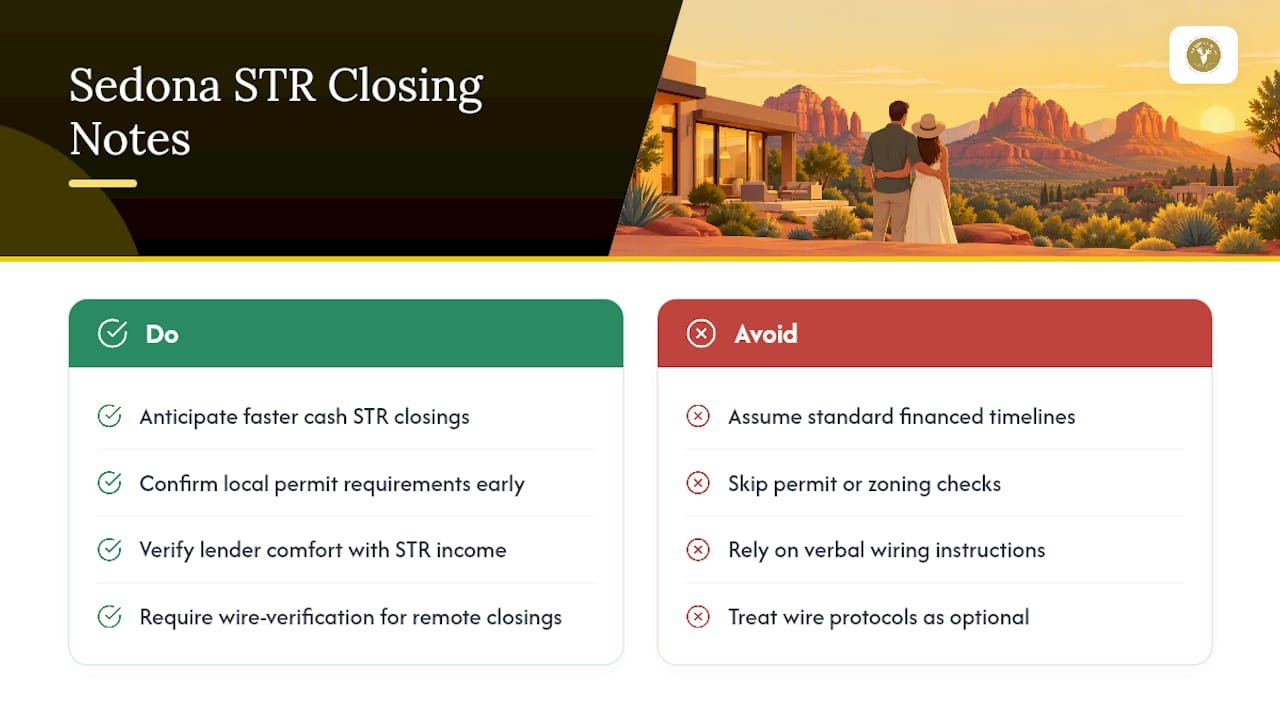
Short-term rental deals in Sedona often move faster than typical financed purchases, especially when investors pay cash and lenders aren’t part of the equation. Watch for local permit questions and lender comfort with STR income when financing is involved. Remote closings are common here, which makes wire verification protocols non-negotiable, not optional. Our Sedona-specific purchase timeline breaks down how these deals typically unfold in practice.
A Local Agent’s Take on Realistic Timelines
Book your inspector the day your offer gets accepted, not the day after. That single habit prevents more delays than any other advice in this guide. Confirm wiring instructions by phone every single time, and know that your escrow officer, not your agent, handles the final recording call. Seasonal contractor availability around Sedona can also push inspection scheduling out a few days during peak tourist months.
— Chad
How Equity Team Keeps Sedona Closings on Track
There are specialized local agents offering hands-on timeline management built specifically around STR permitting quirks and remote-closing wire protections that generalist agents often miss.
Working with us looks like this: we track every deadline from inspection to Closing Disclosure, liaise directly with your escrow officer so nothing slips through a communication gap, and flag STR-specific appraisal or permit issues before they become a problem at day 30 instead of day 3. Whether you’re buying your first Sedona rental or selling one that’s already performing well, our buyer and seller representation starts with a conversation about your timeline and your goals. If you’re weighing an exit, our rental exit strategy and valuation conversation is a good next step to pin down what your property is actually worth before you list.
Sources
Check CFPB’s Closing Disclosure guidance, the ADRE Law Book, and your county recorder for official timing.
FAQ
How Does Escrow Work in Arizona?
Escrow in Arizona is handled by a neutral third party, usually a title company’s escrow division, that holds funds and documents until every contract condition is met. The escrow officer coordinates the title search, disbursement of funds, and final recording with the county, rather than an attorney managing the closing.
Is Arizona an Escrow State?
Yes. Arizona closings run through licensed escrow companies or the escrow divisions of title companies instead of attorney-led closings common in some other states. This structure means the escrow officer, not a lawyer, typically manages document flow and fund disbursement.
How Long Does It Take for Escrow to Go Through in Arizona?
A financed purchase generally takes 30 to 45 days from contract acceptance to close, while cash deals often finish in 7 to 21 days. Title issues, appraisal gaps, or a corrected Closing Disclosure can push either timeline out further.
How Long Are You Liable After Selling a House in Arizona?
Arizona’s disclosure laws don’t set one universal liability window, and it varies based on the type of claim and whether fraud or nondisclosure is involved. Sellers should keep records of their SPDS and any inspection responses, and consult a real estate attorney for questions about post-sale liability specific to their transaction.
What Triggers a New Three-Day Wait on the Closing Disclosure?
A corrected Closing Disclosure that changes the APR beyond a small tolerance, adds a prepayment penalty, or changes the loan product itself restarts the three-business-day waiting period before signing. Minor corrections, like fixing a typo, generally don’t require a new wait.