
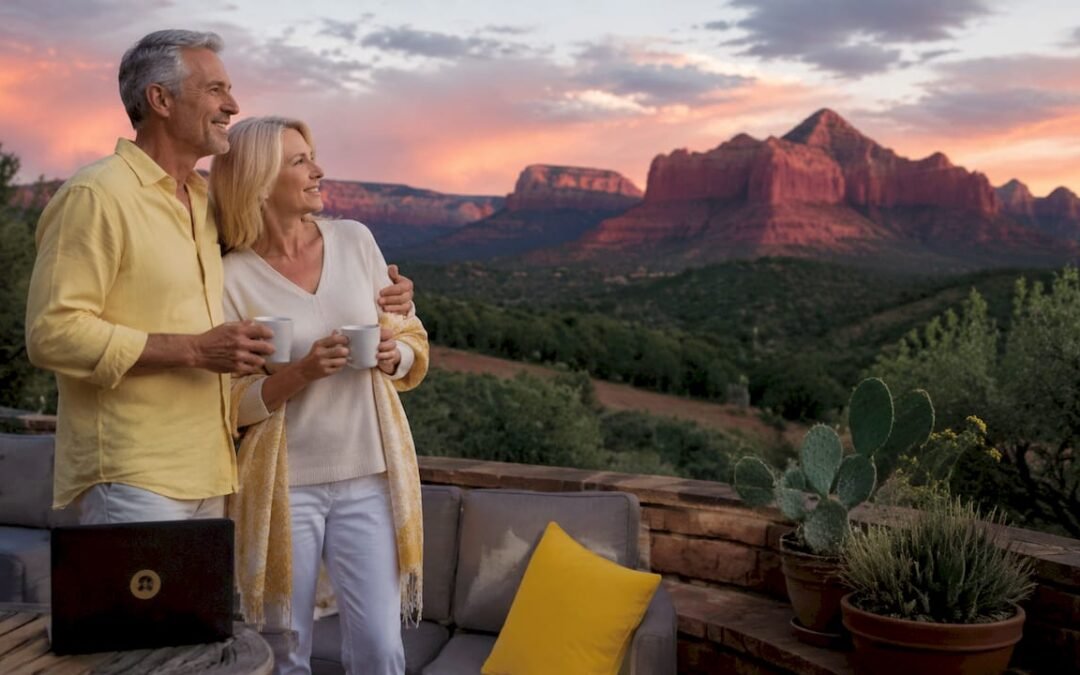
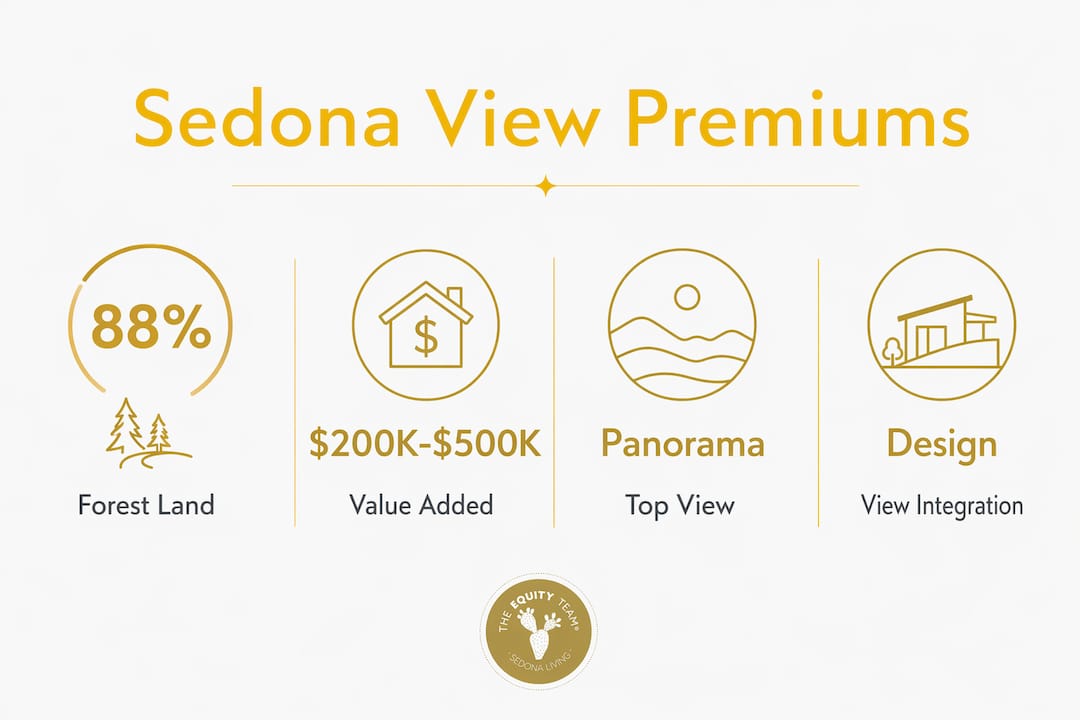
A property with unobstructed views of Sedona’s iconic red rock formations is defined as one of the rarest asset classes in American real estate. Cathedral Rock, Bell Rock, and Coffee Pot Rock are not just pretty backdrops. They are geological features that add $200,000 to $500,000 or more to a property’s value. Understanding why sedona views command price premium requires looking at three converging forces: permanent land scarcity, protected sightlines, and the quality of the view experience itself. Equity Team works exclusively in this market, and the nuances here are genuinely fascinating.
Why do Sedona views command a price premium?
The short answer is supply and demand, but Sedona’s version of that story is wonderfully extreme. Around 88% of the land surrounding Sedona is permanently protected Coconino National Forest. That means the housing supply is effectively capped by federal law, not just zoning. No developer can bulldoze the forest to build a new subdivision and block your Cathedral Rock view. That permanence is the foundation of every view premium in this market.
Strict environmental regulations compound the scarcity. Sedona’s building codes limit structure height, restrict grading, and protect natural vegetation. The result is a town where irreplaceable view lots create genuine buyer competition. When supply is fixed and demand keeps growing, prices move in one direction.
Sedona also holds a rare International Dark Sky Community designation. That status adds prestige and attracts a specific type of buyer who values the full sensory experience of the landscape, not just the daytime view. The dark sky designation is quirky, charming, and very real in its effect on buyer psychology.
- Coconino National Forest boundary: Permanently caps developable land on all sides of town.
- Height and grading restrictions: Prevent new construction from blocking established view corridors.
- Dark sky designation: Adds nighttime appeal and attracts premium buyers.
- Protected open space: Adjacency to forest land guarantees views cannot be obstructed by future neighbors.
Pro Tip: When evaluating a Sedona property, check whether it backs directly onto National Forest land. Permanent view protection from forest adjacency is often worth more than the view itself, because it eliminates future obstruction risk entirely.
What makes certain Sedona views more valuable than others?
Not all views in Sedona are created equal, and the price differences between them can be startling. A full panoramic view of Cathedral Rock from a southwest-facing living room is a fundamentally different product than a partial glimpse of a red rock formation from a side window. View quality and orientation directly affect the premium a property commands. Buyers pay for the full experience, not just the presence of a view.
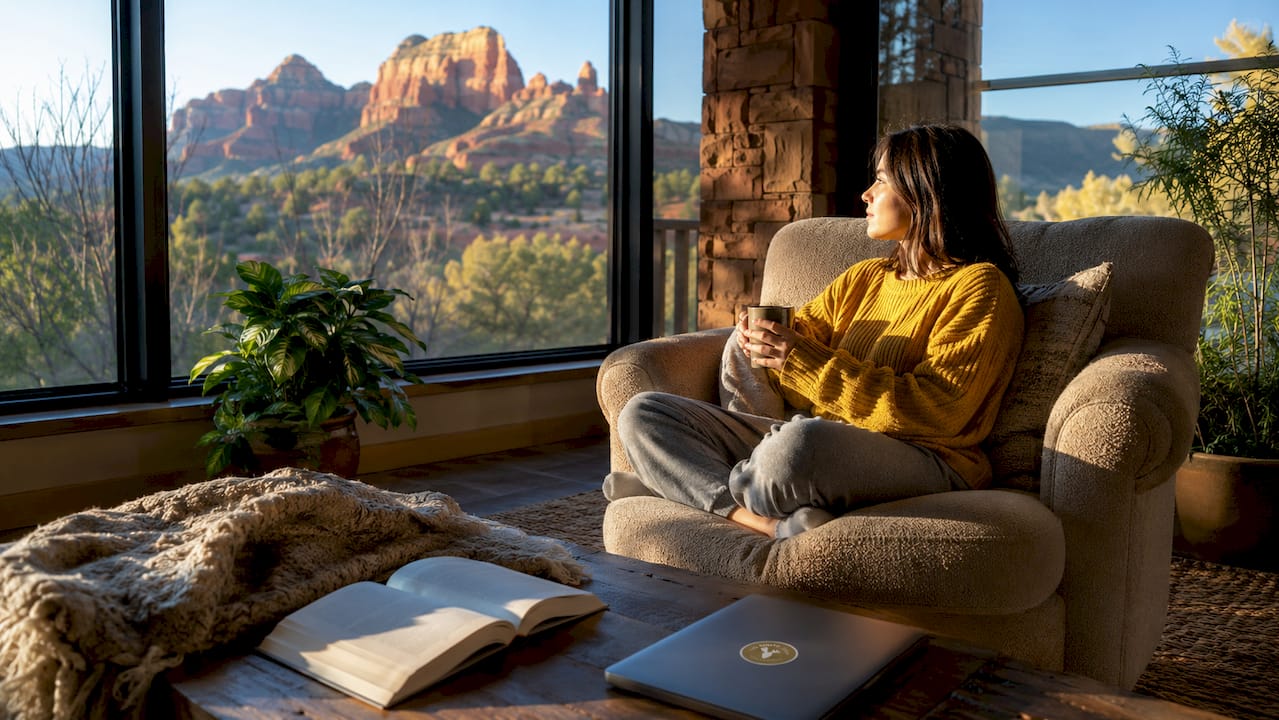
The specific formation matters enormously. Cathedral Rock is Sedona’s most photographed landmark and carries the highest name recognition among buyers nationwide. Bell Rock and Courthouse Butte draw strong interest in the Village of Oak Creek area. Coffee Pot Rock anchors the West Sedona market. Properties with clear sightlines to these named formations consistently outperform those with generic red rock views.
Orientation shapes the light, and light shapes the experience. A southwest-facing Cathedral Rock view catches the warm afternoon glow that photographers chase. That golden light hitting the red sandstone at 4:00 PM is genuinely breathtaking. Buyers feel it during showings, and that emotional response translates directly into offers.
| View type | Premium driver | Relative value |
|---|---|---|
| Full panorama, named formation | Iconic landmark, unobstructed sightline | Highest |
| Partial view, named formation | Recognizable feature, some obstruction | High |
| Full panorama, general red rock | Wide vista, no iconic anchor | Moderate to high |
| Partial view, general landscape | Limited visual impact | Moderate |
| Obstructed or distant view | Minimal differentiation from non-view lots | Low |
Architectural alignment with the view corridor also plays a role. A home designed with large windows and an open floor plan oriented toward the view captures far more value than a home where the view is an afterthought. The Sedona architectural style of a property can amplify or diminish the view premium depending on how well the design frames the landscape.
How does view integration into home design affect property value?
Where you see the view from inside the home matters as much as the view itself. Views visible from main living areas add significantly more value than views limited to outdoor patios or secondary bedrooms. A buyer standing in the kitchen, looking out at Cathedral Rock while making coffee, is having a fundamentally different experience than one who has to walk outside to see the view. That difference shows up in the price.
The hierarchy of view visibility runs roughly like this:
- Great room and kitchen: The highest-value placement. Buyers spend the most time here, and the view becomes part of daily life.
- Primary bedroom: Strong secondary value. Waking up to red rock views is a genuine selling point, especially for short-term rental properties.
- Dining area: Solid value, particularly for vacation rental guests who linger over meals.
- Outdoor patio only: Meaningful but limited. The view premium shrinks considerably when it requires stepping outside.
- Secondary bedrooms or hallways: Minimal premium contribution.
Window placement and home layout are the mechanical levers that control this hierarchy. A home with floor-to-ceiling windows on the view-facing wall captures the landscape in a way that photographs beautifully for short-term rental listings. That photographic quality drives nightly rates. Equity Team consistently sees view-integrated properties outperform comparable homes in short-term rental revenue precisely because the view is visible in every listing photo.
Pro Tip: Before making an offer on a Sedona view property, visit at multiple times of day. The view experience at sunrise, midday, and sunset can vary dramatically, and the best light often reveals whether the view is truly integrated into the home’s living spaces or just visible from one awkward angle.
What role does property condition play in realizing view premiums?
A spectacular view does not automatically produce a spectacular sale price. Poor or outdated home condition can erode the view premium substantially, and the 2026 Sedona market is not forgiving of overpriced, tired properties. Buyers today are sophisticated. They recognize that a $600,000 view premium attached to a home needing $200,000 in renovations is not actually a $600,000 premium. The math matters.
The current market shows some softness compared to the frenzy of 2021 through 2023. Buyers have more options and more patience. Sellers who price view homes based purely on the view, without accounting for condition, finish level, and renovation costs, tend to sit on the market longer than expected. Extended days on market then trigger price reductions, which can undercut the very premium the seller was trying to capture.
A balanced pricing strategy looks like this:
- Establish the baseline view premium by comparing recent sales of similar view lots in the same neighborhood.
- Assess condition honestly and estimate realistic renovation costs with contractor input, not wishful thinking.
- Subtract condition discount from view premium to arrive at a defensible list price that attracts offers quickly.
- Consider pre-listing improvements that are high-visibility and low-cost, such as fresh paint, updated fixtures, and landscaping that frames the view.
- Price to sell within 30 days rather than testing the market, because overpriced view homes develop a stigma that is hard to shake.
Pro Tip: Buyers evaluating Sedona view properties should request a condition-adjusted comparable analysis, not just a raw view premium estimate. The gap between those two numbers is where negotiating leverage lives.
Key Takeaways
Sedona views command a price premium because protected land scarcity, iconic formation sightlines, and interior view integration combine to create an asset class that cannot be replicated anywhere else in Arizona.
| Point | Details |
|---|---|
| Scarcity drives value | 88% of surrounding land is Coconino National Forest, permanently capping housing supply. |
| Named formations command top premiums | Cathedral Rock, Bell Rock, and Coffee Pot Rock views add $200,000–$500,000 or more to property value. |
| Interior visibility matters most | Views seen from kitchens and great rooms add far more value than views limited to outdoor spaces. |
| Forest adjacency protects the premium | Properties backing onto National Forest land carry permanent view protection, reducing long-term risk. |
| Condition affects realized premium | Outdated homes lose a significant portion of their view premium to renovation discounts. |
Chad’s take on investing in Sedona view properties right now
I have watched buyers agonize over view lots for years, and the most common mistake I see is treating all views as interchangeable. They are not. A partial view of a generic red rock ridge is a pleasant amenity. An unobstructed, southwest-facing Cathedral Rock panorama visible from the kitchen is a financial asset with a defensible floor price. Those are two different investments, and confusing them is expensive.
The supply constraint here is not going away. Coconino National Forest is not getting smaller. Sedona’s regulations are not getting looser. The number of true premium view lots is fixed, and the pool of buyers who want them keeps growing. That dynamic makes view properties one of the more reliable long-term holds in the Arizona market, even when the broader market softens.
What I tell investors is this: prioritize permanence over prettiness. A view that backs onto protected land and is visible from the main living areas is worth paying up for. A view that depends on a neighbor not building a second story is a gamble. Do the protection analysis before you fall in love with the scenery. Check the Sedona real estate market trends before you make any assumptions about current pricing. And please, visit the property at sunset. If the light on Cathedral Rock doesn’t make you a little emotional, the buyers you’re trying to attract won’t feel it either.
— Chad
Sedona view properties worth your investment attention
Equity Team specializes in Sedona short-term rental investments, and view properties are the crown jewel of that market. A well-chosen view home does not just appreciate. It generates nightly rates that non-view properties cannot touch.
Equity Team is the first STR-specialized real estate team in Northern Arizona, and the clients represented operate in the top 10% of the rental market. If you are ready to evaluate specific properties that combine protected views with strong rental income potential, the right short-term rental investment starts with understanding exactly which view lots are worth the premium and which ones are priced on hope. Reach out to Equity Team to get a clear-eyed analysis of what is actually available in 2026.
FAQ
How much do Sedona views add to property value?
Direct, unobstructed views of iconic formations like Cathedral Rock add $200,000 to $500,000 or more to property value. The exact premium depends on the specific formation, view quality, and how well the view is integrated into the home’s living spaces.
Why are Sedona view lots so scarce?
88% of land surrounding Sedona is permanently protected Coconino National Forest, which caps the total supply of developable lots. Strict environmental regulations further limit new construction, making existing view lots genuinely irreplaceable.
What is the most valuable type of view in Sedona?
A full, unobstructed panorama of a named formation such as Cathedral Rock, visible from the main living areas of the home, commands the highest premium. Southwest-facing orientations that capture afternoon light on the red rock are particularly sought after by buyers.
Does home condition affect the view premium?
Yes. Poor or outdated condition can significantly reduce the realized view premium, because buyers subtract estimated renovation costs from their offers. A balanced pricing strategy accounts for both the view premium and the condition discount.
How do I protect a Sedona view long-term?
The most reliable protection comes from buying a property that backs directly onto National Forest land. Federal protection of that land means no future neighbor can build a structure that blocks the view, which supports sustained long-term value.