

Sedona’s breathtaking red rocks attract buyers and sellers from all over the country, but the Sedona real estate commission structure trips people up more than you’d expect. Most people walk into a transaction assuming the seller always pays everyone, that rates are fixed, and that the rules haven’t changed. All three assumptions are wrong. The 2024 NAR settlement quietly rewrote how agent compensation works across the country, and Sedona is no exception. Here’s what the fees actually look like, who pays what, and how to negotiate like someone who read the fine print.
Table of Contents
- Key Takeaways
- What is Sedona real estate commission structure, really?
- The 2024 NAR changes and what they mean here
- How commission payments actually work now
- My honest take on commissions after 2024
- Ready to invest in Sedona with the right team?
- FAQ
Key Takeaways
| Point | Details |
|---|---|
| Typical total commission | Sedona and Arizona total commissions run around 5% to 6%, split between listing and buyer agents. |
| 2024 NAR rule shift | Buyer-agent fees no longer appear on MLS listings; buyers must sign a written fee agreement before touring homes. |
| Sellers have options now | Sellers can offer buyer-agent compensation as a concession, or leave buyers to pay their own agents directly. |
| Land and luxury differ | Vacant land commissions in the Verde Valley often run 6% to 10%, higher than standard residential rates. |
| Negotiation is real | Commission rates are fully negotiable, and understanding your leverage makes a meaningful difference in net proceeds. |
What is Sedona real estate commission structure, really?
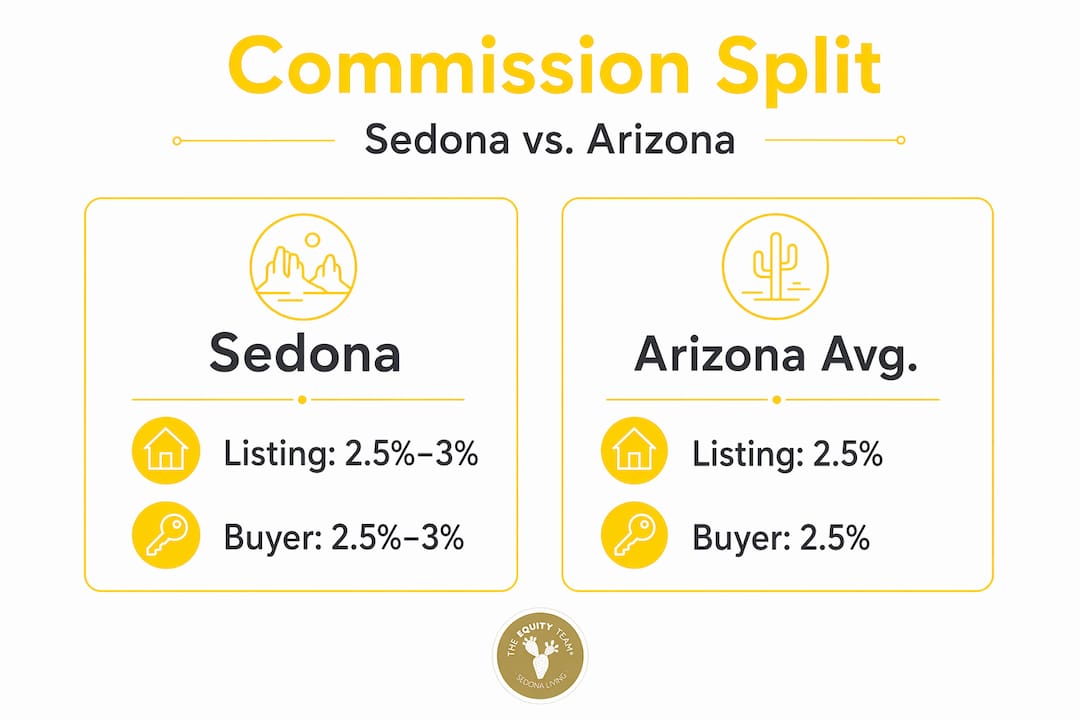
The formal term you’ll hear in contracts is “agent compensation” or “broker commission,” and understanding how it works starts with the numbers. In 2026, the total commission rate in Sedona and across Arizona averages around 5.82%, typically split between the listing agent and the buyer’s agent. The listing agent generally takes about 2.5% to 3%, with the buyer’s agent receiving the remainder.
Historically, the seller paid both sides out of the sale proceeds at closing. That arrangement felt invisible to buyers, which is precisely why so many people were surprised when a new set of rules arrived in 2024 and changed everything.
Here’s a simple breakdown of how commission splits typically look in Sedona compared to Arizona statewide:
| Agent Role | Sedona Typical Rate | Arizona Statewide Average |
|---|---|---|
| Listing agent | 2.5% to 3% | 2.5% to 3% |
| Buyer’s agent | 2% to 3% | 2% to 3% |
| Total combined | 5% to 6% | ~5.82% |
| Land/specialty | 6% to 10% | Varies widely |
A few things move these numbers. Property type matters. So does price point. A $1.8 million property in the Village of Oak Creek doesn’t get the same negotiation dynamics as a $450,000 condo near Tlaquepaque. Sellers on higher-value homes often have more room to negotiate a lower percentage. Buyers, meanwhile, are now figuring out that they have a role in this conversation too.
The 2024 NAR changes and what they mean here
The biggest shift in Sedona real estate fees in recent memory came from outside Sedona entirely. On August 17, 2024, the National Association of Realtors implemented new MLS policy rules that fundamentally changed how buyer-agent commissions are handled.
Before the change, sellers routinely advertised a buyer-agent commission offer right on the MLS listing. Buyers often had no idea their agent was being paid by the other side. That transparency gap is what the settlement addressed.
Here’s what changed in practice:
- No more MLS commission offers. Buyer-agent compensation can no longer be listed or offered on MLS systems. That offer has to happen outside the MLS, typically in the purchase contract.
- Written buyer agreements are now required. Before a buyer tours any MLS-listed home, they must sign a written agreement with their agent that specifies the compensation terms.
- Commissions are fully negotiable. The rules reinforce that no rate is standard or required. Everything is up for discussion.
- Sellers choose whether to offer compensation. A seller can decide to offer a buyer-agent concession, or they can leave the buyer to handle that cost on their own.
The ripple effect is real. Buyers now enter transactions with a clearer picture of what their agent costs, but also with more responsibility to understand and negotiate those costs upfront. Sellers face new strategic choices about whether offering buyer-agent compensation helps attract more offers, especially in a competitive Sedona market.
NAR’s rule changes shifted buyer-agent fee negotiation responsibility from sellers to buyers, increasing transparency but also adding a layer of complexity that catches many first-timers off guard.
Pro Tip: Before scheduling a single home tour in Sedona, ask to review the buyer-agent agreement carefully. Know exactly what you’re committing to pay your agent, under what conditions, and whether that fee can be covered by a seller concession.
How commission payments actually work now
Understanding who pays whom requires thinking about both sides of the transaction separately. Sedona area contracts now commonly separate listing-side and buyer-side commission terms, which means buyers and sellers each need to understand their own agreements clearly.
For sellers, the listing agreement spells out what percentage goes to the listing agent. That part hasn’t changed much. What has changed is that sellers now decide separately whether to offer any compensation toward the buyer’s agent.
For buyers, the options look like this:
| Scenario | Who Pays Buyer’s Agent | How It Works |
|---|---|---|
| Seller offers concession | Seller (indirectly) | Seller credits buyer at closing; buyer uses it to pay their agent |
| Buyer pays directly | Buyer | Buyer pays agent fee out of pocket or rolls it into financing if allowed |
| Negotiated price offset | Negotiated between parties | Purchase price adjusted so net cost reflects agent fees |
The most common outcome right now in Sedona is the concession model. Sellers who want to attract the widest pool of buyers often offer buyer-agent compensation as a closing cost concession. It keeps buyers from having to come up with additional cash out of pocket, which in Sedona’s high-price environment is a real obstacle.
Sellers who skip the concession risk limiting their buyer pool to cash-rich buyers or those with agents willing to work for a reduced fee. That’s a meaningful risk in a market where the wrong pricing decision costs tens of thousands of dollars. Reviewing the full Sedona seller timeline helps sellers see exactly where commission decisions land in the overall process.
Pro Tip: Sellers who include a buyer-agent concession in their offer strategy often see faster offers and cleaner transactions. It’s worth modeling the net proceeds both ways before deciding.
Commission quirks for land and luxury properties
Sedona’s market isn’t just resale condos and family homes. There’s a meaningful slice of vacant land, investment properties, and high-end retreats, and those categories play by different rules.
Vacant land in the Verde Valley area often carries commission rates between 6% and 10%. The higher rate reflects longer selling timelines, a smaller pool of qualified buyers, and the extra work agents put in to evaluate raw land without the comparables that residential homes generate naturally.
A few things stand out in these specialty segments:
- Luxury home commissions are negotiable in a different way. On a $3 million property, even a 1% difference represents $30,000. Sellers in the luxury market often negotiate lower percentage rates because the absolute dollar payout is still meaningful to agents.
- Limited inventory amplifies negotiation leverage. Sedona’s high-demand market conditions mean desirable properties sometimes generate competing offers quickly. In those cases, sellers may feel less pressure to offer buyer-agent concessions at all.
- Short-term rental investment properties add another wrinkle. Buyers evaluating properties for STR income potential are often working with agents who understand revenue modeling, seasonal occupancy, and local regulations. That specialized knowledge commands and justifies full commission.
- Transparency matters more in these segments. With larger dollar amounts on the table, both buyers and sellers in land and luxury transactions should get every commission term confirmed in writing early. Surprises at closing are especially costly here.
Tips for buyers and sellers to navigate commissions
Knowing the structure is one thing. Using that knowledge well is another. Here’s a practical roadmap for both sides of a Sedona transaction.
-
Buyers: Read your buyer-agent agreement before anything else. The written agreement requirement isn’t bureaucratic paperwork. It defines your financial commitment to your agent. Review it carefully and ask what happens if a seller covers your agent’s fee through a concession.
-
Sellers: Decide on your concession strategy before listing. Knowing in advance whether you’ll offer buyer-agent compensation saves confusion during negotiations. Talk to your listing agent about how similar Sedona listings have handled this since 2024.
-
Both sides: Get everything in writing. Sellers handling payments outside MLS after the 2024 rules means you cannot rely on what a listing says. The contract is the only document that counts.
-
Budget for total Sedona home selling costs early. Commission is usually the largest single cost, but sellers also face property sale tax implications that affect net proceeds. Run the full numbers before accepting or countering an offer.
-
Work with agents who know Sedona specifically. Local expertise matters when commission negotiations intersect with seasonal demand, property type, and Sedona market trends. A generalist agent may miss nuances that cost you real money.
My honest take on commissions after 2024
I’ve worked with buyers and sellers through the post-2024 transition, and the thing that stands out most is how many people were unprepared for the conversation. Not because they’re not smart. Because nobody told them the rules changed.
What I’ve learned is that the shift has actually made transactions healthier when both sides engage with it honestly. Buyers who understand what they’re paying their agent tend to ask better questions and make cleaner offers. Sellers who think strategically about concessions rather than defaulting to “no” often close faster and at stronger prices.
The mistake I see most often is buyers signing the buyer-agent agreement without reading it and sellers refusing concessions reflexively. Both moves cost money. What actually works is approaching commission conversations the same way you’d approach any negotiation: know your leverage, understand the other side’s position, and get it in writing.
Sedona’s market is quirky and vibrant enough that cookie-cutter strategies don’t survive contact with reality. Every property has its own dynamics. The 7 steps to negotiate your purchase price are worth reviewing before any offer goes out. Commission is part of that picture.
— Chad
Ready to invest in Sedona with the right team?
Understanding commissions is the foundation, but knowing how to turn that knowledge into a smart investment is where Equity Team comes in. Equity Team is the first STR-specialized real estate team in Northern Arizona, representing buyers and sellers in the top 10% of the short-term rental market. Whether you’re buying a performing property or selling for top dollar, the combination of local expertise and STR market data makes a real difference.

Equity Team’s resources go well beyond commission basics. From detailed market analyses to hands-on investment guidance, there’s a clear path from curious to closing. Start by exploring Sedona short-term rental investments to see what a well-structured purchase actually looks like. Or dig into why Sedona attracts profitable STR investors year after year. The red rocks are waiting, and so is the right deal.
FAQ
What is the typical commission rate in Sedona?
Total commission in Sedona typically falls between 5% and 6%, with the listing agent taking around 2.5% to 3% and the buyer’s agent receiving the remainder, though all rates are fully negotiable.
Who pays the buyer’s agent commission in Sedona now?
Since the 2024 NAR rule changes, buyers must sign a written fee agreement with their agent, and the seller can choose to cover that cost as a concession or leave the buyer to pay it directly.
Are Sedona land commissions different from home commissions?
Yes. Vacant land in the Verde Valley area often carries commission rates between 6% and 10%, higher than the 5% to 6% typical of residential home sales.
Can buyers negotiate their agent’s commission in Sedona?
Absolutely. Commissions are fully negotiable, and buyers should review their written buyer-agent agreement carefully before touring any home to understand exactly what fee they’ve committed to.
Does offering a buyer-agent concession help sellers in Sedona?
Sellers who offer buyer-agent compensation as a concession typically attract a broader pool of buyers and see faster, cleaner transactions, especially given Sedona’s high property prices where out-of-pocket agent fees create real friction for buyers.