
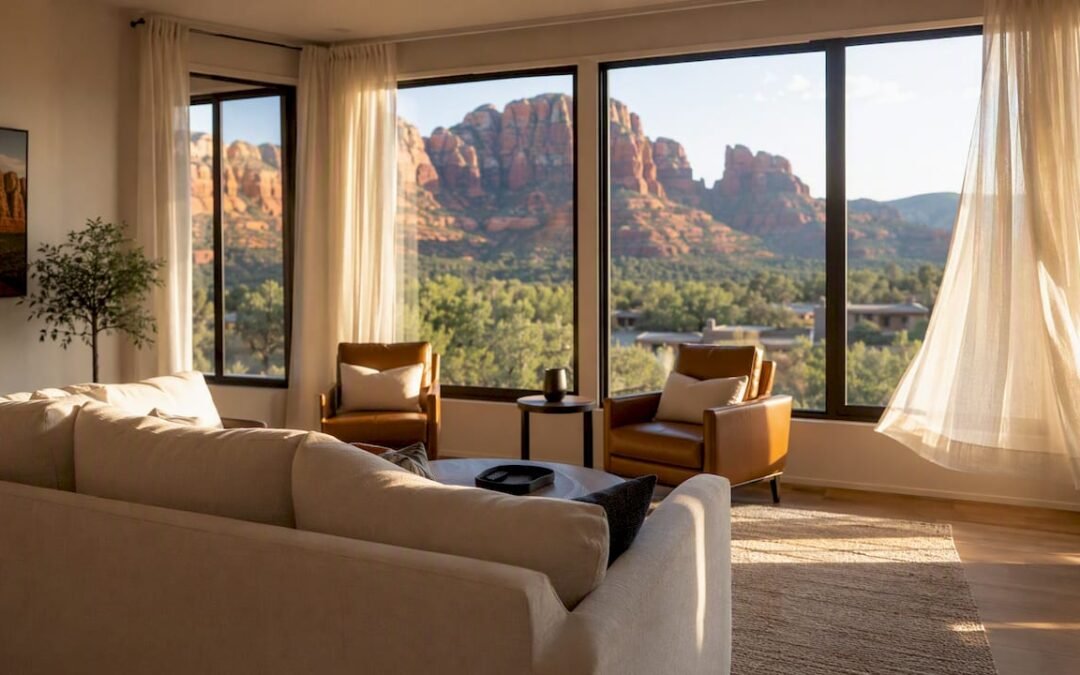
The five staging moves that immediately lift bookings and rates for a Sedona short-term rental are: frame the red-rock views so they dominate every listing photo, deploy a desert-inspired palette with warm terracotta accents and durable natural textures, layer dark-sky–friendly lighting that photographs beautifully without violating Sedona’s exterior lighting ordinance, stage outdoor living as a full room (not an afterthought), and load the amenity set with the specific items Sedona guests actually review. Whether you’re launching a new listing, rescuing an underperformer, or doing a seasonal refresh before the spring peak (March–May) or fall peak (September–November), these five actions are where the ROI lives.
- Frame red-rock views in every room with a sightline
- Deploy a warm desert palette with durable, camera-friendly textures
- Layer dark-sky–compliant lighting and build a photography shot list
- Stage outdoor living as an extension of the interior
- Curate a guest-ready amenity set that earns five-star reviews
Book staging 6–10 weeks before your target launch date so design, sourcing, delivery, install, and photography all land before peak-season demand hits.
Key Takeaways
Staging a Sedona vacation rental for top performance requires framing the red-rock views, deploying a desert-inspired palette, layering dark-sky–compliant lighting, staging outdoor living as a full room, and booking the process 6–10 weeks before peak season.
| Point | Details |
|---|---|
| Frame views first | Every room should have a sightline to the red rocks; low-profile furniture and sheer window treatments make this possible. |
| Book staging early | Full-service staging needs 6–10 weeks; for spring peak, book November–January; for fall peak, book May–July. |
| Outdoor living converts | A fire pit, weather-resistant seating, and a dusk photo of the outdoor space are among the highest-return staging investments. |
| Limited supply raises stakes | Sedona’s constrained STR inventory means well-staged listings capture a disproportionate share of bookings at premium rates. |
| Equity Team | Offers local market analysis, staging advisory, and video walkthroughs to help Sedona STR owners maximize ADR and occupancy. |
Table of Contents
- 1. How Sedona’s palette, materials, and views should drive your design
- 2. Make small Sedona rentals feel larger and more functional
- 3. Layered lighting, photography-ready staging, and Sedona’s dark-sky rules
- 4. Turn patios, decks, and yards into booking magnets
- 5. Durable finishes and the amenities Sedona guests expect
- 6. Typical staging timeline, cost ranges, and an implementation plan
- 7. Local compliance and guest-safety checklist for Sedona STRs
- 8. What drives top-performing Sedona STRs, according to Equity Team
- 9. The staging mistakes Sedona owners keep making (and how to fix them)
- Equity Team helps Sedona owners stage for real results
- Sources
1. How Sedona’s palette, materials, and views should drive your design
Sedona guests book for the landscape: the red rocks, the golden light, the high-desert air — that’s the product. Staging that competes with those views loses. Staging that frames them wins.
Color palette by room:
- Living areas: Warm whites, sandstone, and soft clay on walls. Terracotta and rust as accent colors in throw pillows, ceramics, and art. Avoid cool grays — they fight the warm light pouring through Sedona windows.
- Bedrooms: Layered neutrals (linen, oatmeal, warm taupe) with one earthy accent wall or a woven textile headboard. Guests sleep better and photograph better against calm, warm tones.
- Kitchens and bathrooms: Matte terracotta tile, sealed travertine, or honed limestone. These materials look premium on camera and handle Sedona’s dry heat without warping or cracking.
Materials that survive the climate and look great on camera:
- Performance upholstery (Sunbrella-grade or equivalent) for sofas and chairs — Sedona’s UV index is brutal
- Matte finishes on walls and cabinetry (they don’t glare under photography lighting)
- Stone or concrete countertops sealed for easy cleaning
- Woven jute, sisal, or wool rugs that add texture without competing with the view
Framing the view without sacrificing comfort:
Keep window treatments sheer or cellular — something that diffuses harsh afternoon sun without blocking the sightline. Low-profile furniture keeps the visual horizon open. A sofa facing the window, not the TV, is a staging decision that pays for itself in booking photos.
Pro Tip: When selecting local art, choose photography prints or paintings that use the same warm palette as the view outside — not pieces that introduce competing colors. A local Sedona artist whose work echoes the red rocks creates a cohesive story guests feel before they consciously notice it. Source from Sedona Arts Center or local gallery shows for authenticity that guests mention in reviews.
2. Make small Sedona rentals feel larger and more functional
Tight square footage is common in Sedona, especially in older cabins and canyon-adjacent properties. The good news: a well-staged small rental photographs larger than a cluttered big one. Here’s how to work the space.
- Scale furniture to the room. Oversized sectionals in a 600-square-foot cabin make the space feel like a furniture showroom. Choose a loveseat or apartment-scale sofa, a round dining table (corners eat space), and a bed frame without a bulky footboard.
- Use multifunction pieces. An ottoman with interior storage doubles as a coffee table and extra seating. A murphy bed or daybed in a studio creates a daytime living area that photographs as a lounge, not a bedroom.
- Zone with rugs, not walls. A rug under the dining set and a different rug under the seating area creates two perceived rooms in one open space. Guests feel the separation; the camera captures it.
- Remove what doesn’t earn its place. Professional staging guides consistently recommend decluttering, removing personal items, and rearranging furniture for flow before any listing photos are taken. In a small Sedona rental, this means removing a significant portion of existing furniture and decor before the photographer arrives.
- Add vertical storage. Floating shelves, tall wardrobes, and wall-mounted hooks keep floors clear and make ceilings feel higher. Guests notice floor space more than wall space.
- Create a dedicated prep zone. Even a small kitchen feels functional when there’s a clear counter workspace, a coffee station with visible supplies, and labeled storage for cookware. Guests who feel organized leave better reviews.
- Let natural light do the heavy lifting. Clean windows, sheer curtains, and mirrors on interior walls (not facing the view — facing a light source) amplify the sense of space without a single renovation.
3. Layered lighting, photography-ready staging, and Sedona’s dark-sky rules
Sedona sits within the Dark Sky Community framework, and the city takes exterior lighting seriously. Getting this right isn’t just about compliance — guests who come for stargazing genuinely appreciate a host who explains it. That’s a review moment.
Interior lighting layers:
- Ambient: Warm-white LED bulbs (2700K–3000K) in ceiling fixtures and recessed cans. This color temperature photographs golden and feels cozy, not clinical.
- Task: Under-cabinet lighting in the kitchen, bedside reading lamps, and a desk or workspace lamp. These layers add depth to interior photos.
- Accent: Dimmable table lamps, LED strip lighting under a kitchen island, or a single statement pendant over the dining table. Accent lighting is what makes a listing photo look like a magazine spread rather than a real estate snapshot.
Photography shot list (sequence matters):
Following Sedona listing photography best practices, lead with the view, not the front door.
- Exterior at golden hour (first 30 minutes after sunrise or before sunset)
- Living area with framed red-rock view through the window
- Kitchen with coffee station styled and counter cleared
- Primary bedroom with layered bedding and bedside lamps on
- Bathroom with fresh towels, candle, and no personal items visible
- Outdoor living area at dusk with string lights or fire pit lit
- Amenity close-ups: coffee maker, outdoor grill, hot tub if applicable
- One wide exterior shot showing the property in its landscape context
Dark-sky exterior lighting:
Use fully shielded, downward-facing fixtures only. Warm amber LEDs (under 3000K) are the standard. Motion-sensor lights at entry points satisfy safety without constant light pollution. Include a short note in your listing and your guest welcome guide explaining Sedona’s dark-sky ethos — guests who came for the stars will thank you for it.
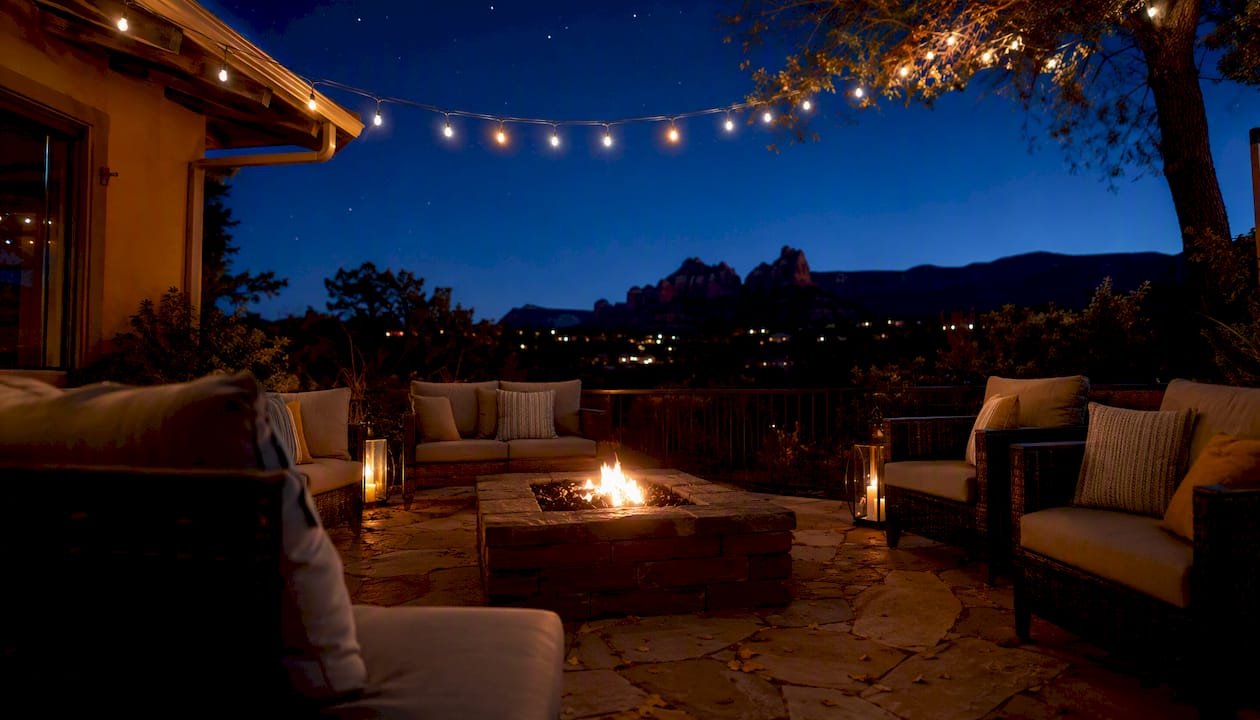
Pro Tip: Schedule your photography session on the same day as final staging, and turn on every interior lamp before the photographer arrives. Brief the photographer on the dark-sky angle so they capture the outdoor space at dusk with the fire pit or string lights active. That dusk shot is often the image that converts a browser into a booker.
4. Turn patios, decks, and yards into booking magnets
Here’s a quirky truth about Sedona rentals: guests often spend more time outside than inside. The red rocks don’t care about your interior design. Your outdoor staging had better be ready for that.
Furniture and layout:
- Choose low-profile seating (chairs and sofas under 30 inches tall) so the view clears the furniture line in photos and in person.
- Arrange seating to face the dominant view, not the house. A semicircle of chairs around a fire pit facing Cathedral Rock is a booking photo. Four chairs facing each other in a square is a backyard.
- Use rust-resistant powder-coated aluminum or teak for frames. Sedona’s monsoon season (July–September) and UV exposure will destroy cheaper materials within two seasons.
View-framing focal points:
A fire pit is the single highest-return outdoor staging investment for Sedona. Guests mention it in reviews, photograph it, and filter for it on Airbnb and Vrbo. A hammock between two trees, a breakfast nook with a small bistro table, or a swing chair facing the rocks all create distinct “moments” that photograph as separate amenities even in a small yard.
Outdoor living that offers flexible use — dining, relaxing, and stargazing — produces higher guest satisfaction than a single-purpose patio setup. Stage for all three.
Maintenance and safety:
- Cover cushions with UV-resistant, water-repellent fabric. Store covers on-site so guests can use them.
- Check railings and steps before every turnover season. Sedona’s temperature swings loosen hardware faster than most climates.
- Downward-facing amber path lighting keeps outdoor areas safe at night without violating dark-sky rules.
5. Durable finishes and the amenities Sedona guests expect
Sedona guests skew toward experience-seekers with disposable income. They’ve stayed in nice places. They notice the difference between a $12 drip coffee maker and a proper pour-over or espresso setup. They notice when the linens feel thin. And they write about it.
The amenity checklist that moves the needle:
- Coffee setup: A Nespresso, Breville, or pour-over station with locally sourced coffee (Sedona Coffee Roasters, for example) is a genuine differentiator. Guests mention it in reviews more than almost any other amenity.
- Linens: 400-thread-count minimum, white or warm white. White photographs clean and communicates quality. Cheap colored linens communicate the opposite.
- Outdoor gear storage: A dedicated space for hiking boots, trekking poles, and bikes. Sedona guests arrive with gear. Give it a home.
- Climate control: A smart thermostat (Ecobee or Nest) that guests can control from their phone. Sedona swings from cold mornings to warm afternoons — guests who can’t manage the temperature leave reviews about it.
- High-speed Wi-Fi: Non-negotiable. Test it from every room before listing.
Durable materials that reduce maintenance costs:
Sealed stone or quartz countertops, tile entryways (not hardwood — Sedona guests track in red dirt), and performance upholstery on all seating. These choices reduce turnover cleaning time and extend replacement cycles. Amenity and layout choices that prioritize durability directly affect long-term rental profitability.
Luxury vs. mid-market expectations:
For Sedona luxury home staging, the bar includes heated floors, a hot tub, a wine fridge, and curated local art. Mid-market properties compete on cleanliness, coffee, and outdoor access. Know your tier and over-deliver within it rather than spreading budget thin across both.
6. Typical staging timeline, cost ranges, and an implementation plan
The single most common staging mistake Sedona owners make is starting too late. Book full-service staging 6–10 weeks before your target launch date. For spring peak season, that means booking several months before. For fall peak season, book several months ahead as well.
Staging scope, cost ranges, and lead times:
Cost ranges reflect general market estimates for Sedona-area staging projects and vary by property size, vendor, and material selections.
Implementation checklist (assign to vendors or stager):
- Measure all rooms and doorways before ordering any furniture
- Finalize design plan and palette (get sign-off before purchasing)
- Source furniture, textiles, and decor (allow 2–4 weeks for delivery)
- Schedule utility connections and any minor repairs or paint
- Coordinate delivery and installation day (stage largest pieces first)
- Style accessories, art, and amenity sets
- Schedule photography session (golden hour exterior + interior + dusk outdoor)
- Review listing photos and write listing copy before going live
Sedona’s peak rental seasons reward owners who launch before demand peaks — early bookings at full rate beat last-minute discounts every time.
7. Local compliance and guest-safety checklist for Sedona STRs
Sedona’s short-term rental rules have real teeth, and the compliance landscape shifted meaningfully in recent years. This is a checklist, not legal advice — verify every item with the City of Sedona, Yavapai County, and your HOA before listing.
Safety checklist:
- Smoke detectors in every bedroom and hallway (test monthly)
- Carbon monoxide detectors on every floor with gas appliances or attached garage
- Fire extinguisher in the kitchen, inspected annually
- Posted emergency exit plan visible from every sleeping area
- Pool and hot tub fencing and safety equipment per Arizona state code
- First-aid kit stocked and visible
- Emergency contact numbers posted (local fire, police, property manager)
Regulatory flags to verify:
- City of Sedona STR permit status and annual renewal requirements
- HOA rules on short-term rentals, noise, and parking (some Sedona HOAs prohibit STRs entirely)
- Noise ordinance hours (typically 10 PM–7 AM in residential areas)
- Exterior lighting compliance with Sedona’s dark-sky ordinance (fully shielded, downward-facing, warm amber only)
- Transient occupancy tax registration with the City of Sedona and the State of Arizona
Owners should confirm current permit requirements and fee schedules directly with the City of Sedona’s Planning and Zoning Department — rules change, and this article is not a substitute for that conversation.
Why compliance affects your bottom line:
Proper permits and documented safety measures reduce insurance premiums and protect against liability claims. Guests who see a posted safety plan and a compliant, well-lit exterior feel safer. That feeling shows up in reviews.
8. What drives top-performing Sedona STRs, according to Equity Team
Sedona’s limited short-term rental inventory in 2026 creates a market where differentiation pays outsized dividends. When supply is constrained, the best-staged listings capture a disproportionate share of bookings at premium rates. A 24% drop in Sedona STR supply over recent years has tightened the competitive field — which means a well-staged property faces fewer direct competitors than it did three years ago.
Performance drivers unique to Sedona:
- View-driven pricing: Properties with staged, photographed red-rock views command meaningfully higher nightly rates than comparable properties where the view is present but not featured. Guests book the view. Stage it accordingly.
- Guest profile: Sedona attracts couples and small groups on experience-focused trips, often with above-average budgets. They compare listings carefully and filter for specific amenities. A Sedona Airbnb market trends analysis shows that high-performing properties consistently lead with outdoor living and view photography.
- Seasonality: Spring and fall peaks are predictable and bookable months in advance. Owners who stage and photograph before November (for spring) or before May (for fall) capture early bookings at full rate.
- Staging ROI: Professional staging improves perceived value and accelerates market performance by creating stronger first impressions — a principle that applies equally to sales and short-term rental listings.
Equity Team offers Sedona vacation rental comparative market analysis so owners can benchmark their current ADR and occupancy against comparable staged properties before committing to a staging budget. That data often makes the investment decision obvious.
For owners who want to see real-world staging outcomes, Equity Team’s video walkthroughs of Sedona STR properties show before/after analyses from local expert perspectives — the kind of detail that’s hard to get from a generic staging guide.
9. The staging mistakes Sedona owners keep making (and how to fix them)
Three patterns show up repeatedly in underperforming Sedona rentals, and they’re all fixable without a full renovation.
Over-decorating the interior while ignoring the exterior. The instinct to fill every shelf with Southwestern pottery and every wall with art is understandable — Sedona has a rich visual culture. But a cluttered interior competes with the view and photographs as chaos. The fix: pull back to three or four intentional decor moments per room, and redirect that energy (and budget) to the patio. Guests who walk outside and see a fire pit facing Cathedral Rock forget about the pottery.
Treating listing photos as an afterthought. A surprising number of Sedona owners photograph their rental on a Tuesday afternoon with overhead lights on and curtains closed. The result looks like a storage unit with furniture. The fix is simple: sequence your photos to lead with the exterior view at golden hour, then move inside with every lamp on and every surface styled. That sequence — view first, amenities second, rooms third — mirrors how guests actually decide to book.
Skipping the outdoor staging entirely. A bare concrete patio with two plastic chairs is not outdoor living. It’s a missed opportunity in a market where guests are paying, in part, for the experience of being outside in Sedona. The fix: a fire pit, two or three weather-resistant chairs, a side table, and a string of warm lights costs less than one month of lost bookings from a weak listing.
Equity Team helps Sedona owners stage for real results
Sedona’s STR market rewards owners who treat staging as an investment, not a cost.
A consultation with Equity Team delivers a Sedona market analysis, a staging advisory tailored to your property’s tier and view, vendor coordination guidance, and a photo shot list your photographer can follow the day of the shoot. Equity Team also produces video walkthroughs and property analyses that show exactly how staging decisions translate to booking performance in the local market.
If you’re ready to see what your Sedona rental could earn with the right staging and positioning, explore Sedona STR investment options or reach out to Equity Team directly to schedule a consultation.
Sources
- When to Book Airbnb Staging in Sedona, AZ
- How to Stage a Vacation Rental | Vacasa
- The Benefits of Home Staging in Sedona: Why It’s Worth It