

The catch, and it’s a big one, is that Sedona’s STR permits don’t automatically transfer at closing. Get that detail wrong and your dreamy desert cash flow turns into a quirky little paperwork nightmare.
TL;DR:
- Use annual occupancy assumptions because spring and fall peaks offset summer and winter lulls; operating costs consume 35% to 45% of gross revenue.
- Sedona short term and long term rentals often return 3% to 6%; 8% to 12% typically requires optimized operations and favorable financing.
- Four bedroom homes with views near Uptown or Village of Oak Creek can command stronger nightly rates, while HOA restrictions often favor long term leasing.
- Use Arizona’s 10 day inspection period to confirm zoning, septic and well condition, and whether a short term rental permit can be secured before closing.
- Calculate cash on cash by dividing annual pretax cash flow by total cash invested, including the down payment, closing costs, reserves, and immediate repairs.
Table of Contents
- Short-Term vs Long-Term Rentals: How Revenue and Costs Change Cash-on-Cash
- Step-by-Step: Calculate Cash-on-Cash for a Sedona Rental
- Sedona Market Drivers That Materially Affect Cash-on-Cash
- Sedona Example Scenarios With Numbers
- How Financing, Closing Costs, and Timing Change Cash Invested
- Tactics to Improve Cash-on-Cash on Sedona Rentals
- The Equity Team’s Perspective on Common Underwriting Mistakes
- How We Help You Underwrite and Acquire High Cash-on-Cash Sedona STRs
- FAQ
- Sources
Short-Term vs Long-Term Rentals: How Revenue and Costs Change Cash-on-Cash
The math behind these two strategies looks deceptively similar until you actually run the numbers. Long-term rentals earn their keep through a flat monthly rent check, predictable and a little boring in the best way. Short-term rentals earn through average daily rate multiplied by occupancy, which means revenue swings with the seasons, the red rocks’ Instagram fame, and whatever quirky local event happens to be drawing crowds that month.
On the cost side, long-term rentals keep things simple: a vacancy here, some wear and tear there, maybe a slow trickle of maintenance calls. Short-term rentals carry a livelier cast of expenses, including cleaning fees between guests, platform commissions, marketing spend, and more frequent furniture refreshes because nothing says “charming Sedona getaway” like a couch that hasn’t survived three hundred checkouts.
A sampled Sedona STR listing illustrates how these pieces land in the real world: an asking price around $799,000 with estimated annual revenue near $94,170 produced an estimated cash-on-cash return of 5.40%, according to a local deal snapshot that tracks actual Sedona listings. That number sits right in the middle of what we typically see once permits, seasonality, and management fees are all accounted for honestly.
A few factors tend to tip the scales one way or the other:
- Properties near Uptown or the Village of Oak Creek with scenic views usually command higher ADRs, favoring the STR model.
- Homes on septic systems or with well water often carry extra operating costs that erode STR margins faster than long-term ones.
- Larger homes with four or more bedrooms tend to outperform as STRs because group travelers pay a premium per night that a single long-term tenant never would.
- Smaller condos or townhomes inside HOA-restricted communities frequently perform better as long-term rentals since many HOAs cap or ban short-term stays outright.
The bottom line is that Sedona’s STR advantage is real, but it’s not universal. It leans hardest toward larger, view-friendly, permit-eligible properties, while smaller or HOA-bound homes often do better playing the long game.
Step-by-Step: Calculate Cash-on-Cash for a Sedona Rental
Cash-on-cash return answers one practical question: for every dollar you actually put into the deal, how much cash lands back in your pocket each year? The formula is refreshingly simple.
Cash-on-cash return equals annual pre-tax cash flow divided by total cash invested, expressed as a percentage. “Cash invested” means your down payment, closing costs, initial reserves, and any immediate capital expenditures, not the full purchase price. “Annual pre-tax cash flow” means your net operating income after expenses, minus your annual debt service, before Uncle Sam takes his cut.
Here’s a compact worked example you can adapt to your own Sedona target:
- Estimate gross revenue. For an STR, multiply your projected average daily rate by expected occupancy and by 365 nights. A conservative Sedona property running a $280 ADR at 55% occupancy nets roughly $56,210 in gross annual revenue.
- Subtract operating expenses. Factor in cleaning, platform fees, utilities, property management, insurance, and maintenance reserves, typically landing between 35% and 45% of gross revenue for a managed Sedona STR.
- Subtract annual debt service. Pull this from your loan’s principal and interest payments based on your actual rate and term.
- The result is your annual pre-tax cash flow.
- Divide that figure by total cash invested (down payment, closing costs, reserves, and any immediate capex) to get your cash-on-cash percentage.
A good cash-on-cash return nationally is often cited around 8% to 12% for strong performers, according to general investment benchmarks, though Sedona’s higher entry prices and permit constraints frequently push realistic numbers into the mid single digits for conservative underwrites and into that stronger range only for well-optimized STRs with favorable financing.
When building the Sedona version of this formula, don’t forget to include Arizona-specific transaction costs on the “cash invested” side, since closing costs here commonly run between 1% and 3% of purchase price, a detail we’ll unpack further down.
Sedona Market Drivers That Materially Affect Cash-on-Cash
Sedona’s red rocks might be the main attraction, but the fine print is what actually decides your return. The single biggest variable is permit transferability. Many Sedona STR permits do not pass automatically to a new owner at closing, meaning you may need to reapply after purchase and verify feasibility before you ever count on that income stream.
Seasonality adds its own personality to the equation. Spring and fall bring the heaviest hiking and sightseeing traffic, pushing ADR and occupancy to their yearly highs, while summer heat and winter’s quieter stretches create shoulder seasons where smart pricing calendars matter more than wishful thinking.
A few other local quirks shape the numbers:
- Zoning overlays and HOA rules in certain neighborhoods restrict or outright prohibit short-term rentals, so always confirm before you fall in love with a listing.
- Septic and well systems, common outside municipal water zones, add inspection and maintenance costs that rarely show up in a quick back-of-napkin calculation.
- Local STR supply has grown enough in some pockets that oversaturation can soften ADR growth, making differentiated properties, like those with views or unique architecture, more resilient.
- Utility costs can run higher than expected in homes with private wells or older HVAC systems built for a different era of Sedona’s growth.
Arizona lawmakers continue to revisit short-term rental rules at the state level, and reviewing the current legislative language is a smart habit before finalizing any STR purchase, since municipal and state rules can shift the ground under an otherwise solid deal.
Pro Tip: Treat permit verification like a non-negotiable line item in your due diligence, not a formality you’ll get to later.
Sedona Example Scenarios With Numbers
Small changes in ADR, occupancy, or financing terms can swing cash-on-cash return more than most new investors expect. Here are three illustrative scenarios built on realistic Sedona inputs to show how that plays out.
These figures are illustrative examples built on the inputs shown, not published performance data, but they mirror the kind of spread we regularly see between optimistic and conservative STR underwrites on comparable Sedona properties, consistent with the 5.40% CoC example noted earlier for a similarly priced listing.
A few quick takeaways from the table:
- The gap between the high-performance and conservative STR scenarios comes almost entirely from occupancy and ADR assumptions, not from financing differences.
- Long-term rentals offer the smoothest cash flow curve but the lowest ceiling, making them a fit for investors who prioritize predictability over upside.
- Even a conservative STR underwrite outperforms a long-term lease here, which is the pattern that draws most buyers toward the STR model in the first place, provided the permit and cost assumptions hold up.
How Financing, Closing Costs, and Timing Change Cash Invested
Every dollar that goes into your “cash invested” denominator makes your cash-on-cash percentage a little harder to hit, so the financing and closing process deserves real attention rather than a rushed afterthought.
Sedona transactions typically close in 30 to 60 days for financed purchases, with cash offers moving faster, and Arizona contracts commonly include a 10-day inspection period that savvy buyers use to verify zoning, septic systems, wells, and STR permit feasibility, according to local closing guidance. That inspection window is your best shot at catching a permit problem before it becomes your problem.
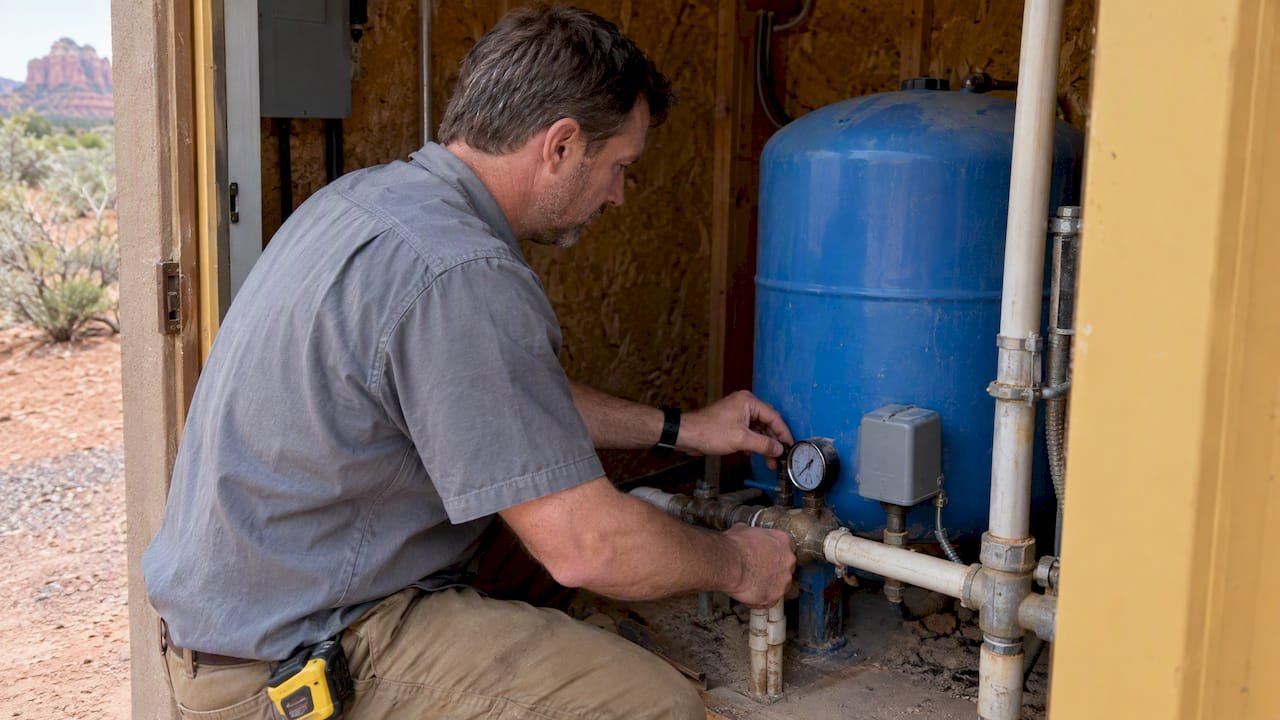
On the lending side, Arizona’s 2026 conforming loan limit for a single-unit property sits at $806,500, meaning properties priced above that threshold typically require a jumbo loan with a larger down payment and more robust reserve documentation, per Amy D. Brown’s cost and timeline breakdown.
A few more mechanics worth underwriting carefully:
- Lenders financing short-term rentals often use DSCR (debt service coverage ratio) underwriting, which weighs projected rental income rather than personal income alone.
- Reserve requirements for STR-focused loans tend to run higher than for a standard owner-occupied mortgage, sometimes six months or more of payments.
- Hard money or bridge loans can speed up a competitive purchase, though the true cost of that financing needs to be modeled against your expected hold period before you commit.
- Commercial-style financing is occasionally used for larger STR portfolios, and understanding current rate expectations helps set realistic cash flow assumptions before you make an offer.
Tactics to Improve Cash-on-Cash on Sedona Rentals
Raising your cash-on-cash return doesn’t require reckless risk. It usually means tightening a handful of levers that are easy to overlook in the excitement of closing day.
- Underwrite conservatively from day one, using occupancy assumptions below the market average, then look for upside through smart pricing tools, photography upgrades, and small experience add-ons like a hot tub or a well-stocked hiking gear closet.
- Automate your pricing calendar seasonally rather than setting one flat rate year-round, since Sedona’s spring and fall demand peaks deserve different rates than its quieter summer stretch.
- Build review velocity early by pricing slightly below market for your first bookings, since early reviews compound into long-term demand and higher achievable ADR.
- Negotiate group rates with cleaners, landscapers, and pool or hot tub maintenance vendors if you own more than one property, since volume discounts show up directly in your expense line.
- Explore seller financing, portfolio loans, or local lender relationships that reduce your required down payment, since lowering cash invested raises your cash-on-cash percentage even when cash flow stays flat.
Pro Tip: Run your numbers twice, once with your optimistic occupancy and once with a number five to ten points lower, and make your purchase decision based on the lower figure.
The Equity Team’s Perspective on Common Underwriting Mistakes
We see the same three mistakes trip up buyers again and again in Sedona. The first is trusting a seller’s past permit history as a guarantee of future eligibility, when permits are frequently non-transferable and need fresh verification. The second is plugging in optimistic occupancy numbers pulled from peak-season screenshots rather than full-year averages. The third is under-budgeting reserves, especially for homes with septic systems or well water that can surprise a new owner with maintenance costs.
Pre-approval or proof of funds matters more here than in most markets, since sellers above the $1 million tier often expect clean financing or cash before they’ll even consider an offer seriously. We built our STR CMA process specifically to catch these issues early, pairing permit review with local underwriting models before a buyer ever submits an offer.
— Chad
How We Help You Underwrite and Acquire High Cash-on-Cash Sedona STRs
Running these numbers on your own is doable, but Sedona’s permit quirks and seasonal swings reward buyers who have someone double-checking the fine print before the ink dries. We built our practice around exactly that gap: we are a dedicated short-term rental specialized real estate team, and we underwrite every property the way a working STR owner would, not just the way a generic listing sheet presents it.

Our services cover the full arc of a Sedona STR purchase or sale:
- Buyer representation that includes permit feasibility review alongside standard contract negotiation.
- A Sedona vacation rental CMA that models realistic cash flow using local comps rather than national averages.
- A Sedona rental exit strategy and valuation conversation for owners weighing whether to hold, refinance, or sell.
- Seller prep consultation to help current STR owners present their performance history clearly to serious buyers.
If you’re ready to see what a property could actually return under real local conditions, start with us and we’ll walk the numbers with you before you ever write an offer.
FAQ
What’s a good cash-on-cash return for Sedona rentals?
Conservative STR underwrites and most long-term rentals in the market tend to land in the 3% to 6% range once permit and seasonal factors are accounted for.
What is the 7% rule in real estate?
Investors are better served comparing their actual projected cash-on-cash percentage against their own return targets rather than relying on a general rule of thumb.
Are real estate prices dropping in the USA?
National home price trends vary by region and shift over time, and no source in our research ties a specific current figure to Sedona’s market. Investors evaluating Sedona should look at local comps and recent closed sales rather than national headlines when underwriting a purchase.
What are three specializations in the real estate industry?
Real estate professionals commonly specialize in areas like residential buyer or seller representation, commercial property transactions, and investment property consulting, which includes short-term rental underwriting. We focus specifically on the short-term rental specialization within the Sedona market.
Sources
- What Nobody Tells You About Buying a Home in Sedona
- Buying a Home in Sedona, AZ: Process, Costs & Timeline | Amy D. Brown
- Arizona legislative bill (SB1350) text