

Half-service or à la carte setups usually land at 10% to 15%, or a flat monthly fee instead of a cut of bookings. Before you run any numbers, know this: Sedona charges a flat $210 annual permit fee per unit, non-refundable, and if you renew late starting in 2026, tack on $50 (2 to 90 days late) or $100 (past 90 days).
Here’s a two-minute math. Say your property pulls in gross annual revenue at a level some Sedona-focused operators cite as realistic for a well-booked unit. The management fee can vary significantly depending on the percentage applied. That range alone should tell you why the fee percentage matters more than almost any other line item in your budget.
Pro Tip: Never evaluate a management quote on the percentage alone. A 20% fee with mediocre pricing tools can net you less than a 28% fee from a manager who fills your calendar with better ADR.
Beyond the headline percentage, expect these recurring costs on top of (or sometimes bundled into) your management fee:
- Cleaning per turnover, typically $150 to $250 depending on property size
- Onboarding or setup fees (photography, listing creation, initial supply stocking)
- Maintenance markups for repairs coordinated by your manager
- Booking platform fees passed through from Airbnb or Vrbo
- Occupancy and tourist tax collection and remittance
- Insurance, which for short-term rentals can run roughly three times a standard homeowner policy for comparable coverage
Once you’ve got these numbers sketched out, the smartest next move is getting a Sedona-specific projection built around your actual property, not a national average.
Table of Contents
- How much does property management cost sedona owners in practice?
- How The Equity Team Builds Your Sedona Cost Projection
- What Actually Moves the Needle on Sedona Management Fees
- Your Sedona Property Management Cost Checklist
- Where to Verify These Numbers Yourself
- Sources
How much does property management cost sedona owners in practice?
The 20% to 30% band isn’t arbitrary. Local Sedona-focused guides consistently point to that same range for full-service arrangements, though the guide itself notes something worth sitting with: a manager charging 25% to 30% doesn’t automatically outperform an organized owner running things solo. Fee size and fee value aren’t the same thing.
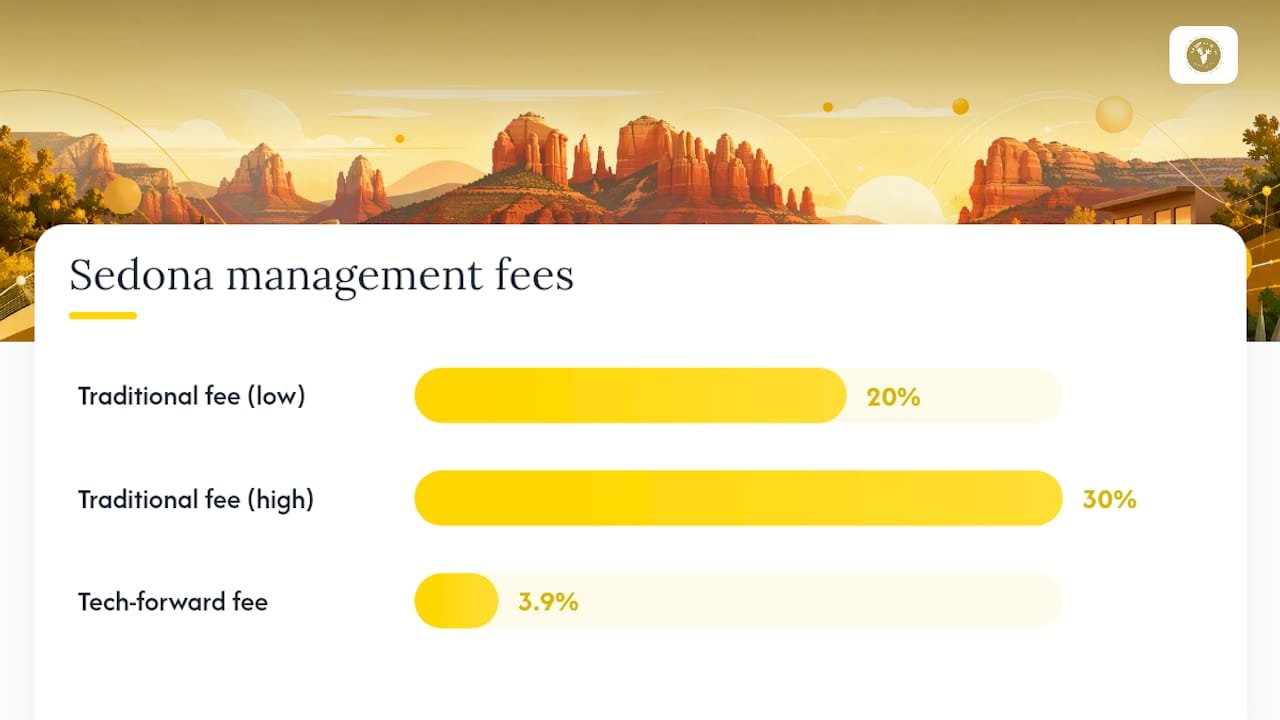
On the other end, tech-forward operators have started undercutting the traditional model dramatically. Some Sedona services now advertise fees as low as 3.9% by automating guest messaging, scheduling, and dynamic pricing, reserving human involvement for exceptions. That’s a fundamentally different cost structure, and it works best for owners comfortable with less hand-holding and more self-service through an app.
Where does your property land? A few concrete numbers to test against:
- Premium red-rock or trailhead-adjacent homes often command $350 to $500+ ADR with 70% to 75% occupancy in peak seasons.
- A $750,000 Sedona property running full management showed net operating income between $40,000 and $55,000 annually, before debt and taxes, after accounting for HOA dues, utilities, and reserves.
- Additional operating lines beyond management such as utilities, HOA, and replacement reserves can add significant annual costs.
Sedona’s pricing environment moving into 2026 keeps shifting with demand, so treat any fee quote as a snapshot, not a permanent number.
How The Equity Team Builds Your Sedona Cost Projection
Equity Team spends its days in Sedona’s short-term rental data: local ADR bands, seasonal occupancy swings, permit renewal timing, and the fee structures different management models actually charge. That local grounding matters because a generic national average tells you almost nothing about what your specific property, on your specific road, in your specific season, will net after fees.
Owners who reach out get a line-item breakdown, not a guess: projected gross revenue, a recommended fee model based on property type, and specific spots where operational costs could shrink without cutting guest quality. It’s the difference between hoping your numbers work and knowing them before you sign anything.
To get a fast, property-specific read, send your address, typical available nights, sleep count, and any standout amenities (pool, hot tub, red-rock views). Most owners get a workable estimate back within a few business days. If you’re still deciding whether to buy your first Sedona STR or want a comparative market analysis on a property you already own, that’s the natural starting point.
What Actually Moves the Needle on Sedona Management Fees
What I see most often changing a Sedona owner’s quote isn’t the manager’s brand, it’s the property itself. A three-bedroom home fifteen minutes from West Sedona trailheads with a private pool gets treated very differently than a condo near uptown, and the fee reflects that gap in service intensity, not just revenue potential.

Distance genuinely matters here. Managers factor in drive time for cleaning crews, maintenance calls, and turnover checks, so a remote Village of Oaks Creek property can carry a slightly higher operating cost than something centrally located. Luxury amenities compound this: concierge service, premium linens, and pool maintenance all add recurring costs that a basic condo simply doesn’t need.
When comparing models, think in categories rather than brand names. Full-service percentage models cover guest communication, marketing, and maintenance coordination, but usually add cleaning and onboarding fees on top. Flat-fee or tech-driven models run leaner but expect more owner involvement. Owner-operators keep the most cash but take on every 2 AM guest text themselves. National franchises, local boutiques, and solo owners each carry different fee structures and service ceilings, so match the model to how hands-on you want to be.
Before signing anything, get clear on contract minimums, onboarding fees, and who pays for the first professional photo shoot.
Pro Tip: Ask any prospective manager for their average occupancy and ADR across comparable Sedona properties, not portfolio-wide. A manager worth a 28% fee should be able to show you numbers that justify it.
Your Sedona Property Management Cost Checklist
Estimating Sedona property management costs comes down to one formula: gross revenue times your chosen fee percentage, minus recurring operating lines, equals estimated net operating income before debt and taxes.
- Use 20% to 30% of gross revenue as your full-service benchmark, 25% for quick math.
- Always ask about cleaning, onboarding, and maintenance markups separately from the headline fee.
- Confirm your Sedona STR permit is current before estimating anything else.
- Run the math: revenue × fee % − line items (cleaning, insurance, reserves) = estimated NOI.
- Watch for contract red flags: long minimum terms, vague onboarding costs, no performance reporting.
| Point | Details |
|---|---|
| Typical fee range | Full-service runs 20% to 30% of gross revenue; à la carte models run 10% to 15% or flat rates. |
| Permit cost is fixed | Sedona charges $210 per unit annually, plus late fees starting in 2026. |
| Cleaning adds up separately | Budget $150 to $250 per turnover on top of any management percentage. |
| Property type drives cost | Remote or luxury properties with pools and concierge service carry higher operating costs. |
| Get a local projection | Equity Team builds Sedona-specific cost and revenue estimates using local ADR and permit data. |
Where to Verify These Numbers Yourself
Before locking in any budget, confirm the details yourself with primary sources rather than relying on secondhand estimates.
- Start with the Sedona vacation rental owner’s guide for the exact permit fee schedule and renewal deadlines.
- Cross-check management-fee ranges and sample P&L math against the Sedona Airbnb investment math breakdown.
- Review current Sedona real estate market trends to see whether your property’s price point still supports strong STR economics after fees.
- If you’re weighing financing costs into your net return, DSCR loan options for Arizona investors are worth a look before you commit.
A sensible order of operations: check your permit status first, confirm local ADR and occupancy for your property type second, benchmark management fees third, then gather your property details for an accurate quote. That sequence keeps you from budgeting around a number that doesn’t reflect Sedona’s actual market.
Is property management in Sedona negotiable?
Often, yes, especially on onboarding fees or contract length. Fee percentages are less flexible for established local managers but worth asking about if you’re bringing multiple properties.
Do all Sedona managers charge the same fee structure?
No. Full-service percentage models, flat-fee tech-driven services, and hybrid arrangements all coexist in Sedona, and the right fit depends on how hands-on you want to be.
How often do Sedona management fees change?
Fees themselves shift less often than the market conditions around them; ADR and occupancy swing seasonally, which changes your effective cost even if the percentage stays fixed.