

What are the top alternatives to discovertheregion.com for Sedona STR operators?
If you’re a Sedona short-term rental investor searching for discovertheregion.com alternatives, the honest answer is: the right platform depends entirely on what job you need done. Discover the Region is a bi-monthly lifestyle magazine celebrating Arizona’s culture, red-rock landscapes, and community stories. It’s gorgeous editorial content, but it doesn’t move reservations or manage pricing. For operators running top-performing properties, the gap between “inspiring a reader” and “filling a calendar” is where platform choice really matters.
The best alternatives fall into three distinct buckets:
- Local travel discovery and curated guide platforms (Travelandword.com, NotForTourists.com, LikeALocalGuide.com, EverythingSoutheastAZ.com) for top-of-funnel guest awareness and authentic regional storytelling
- AI-native trip planning and booking tools (Immerse AI, Voyagier, Bleko) for personalized itinerary creation and direct booking conversion
- Post-booking operational platforms (OneAir AI) for dynamic pricing, reservation monitoring, and profitability optimization after a guest clicks “book”
Sedona’s short-term rental market rewards operators who think in layers, not just one platform. Each category above serves a different stage of the guest journey, and the savviest investors use at least one from each.
Table of Contents
- How different platform types serve Sedona STR marketing and guest engagement
- Why separating discovery marketing from operations protects your ROI
- Strategic advice for Sedona STR investors choosing platform alternatives
- Key Takeaways
How different platform types serve Sedona STR marketing and guest engagement
Not every travel platform is built for the same purpose, and mixing them up is one of the most common (and expensive) mistakes STR operators make. Here’s how the main categories break down and where each fits into a Sedona property’s marketing stack.

Traditional travel blogs and regional guides focus on storytelling, curated recommendations, and destination inspiration. Platforms like Travelandword.com and NotForTourists.com build trust with travelers who want to go deeper than a Google search. They attract readers who are already curious about a place, making them useful for brand awareness before a guest ever considers booking.
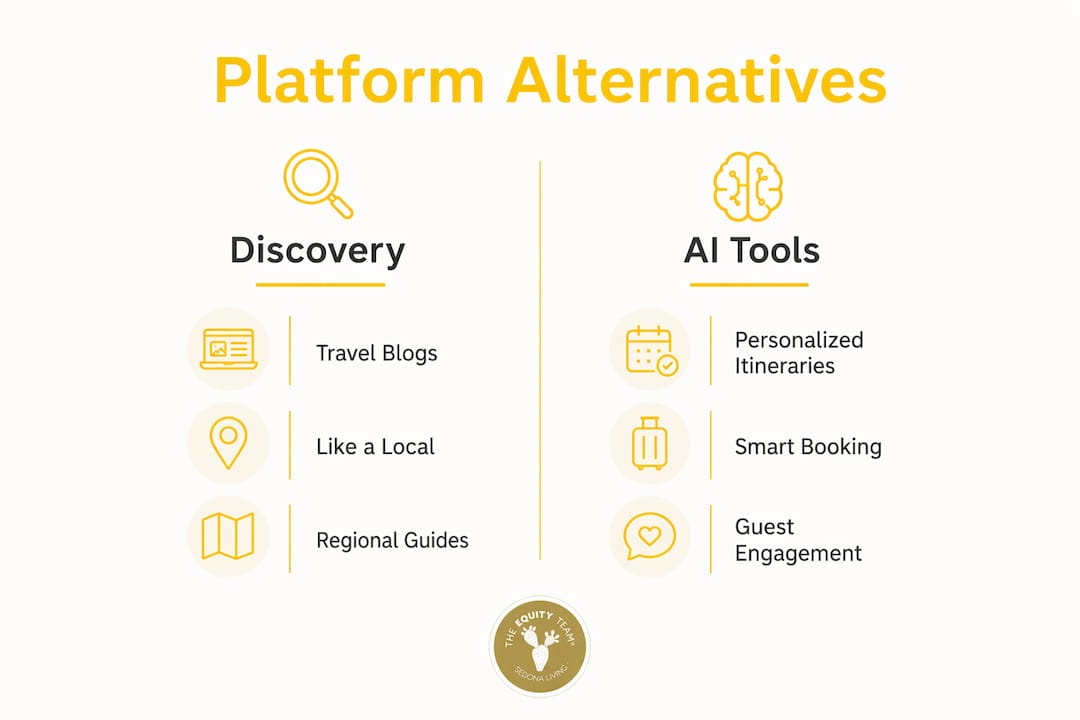
“Like a local” discovery platforms take that a step further. LikeALocalGuide.com connects travelers with insider tips from actual residents, which plays beautifully in a market like Sedona where the vortex hikes, hidden swimming holes, and off-menu wine experiences are what separate a memorable stay from a forgettable one. GoWithGuide.com operates similarly, pairing travelers with private local guides for personalized tours.
AI-native planning tools are where things get genuinely exciting. Immerse AI’s Lotus builds personalized itineraries, lets groups vote on activities in real time, and handles one-click reservations for flights, hotels, and experiences. Voyagier goes even further, functioning as a full AI-native travel agency that actually transacts bookings through live inventory via Sabre GDS rather than handing guests a pretty plan they still have to book elsewhere. For Sedona operators, a guest who arrives with a pre-built itinerary centered on your property’s neighborhood is a guest who stays longer and reviews better.
Social travel platforms like Pangea connect solo travelers and groups based on shared routes and trip dates, which can drive organic awareness for properties that cater to adventure travelers or digital nomads.
Key distinctions worth knowing:
- Discovery platforms build awareness; booking platforms convert it
- AI tools like Voyagier and Immerse AI are replacing static travel directories for younger, tech-comfortable guests
- Regional guides (EverythingSoutheastAZ.com, LocalGuides.com) carry strong local SEO authority that can indirectly surface your property to Arizona-focused searchers
Why separating discovery marketing from operations protects your ROI
Here’s a trap that catches even experienced STR investors: treating a lifestyle magazine placement or a regional guide listing as an operational strategy. It isn’t. Discover the Region’s editorial mission is deep storytelling, not transactional booking or property management. Spending time and money optimizing for that channel while neglecting dynamic pricing is a bit like polishing the lobby chandelier while the HVAC breaks down.
Discovery marketing covers everything that happens before a guest books: awareness, inspiration, destination research. Operational performance covers everything after: pricing, reservation management, guest communication, and post-stay reviews. The two require completely different tools and completely different success metrics.
For Sedona specifically, the STR investment landscape is competitive enough that operators who blur this line tend to underperform. A beautiful feature in a regional magazine might generate warm feelings about Sedona, but it won’t automatically rebook a guest at a lower rate when prices drop. That’s where post-booking platforms like OneAir AI earn their keep, automatically monitoring reservations and rebooking at lower rates when pricing shifts.
The practical split looks like this:
- Discovery marketing tools: regional guides, travel blogs, AI trip planners, social travel apps
- Operational performance tools: dynamic pricing engines, reservation monitoring platforms, guest messaging automation, revenue management systems
Keeping these two categories separate in your budget and your reporting makes it far easier to see what’s actually driving bookings versus what’s building brand warmth.
Strategic advice for Sedona STR investors choosing platform alternatives
Equity Team works exclusively with investors in the top tier of Sedona’s rental market, and the platform question comes up constantly. The answer almost always starts with the same question back: what stage of the guest journey are you trying to improve?
When evaluating any alternative platform, check for four things before committing time or money:
- Accuracy of local insights. Does the platform actually know Sedona, or is it recycling generic Arizona content? Platforms with real local contributors (LikeALocalGuide.com, GoWithGuide.com) tend to produce content that resonates with the guests who book Sedona’s premium properties.
- Integration with your booking and property management systems. An AI trip planner that can’t connect to your calendar or pricing tool creates more work, not less. Voyagier’s end-to-end booking capability and Immerse AI’s group planning features are worth evaluating specifically for integration compatibility.
- Pricing model and subscription costs. Some platforms are free to list on; others charge monthly memberships or per-booking fees. OneAir AI operates on a membership model that pays for itself quickly through automated savings on hotel and flight rebooking. Bleko is currently free. Evaluate total cost against the specific revenue lever each platform pulls.
- Learning curve and adoption timeline. AI-native tools like Immerse AI and Voyagier are genuinely intuitive, but expect a few weeks to understand how guests interact with them before drawing conclusions. Regional guide platforms require almost no learning curve but also deliver slower, softer results.
Pro Tip: The most overlooked factor in platform selection for Sedona operators is guest profile alignment. Sedona attracts a wildly diverse mix of wellness seekers, adventure hikers, art collectors, and wine tourists. A platform that serves one profile brilliantly may be invisible to another. Check whether a platform’s user base actually matches your property’s ideal guest before investing in it. Equity Team’s market analysis resources can help you define that profile with real data.
Emerging real estate marketing trends point clearly toward AI-powered tools replacing static directories as the primary discovery channel for high-intent travelers. Sedona operators who adopt these tools now, rather than waiting for the market to force the shift, tend to build a meaningful head start on competitors still relying on print placements and passive listings.
Key Takeaways
The strongest platform strategy for Sedona STR operators combines curated local discovery tools with AI-native booking platforms and post-booking optimization, treating each as a separate layer with its own metrics and budget.
| Point | Details |
|---|---|
| Platform type determines purpose | Discovery platforms build awareness; AI booking tools convert it; operational platforms protect revenue after booking. |
| Separate marketing from operations | Conflating the two leads to wasted spend on channels that inspire but don’t convert or optimize. |
| Evaluate local accuracy first | Platforms with genuine Sedona or Arizona-specific content outperform generic travel directories for guest engagement. |
| AI-native tools are the growth edge | Immerse AI and Voyagier offer personalized itineraries and actual booking transactions, not just inspiration. |
| Equity Team expertise accelerates decisions | Working with STR-specialized agents who know Sedona’s top-performing properties shortens the platform learning curve significantly. |
Ready to find a Sedona STR property that performs in the top tier of the market? Equity Team specializes exclusively in short-term rental investment in Northern Arizona, representing buyers and sellers in the top 10% of Sedona’s rental market. The red rocks aren’t going anywhere, but the best properties move fast.