

A hot tub is the single highest-return amenity a Sedona short-term rental (STR) property owner can install, delivering 20–40% higher nightly rates and 15–25% greater occupancy compared to listings without one. Sedona’s average STR already pulls in $83,895 in trailing 12-month revenue, with an ADR of $440 and occupancy around 49%. A hot tub pushes both numbers meaningfully higher. The role of hot tub in Sedona STR revenue is not a soft lifestyle perk. It is a measurable financial lever, and the math behind it is surprisingly compelling for anyone serious about STR profitability in Sedona.
How does a hot tub influence occupancy and nightly rates in Sedona STRs?
The influence of hot tubs on booking performance works through two distinct channels: rate premiums and occupancy lift. Both happen at the same time, which is what makes the math so interesting.

Rate premiums that guests actually pay
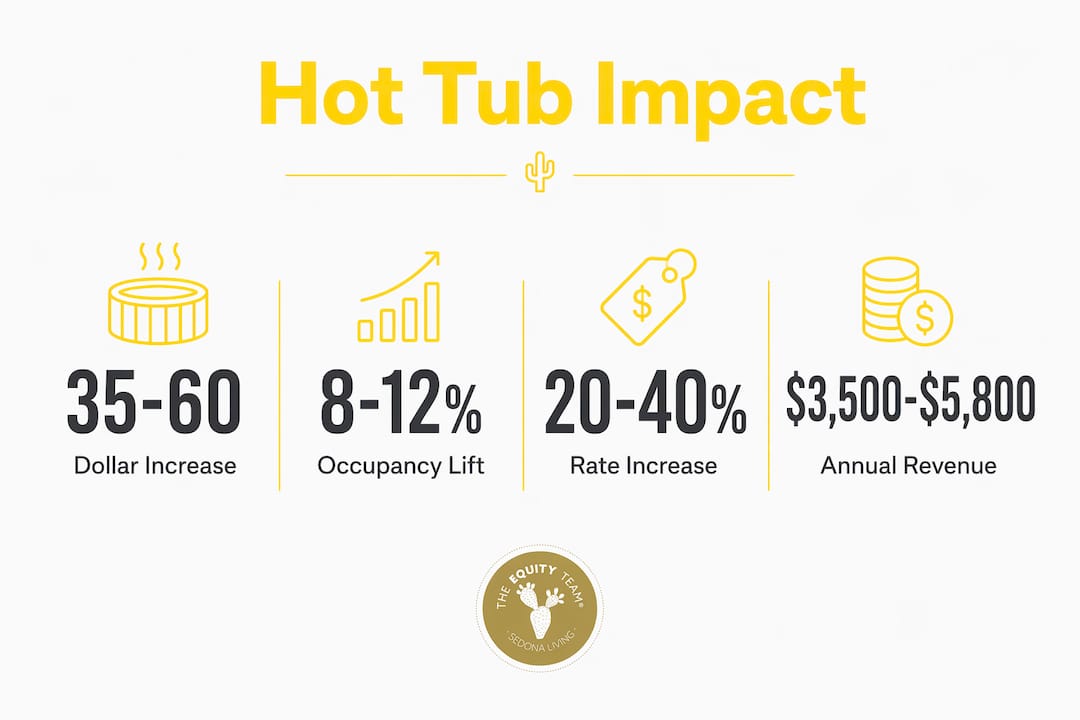
Sedona guests searching for a serene escape under those famous red rocks are already willing to spend. Add a hot tub to the listing, and the nightly rate can climb by $35–$60 per night on average. That premium compounds quickly across a full calendar year. A property running 180 booked nights annually at an extra $45 per night generates $8,100 in additional gross revenue from the rate increase alone.
Occupancy gains in the shoulder months
In Sedona’s cooler shoulder seasons, hot tubs increase occupancy by 8–12 percentage points, adding $3,500–$5,800 in annual revenue from occupancy lift alone. That figure does not include the rate premium. Combined, stacking both effects yields a 35–55% gross revenue increase in shoulder-climate markets, with payback arriving by month 12–14 on average for simpler installations.
The filter visibility advantage
The “hot tub” filter on Airbnb and Vrbo is a quiet superpower. When a guest applies that filter, the listing pool shrinks to 8–20% of the region’s total inventory. Suddenly, a property is competing against far fewer options. That concentrated demand means higher booking likelihood and less pressure to discount. For Sedona investors, this filter effect is particularly valuable during the spring and fall peaks when search volume spikes.
Key occupancy and rate effects at a glance:
- Nightly rate premium: $35–$60 above comparable listings without a hot tub
- Occupancy lift: 8–12 percentage points in shoulder and cooler months
- Gross revenue increase: 35–55% when rate and occupancy gains combine
- Listing pool reduction: down to 8–20% of regional inventory when the hot tub filter is applied
- Annual occupancy revenue add: $3,500–$5,800 from occupancy lift alone
What are the costs and payback timelines for a Sedona STR hot tub?
Installing a hot tub is an investment with real numbers attached, and those numbers vary significantly based on the type of unit chosen.
Plug-and-play versus hard-wired units
Plug-and-play 110V units are cheaper to install and easier to set up, but they heat more slowly and are generally less durable under heavy STR use. Hard-wired 220V units cost roughly double to install but perform better for high-turnover rentals. Hard-wired 220V units carry payback periods of 28–40 months, while plug-and-play units land at 22–34 months. The higher upfront cost of a 220V unit is often worth it for a property running strong occupancy year-round.
Installation and operating costs
Initial installation costs run from $4,000 to $7,000 depending on the model and electrical setup required. Ongoing monthly expenses include:
- Electricity: $30–$80 per month, higher in colder months when the tub works harder to maintain temperature
- Chemicals: $20–$40 per month for sanitizers, pH balancers, and shock treatments
- Cover and filter replacements: periodic costs that vary by usage frequency and water quality
- Annual servicing: a professional inspection and tune-up extends tub life considerably
Operating costs are real but manageable. The monthly electricity and chemical spend is easily absorbed by even a modest rate premium on a handful of booked nights.
Payback timelines in context
Full ROI payback typically arrives within 6–34 months depending on installation complexity and market positioning. Sedona’s climate and dual-peak demand pattern push properties toward the shorter end of that range. Hot climates, by contrast, see minimal occupancy lift from hot tubs and rarely achieve positive ROI. Sedona is firmly in favorable territory.
Pro Tip: Choose a hard-shell 220V unit if your Sedona property runs above 50% occupancy. The durability pays for itself in avoided repairs and better guest reviews, both of which protect long-term revenue.
Why are hot tubs especially valuable during Sedona’s shoulder seasons?
Sedona’s demand pattern is genuinely unusual. Most vacation markets peak in summer and go quiet in winter. Sedona runs two distinct peaks: spring (march through may) and fall (september through november). Summers are hot, and winters are mild but slower. That dual-peak structure creates a specific opportunity for hot tubs.
“Sedona’s dual-peak seasonal pattern creates unique opportunities for hot tubs to drive bookings in cooler months when occupancy would otherwise dip, unlike many markets that rely solely on peak summer seasons.”
During the shoulder months, guests searching for a warm soak under Sedona’s star-filled sky are highly motivated. They apply the hot tub filter, find a short list of qualifying properties, and book. Without a hot tub, a property simply does not appear in that search. The booking goes elsewhere.
Shoulder season versus peak season performance
| Season | Typical Occupancy (no hot tub) | Occupancy Lift with Hot Tub | Revenue Impact |
|---|---|---|---|
| Spring (Mar–May) | Moderate to high | 5–8 points | Strong rate premium maintained |
| Summer (Jun–Aug) | Lower due to heat | Minimal lift | Hot tub less relevant |
| Fall (Sep–Nov) | Moderate | 8–12 points | Highest occupancy gain of the year |
| Winter (Dec–Feb) | Lower | 6–10 points | Significant lift, extended booking windows |
The fall shoulder season delivers the biggest occupancy gains. Guests visiting Sedona for the foliage, hiking, and cooler air actively seek hot tub properties. A listing without one loses those bookings to competitors. The Sedona STR market in 2026 rewards amenities that extend the booking window beyond the two primary peaks, and a hot tub does exactly that.
Beach and hot-climate markets see the opposite effect. When ambient temperatures are already high, a hot tub adds little appeal. Sedona’s climate is the reason the hot tub ROI math works so well here compared to markets like Phoenix or Scottsdale.
How should Sedona property owners market their hot tub listings?
Owning a hot tub is one thing. Getting full financial credit for it in the market is another. The marketing strategy around the amenity matters as much as the installation itself.
Listing and marketing strategies that move the needle:
- Lead with the hot tub in the title and first photo. Airbnb and Vrbo both weight amenity mentions in search ranking. A title like “Red Rock Views + Private Hot Tub” outperforms a generic title every time.
- Use professional photography. A well-lit evening shot of the hot tub with Sedona’s red rocks in the background is worth more than a dozen interior photos. Guests book the experience, and that image sells it.
- Set pricing that reflects the premium. Use dynamic pricing tools to capture the full $35–$60 rate premium during shoulder months. Underpricing a hot tub listing leaves real money on the table.
- Write clear guest rules. Specify shower-before-entry requirements, maximum occupancy in the tub, and chemical maintenance schedules. Clear rules protect the tub and reduce the risk of water quality issues that generate negative reviews.
- Bundle complementary amenities. A fire pit, outdoor seating area, or pool alongside the hot tub creates a compelling outdoor experience. Bundled outdoor amenities in Sedona STRs consistently outperform single-amenity listings in both rate and occupancy.
- Monitor reviews for hot tub mentions. Guest feedback that references the hot tub positively is a signal to lean into that marketing angle. Negative mentions about water quality or temperature are a maintenance alert, not just a PR problem.
Pro Tip: Schedule a hot tub chemical check between every guest stay, not just weekly. Water quality degrades faster with high turnover, and a single bad review about a cloudy tub can suppress bookings for weeks.
Proper maintenance and guest education extend hot tub lifespan from 5 to 20 years. That range is enormous, and the difference comes down almost entirely to how well the owner manages upkeep and sets guest expectations. A well-maintained tub is a revenue asset for two decades. A neglected one becomes a liability within a few seasons.
Key Takeaways
A hot tub delivers measurable, compounding revenue gains for Sedona STR properties by raising nightly rates, lifting occupancy in shoulder seasons, and concentrating demand through platform search filters.
| Point | Details |
|---|---|
| Rate and occupancy both rise | Hot tubs add $35–$60 per night and 8–12 occupancy points in Sedona’s shoulder months. |
| Payback arrives faster in Sedona | Favorable climate and dual-peak demand push payback to 12–14 months for simpler installs. |
| Filter visibility reduces competition | The hot tub filter shrinks the listing pool to 8–20% of regional inventory, concentrating demand. |
| Maintenance determines long-term ROI | Quality tubs with consistent care last 5–20 years; neglect inverts the revenue gains quickly. |
| Shoulder seasons are the real prize | Fall and spring deliver the highest occupancy lifts, making Sedona ideal for hot tub ROI. |
Chad’s take on hot tubs as a Sedona STR investment
Hot tubs are the amenity I get asked about most, and my answer is always the same: in Sedona, they work. The data backs it up, but so does every conversation I have with owners who installed one and watched their fall bookings fill up weeks earlier than before.
What I tell investors is this: the tub itself is not the hard part. The hard part is the discipline around maintenance. I have seen properties with beautiful hot tubs generate mediocre reviews because the owner treated chemical checks as optional. One cloudy-water complaint in a review can suppress bookings for an entire shoulder season. That is the risk that does not show up in the ROI spreadsheet.
The 2026 Sedona market is competitive at the top end. High-end guests in Sedona expect quality, and they notice when a hot tub is not properly maintained. Invest in a good unit, set clear guest rules from day one, and treat the maintenance schedule like a non-negotiable operating cost. Do that, and the hot tub becomes one of the most reliable revenue drivers in your property’s toolkit.
— Chad
Equity Team can help you find the right Sedona STR property
Sedona’s STR market rewards properties with the right amenities in the right locations. Equity Team specializes in helping investors identify properties where a hot tub and other high-return upgrades translate directly into top-decile revenue performance.
Whether you are evaluating your first Sedona purchase or adding to an existing portfolio, the team’s deep knowledge of local demand patterns, seasonal dynamics, and amenity ROI makes the difference between a good investment and a great one. Start with a look at how to find the right STR property in Sedona, or browse current Sedona STR listings to see what is available in the market right now. Equity Team works exclusively with buyers and sellers in the top 10% of the Sedona rental market, and that focus shows in the results clients achieve.
For additional perspective on Sedona’s real estate market from a trusted local partner, Delex Realty offers complementary market insights worth reviewing alongside your investment analysis.
FAQ
How much does a hot tub increase Sedona STR revenue?
Hot tub listings earn 20–40% higher nightly rates and 15–25% greater occupancy compared to comparable listings without one. In Sedona’s shoulder seasons, the combined effect adds $3,500–$5,800 annually from occupancy lift alone, before counting the rate premium.
What is the payback period for a hot tub in a Sedona rental?
Payback ranges from 6–14 months for simple plug-and-play installs to 28–40 months for hard-wired 220V units. Sedona’s dual-peak demand pattern pushes most properties toward the shorter end of that range.
How much does it cost to maintain a hot tub in an STR?
Monthly operating costs run $30–$80 for electricity and $20–$40 for chemicals, plus periodic cover and filter replacements. These costs are modest relative to the nightly rate premium a hot tub commands.
Do hot tubs work in all vacation rental markets?
Hot tubs deliver strong ROI in cooler and shoulder-season markets like Sedona. Hot climates see minimal occupancy lift and rarely achieve positive ROI, making climate the single most important factor in evaluating a hot tub investment.
How long does a hot tub last in a high-turnover STR?
With proper maintenance and clear guest rules, a quality hot tub lasts 5–20 years. The wide range reflects the difference between consistent upkeep and neglect. Higher-quality units with regular care consistently reach the upper end of that lifespan.