

Selling a home in Sedona sounds dreamy until the paperwork starts piling up and the calendar starts feeling like a countdown clock with a mind of its own. The sedona real estate seller timeline is one of the most misunderstood parts of the process, and that confusion costs sellers time, money, and more than a few sleepless nights. Whether the red rocks are calling you to downsize, cash out, or simply move on to the next adventure, knowing exactly what happens and when makes the whole experience feel a lot less like a mystery tour and a lot more like a well-planned road trip.
Table of Contents
- Key takeaways
- The Sedona real estate seller timeline explained
- Listing and days on market in Sedona
- Contract to close: milestones and deadlines
- Common timeline challenges and how to avoid them
- What to expect at closing and after
- My honest take on the Sedona seller timeline
- Ready to sell? Equity Team has you covered
- FAQ
Key takeaways
| Point | Details |
|---|---|
| Start disclosures early | Prepare your Seller’s Property Disclosure Statement before listing to avoid contract delays and buyer termination rights. |
| Sedona market moves slowly | Average days on market hit 86 in spring 2026, so competitive pricing is critical for a timely sale. |
| Financed deals take 30 to 45 days | Budget for a standard closing window; cash deals can close in as few as 7 days. |
| HOA documents cause real delays | Order HOA resale certificates early since processing delays are a known bottleneck in Sedona closings. |
| Local expertise shortens the timeline | A Sedona-specialized agent helps anticipate market-specific timing quirks that generic agents miss. |
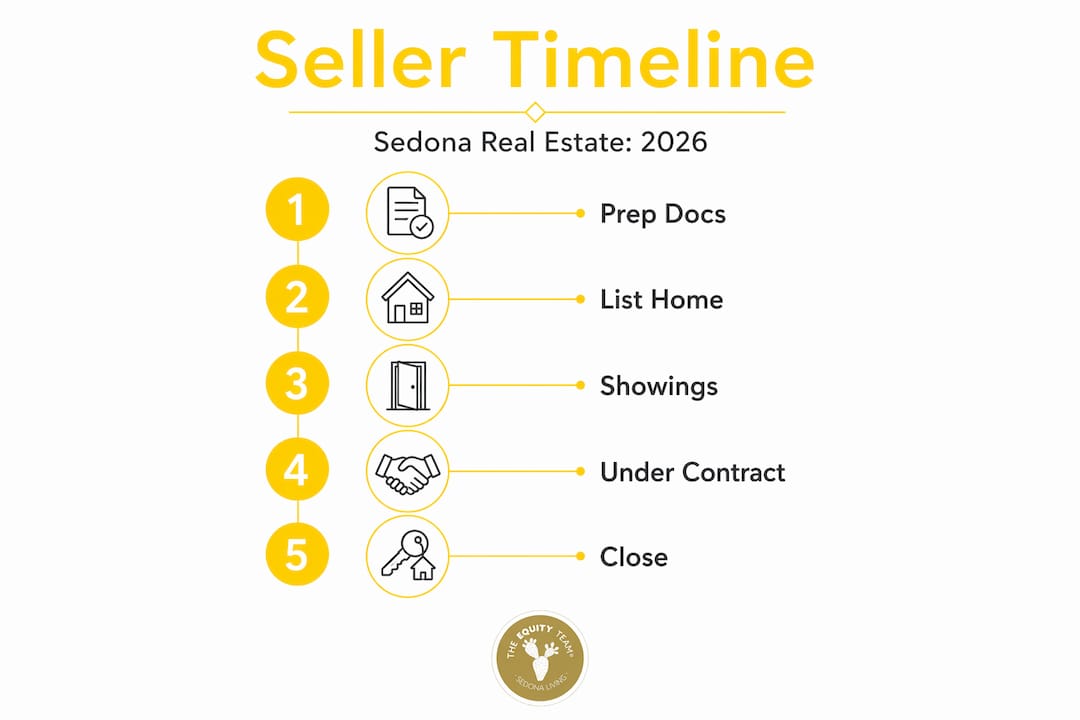
The Sedona real estate seller timeline explained
Before anything goes live on the MLS, there is a surprisingly important phase that many sellers skip right over: preparation. And in Sedona, where buyers are often paying well over a million dollars for a property, skipping prep is like showing up to a vortex hike in flip-flops. Technically possible. Not recommended.
What to gather before you list
The cornerstone document every Arizona seller needs is the Seller’s Property Disclosure Statement, better known as the SPDS. Building a complete SPDS binder before listing, including receipts, permits, and service records, is one of the smartest moves a seller can make. It keeps the timeline clean and gives buyers confidence.
Here is what sellers should pull together before the sign goes in the yard:
- SPDS and supporting documents: Gather repair receipts, permit records, and any documentation of work done on the property.
- HOA documents: If the property is in a homeowners association, HOA resale certificates take time to process and are a known source of closing delays. Order them early.
- Utility records and service history: Buyers love seeing a well-documented home. It builds trust and reduces inspection surprises.
- Title and survey documents: Having these ready speeds up escrow significantly.
- Staging and pricing research: Look at comparable sales in Sedona, not just Arizona broadly. The market here is quirky in the best way, with luxury buyers, vacation home shoppers, and STR investors all in the mix.
Pro Tip: Do not wait for an accepted offer to start gathering your SPDS documents. Sellers who prep this binder before listing shave days off the contract timeline and reduce the risk of a buyer walking away over a paperwork gap.
Listing and days on market in Sedona
Once the home is prepped and priced, it goes live. And then the waiting begins. Sedona is a market that rewards patience and punishes overpricing in equal measure.
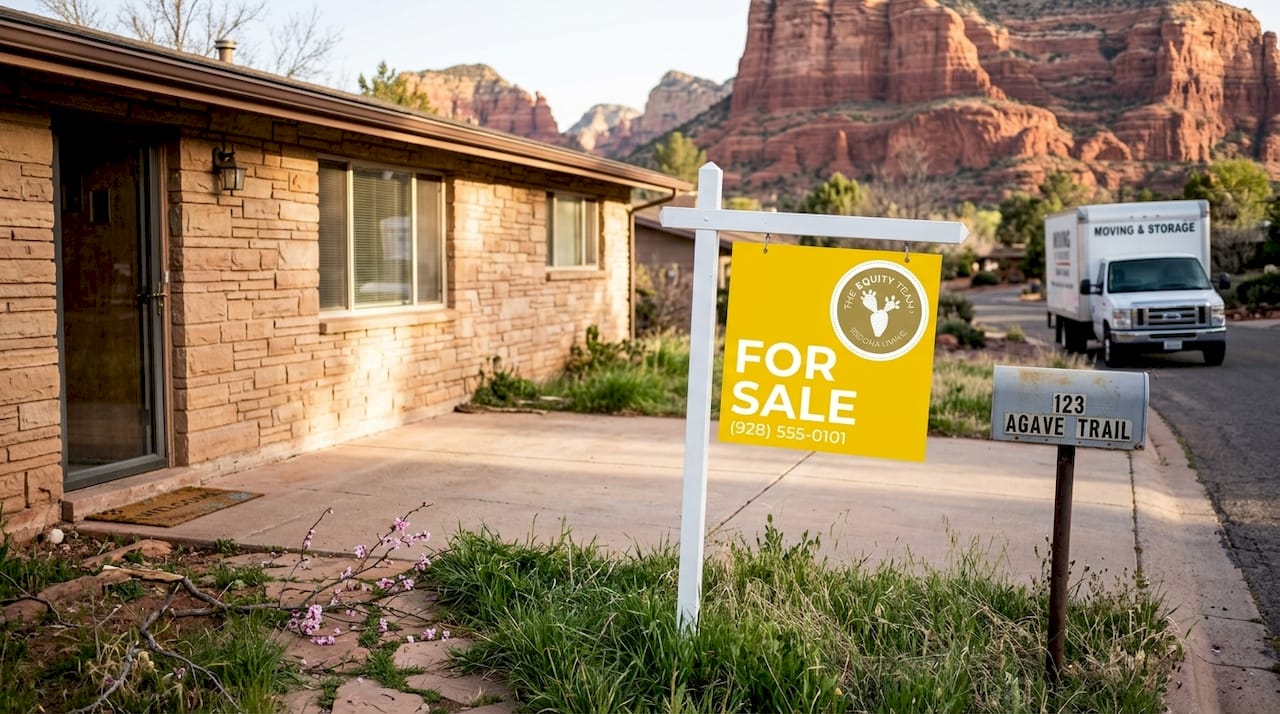
The spring 2026 Sedona market showed an average of 86 days on market, a 50% jump from the prior month, with an average sales price sitting at $1.41 million. That tells a clear story: buyers are selective, and homes that are not priced right are sitting.
| Market Metric | Spring 2026 Data |
|---|---|
| Average days on market | 86 days |
| Average sales price | $1.41 million |
| Market trend | Slower absorption, selective buyers |
| Best pricing strategy | Competitive from day one |
Seasonality matters here too. Sedona draws heavy tourist and buyer traffic in spring and fall when the weather is perfect and the red rocks are at their most photogenic. Listing in January or August tends to produce longer days on market simply because fewer buyers are actively touring. The Sedona real estate market trends show this pattern clearly across price tiers.
Pro Tip: If the home sits for more than three weeks without a serious inquiry, do not wait another three weeks to react. Revisit pricing, refresh photos, or adjust the marketing angle. Buyer psychology shifts fast in a slow market.
Active marketing in Sedona means more than a few MLS photos. Professional photography, drone footage of the surrounding landscape, and targeted digital ads aimed at out-of-state buyers and investors all move the needle. Sedona attracts buyers from California, Texas, and the Pacific Northwest who are shopping remotely before they ever set foot in Arizona.
Contract to close: milestones and deadlines
Once an offer is accepted, the real timeline clock starts ticking. This phase is where most sellers either stay on track or start falling behind, and it all comes down to knowing the key deadlines.
Here is the standard sequence for a financed sale in Sedona:
- Day 1: Contract acceptance. The clock officially starts. Earnest money is typically due within 24 to 48 hours.
- Days 1 to 3: SPDS delivery. The SPDS is delivered within about 3 days of contract acceptance in Arizona. Late delivery hands buyers a termination right, so this is not a deadline to miss.
- Days 1 to 10: Inspection period. The standard Arizona inspection period is 10 days. Buyers complete their due diligence and submit a Buyer’s Inspection Notice, which kicks off repair negotiations or, in some cases, cancellation.
- Days 10 to 20: Appraisal and loan processing. For financed deals, the lender orders an appraisal. This is often where timelines stretch if the property appraises below the contract price.
- Days 20 to 30: Loan approval and final conditions. The lender works through underwriting. Sellers should stay responsive to any document requests that come through escrow.
- Days 30 to 45: Close of escrow. The typical financed closing in Arizona lands in the 30 to 45 day window. Cash deals are a different story entirely.
Financed vs. cash closing comparison
| Deal Type | Typical Timeline | Key Variables |
|---|---|---|
| Financed purchase | 30 to 45 days | Appraisal, lender underwriting, inspection negotiations |
| Cash purchase | 7 to 14 days | Title search, SPDS review, no appraisal required |
Cash closings in Sedona can happen in as few as 7 days when the buyer skips appraisal and lender contingencies entirely. For sellers who need to move fast, this is worth knowing. The escrow deadline sequence from earnest money through closing must be carefully coordinated, and a good transaction coordinator keeps all of it on track.
Common timeline challenges and how to avoid them
Sedona has its own set of quirks that can throw a timeline sideways. Knowing them in advance is the difference between a smooth close and a very stressful phone call from your escrow officer.
- Late SPDS delivery: Incomplete or late SPDS delivery is one of the most common cancellation triggers in Arizona. It compresses the buyer’s due diligence window and creates unnecessary drama. Prep it early and deliver it on time.
- HOA document delays: Many Sedona properties sit in HOA communities. HOA resale certificates take time to process, and missed deadlines here can push closing by days or even weeks.
- Appraisal gaps: In a market where the average sales price is $1.41 million, appraisals can come in low. Sellers should have a plan for this scenario before it happens, whether that means renegotiating price, asking the buyer to cover the gap, or exploring seller carry financing as a creative solution.
- Slow inspection negotiations: The 10-day inspection window moves fast. Sellers who drag their feet on repair requests or counter-offers risk losing the buyer entirely.
- Lender delays: Not all lenders move at the same speed. Sellers cannot control this, but they can ask their agent to vet buyer financing strength before accepting an offer.
“The sellers who close on time are almost always the ones who treated the pre-listing prep phase like it mattered. Because it does.” — Experienced Sedona transaction coordinator
When speed is the priority, cash offers and seller financing options can cut weeks off the standard timeline. These are worth exploring, especially for investment properties or sellers with flexible terms.
What to expect at closing and after
Closing day in Sedona is anticlimactic in the best possible way. After weeks of deadlines and document requests, it mostly involves signing a stack of papers and waiting for a phone call.
Here is what the final stretch looks like:
- Final walkthrough: The buyer does a final walkthrough, typically the day before or morning of closing, to confirm the property’s condition matches the contract.
- Signing with escrow: Both parties sign closing documents with the title and escrow company. Sellers can often sign in advance if they are traveling.
- Deed recording and fund disbursement: Once the deed records with the county, funds are released to the seller. This typically happens the same day as signing or the following business day.
- Possession transfer: The contract specifies when the buyer takes possession, often at close of escrow or within a negotiated timeframe after.
- Post-close record keeping: Sellers should retain all closing documents for tax purposes. Capital gains reporting, cost basis calculations, and any 1031 exchange planning all require accurate records from the sale.
The entire Sedona home selling process, from the day you start prepping documents to the day funds hit your account, typically runs 60 to 90 days for a standard financed sale. Cash deals can compress that to 30 days or less.
My honest take on the Sedona seller timeline
I have watched sellers in Sedona lose buyers over things that were completely preventable. A missing permit from a deck addition. An HOA certificate that nobody ordered until day 20. An SPDS that got delivered on day 6 instead of day 3, handing the buyer a legal out they were already looking for.
In my experience, the sellers who have the smoothest timelines are not necessarily the ones with the nicest homes. They are the ones who treated the preparation phase seriously. Starting the SPDS binder before listing is not just a good idea. It is the single best thing a Sedona seller can do to protect their timeline.
The seasonality piece also surprises people. Sellers assume spring is always the best time to sell in Sedona, and while foot traffic is higher, so is competition. I have seen fall listings move faster simply because inventory dropped and motivated buyers had fewer options. Timing the market perfectly is impossible, but understanding how it behaves gives sellers a real edge.
Pricing is where I see the most emotional decisions and the most costly ones. Sedona buyers in 2026 are selective. They have options. A home priced 5% too high in this market can sit for 60 extra days, which costs more in carrying costs and negotiating leverage than the original price gap was worth.
Work with someone who knows this market specifically. The Sedona real estate timeline has nuances that a generalist agent from Phoenix simply will not anticipate.
— Chad
Ready to sell? Equity Team has you covered
Selling a Sedona property is a big move, and the timeline details matter more than most sellers realize until they are already in the middle of a deal. Equity Team specializes in Sedona real estate and knows this market from the red rocks to the closing table.

Whether you are selling a luxury residence, a short-term rental investment, or a serene retreat you have outgrown, Equity Team brings local expertise that keeps your timeline on track and your sale price strong. Check out the latest Sedona market trends to see exactly what buyers are doing right now, and explore Sedona STR investment insights if your property has rental history worth leveraging in the sale. When you are ready to talk strategy, Equity Team is ready to listen.
FAQ
How long does it take to sell a house in Sedona?
The full Sedona home selling process typically takes 60 to 90 days from pre-listing prep through close of escrow for a financed sale. Cash deals can close in as few as 7 to 14 days.
When is the best time to sell in Sedona?
Spring and fall generally bring the most buyer activity in Sedona due to favorable weather and tourism traffic. However, fall listings sometimes benefit from lower inventory and more motivated buyers.
What is the SPDS and why does it matter for the seller timeline?
The Seller’s Property Disclosure Statement must be delivered within about 3 days of contract acceptance in Arizona. Late delivery can give buyers the right to cancel, making early preparation one of the most important steps in the Sedona real estate timeline.
What causes the most delays in a Sedona real estate sale?
The most common culprits are late SPDS delivery, HOA resale certificate processing delays, appraisal gaps on higher-priced properties, and slow inspection negotiations. Preparing documents before listing eliminates most of these risks.
How does a cash offer change the closing timeline in Sedona?
Cash offers skip the appraisal and lender underwriting process entirely, which means closings can happen in as few as 7 days. This makes cash offers attractive for sellers who need speed or have a time-sensitive next purchase lined up.