

Seller concessions are costs or credits a seller agrees to cover so a buyer’s cash to close gets lighter, and in Sedona they can be a clever little lever for nudging a deal across the finish line. The catch is that loan programs like FHA, VA, USDA, and conventional each put a lid on how much a seller can actually hand over, and every dollar given away is a dollar off the seller’s bottom line. Our advice: loop in your lender and your agent before you write that number down.
TL;DR:
- FHA loans cap seller contributions at 6% of the sale price, while VA permits closing costs and discount points up to 4% of the loan amount.
- USDA loans often follow a 6% ceiling, but lender overlays may apply; conventional limits vary by down payment and lender, and excess credits go unused.
- Disclose concessions to the lender and appraiser, and show each amount and covered cost in the contract and final closing statement.
- Before agreeing, compare a concession with a price cut through a CMA, since credits reduce seller proceeds and may affect appraisal or loan approval.
Table of Contents
- What do seller concessions actually cover?
- Real Sedona-style concession scenarios
- Loan program caps and lender rules you need to check
- How concessions ripple through appraisal, financing, and your proceeds
- Negotiation tips for Sedona buyers and sellers
- Arizona disclosure rules sellers and agents should not skip
- Our Sedona take on concessions for STR sellers
- Get a Sedona CMA before you offer or accept a concession
- FAQ
- Sources
What do seller concessions actually cover?
A seller concession is either a direct payment of a buyer’s cost, like title or escrow fees, or a flat credit the buyer applies toward whatever closing costs pile up. Both versions show up in the purchase contract and again on the closing statement, so there is no mystery about where the money went.
Eligible items tend to be the usual suspects in a Sedona closing:
- Customary closing costs like title insurance, escrow fees, and recording charges
- Prepaid interest and property tax reserves
- HOA transfer or document fees, common in several Sedona subdivisions
- Rate buydown points that shave a little off the buyer’s monthly payment
Every concession reduces the buyer’s cash-to-close dollar for dollar, which is exactly why it shows up as a credit line on the settlement sheet rather than vanishing into the ether.
Real Sedona-style concession scenarios
Numbers make this stuff click faster than definitions do, so here are a few common setups:
- A seller offers a $5,000 closing cost credit, which simply reduces what the buyer brings to the table by that amount.
- A seller covers prepaid interest, a small gesture that can smooth the buyer’s initial payments.
- A seller buys down the buyer’s rate, trading a slice of proceeds for a lower monthly payment that may help the buyer qualify.
- A seller agrees to pay for minor repairs flagged during inspection, like a water heater fix or a worn deck board, instead of lowering the price outright.
In every case, the contract has to spell out the exact dollar figure and which cost it applies to. Vague language like “seller to pay closing costs” with no cap in sight is an invitation for the lender or escrow officer to pump the brakes.
Loan program caps and lender rules you need to check
Here is where the fine print actually matters, because lenders will not budge past these ceilings no matter how generous a seller feels.
- VA loans allow sellers to cover closing costs and discount points up to 4% of the loan amount, per the VA Home Loan Guaranty Buyer’s Guide.
- USDA loans commonly follow a similar 6% ceiling, though lenders may apply their own overlays, so confirm specifics before writing an offer.
- Conventional loans set limits that typically scale with the buyer’s down payment percentage, which varies by lender.
A concession above the program cap is simply ignored. The VA Home Loan Guaranty Buyer’s Guide notes that when appraisals come in low, buyers and sellers have options like requesting a reconsideration of value, renegotiating price, or restructuring concessions, rather than stacking credits past what the loan program allows. Lenders will not credit the overage, so an overambitious concession can quietly do nothing at all.
How concessions ripple through appraisal, financing, and your proceeds
A concession does not just affect the buyer’s wallet. It can tug at a few other levers in the transaction too.
- Appraisal: a sizable concession can influence how value is perceived, and if the appraisal comes up short, the whole loan approval can wobble, a point echoed by Hud.
- Financing: lenders want paperwork for every concession, and anything stacked past the program cap risks delays or an outright denial.
- Seller net proceeds: a seller credit reduces the proceeds available before other costs, which is why modeling the number ahead of time beats guessing.
For a fuller picture of what actually lands in your pocket after a sale, our Sedona seller net proceeds estimate walks through the math in detail.
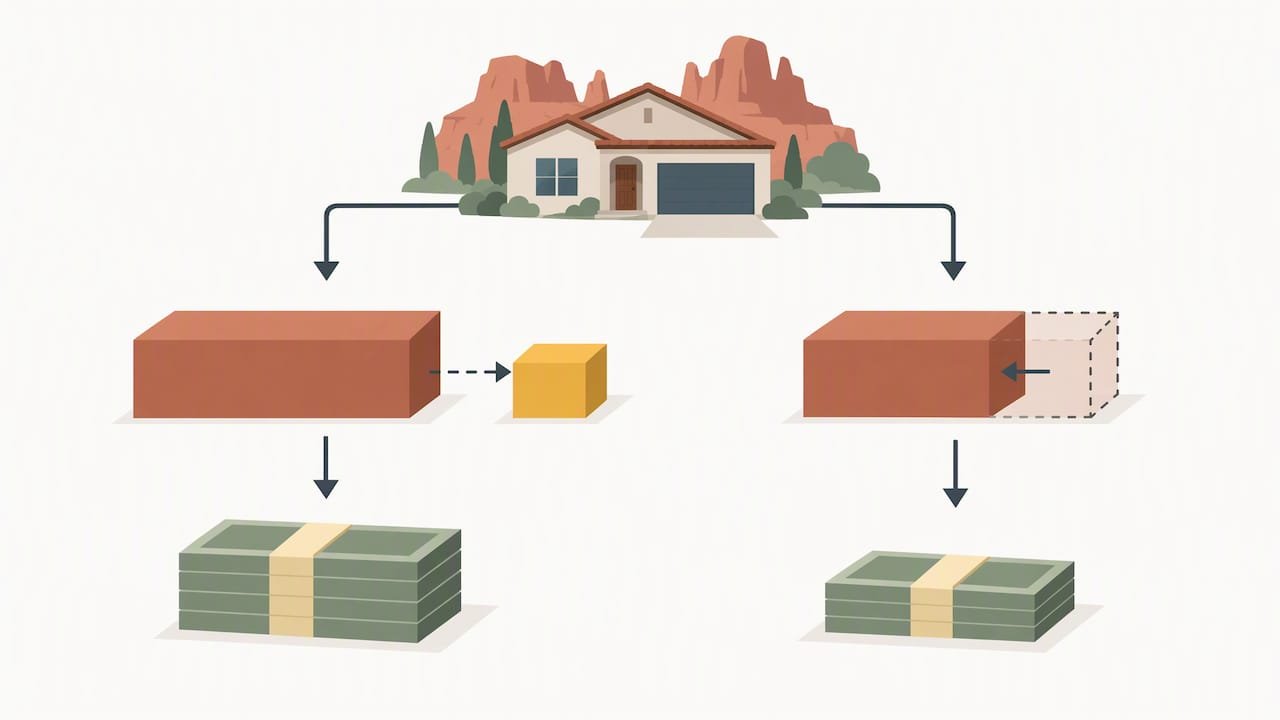
Pro Tip: Run your proposed concession through a CMA before you offer it. Sometimes a smaller credit preserves both your sale price and your net proceeds better than a price cut would.
Negotiation tips for Sedona buyers and sellers
Concessions work best when they are specific, timely, and tied to a real need rather than tossed in as a vague sweetener.
- Sellers should target a concession that solves a buyer’s cash shortfall while holding the listing price steady.
- Buyers should ask for concessions that lower cash-to-close first, like a credit or a rate buydown, and check their loan program’s cap before asking.
- Contract language always needs an exact dollar figure and the specific fee it covers. Loose phrasing like “seller to pay closing costs” with no ceiling is asking for a hiccup at the title company.
- Timing matters: concessions can be built into the original offer, or they can surface during negotiations after inspection, depending on who holds the leverage at that point.
If a seller is weighing a cash credit against smaller physical fixes, One Day Doors & Closets handles fast, low-mess door and closet updates around the Phoenix and greater Arizona area, which can sometimes satisfy a buyer’s inspection request without touching the price at all.
Arizona disclosure rules sellers and agents should not skip
Arizona takes disclosure seriously when money changes hands outside the sale price itself. Current guidance, effective June 18, 2008 and revised December 7, 2018, recommends that licensees disclose any premium, credit, or rebate to every party involved, including the lender. Skipping that step is not just sloppy, it can open the door to disciplinary action or a RESPA violation.
- Document every concession clearly in the purchase agreement, with the dollar amount and designated use spelled out.
- Disclose the concession to the lender and appraiser, not just the buyer and seller.
- Make sure it appears accurately on the final closing statement so nothing gets lost in translation.
Our Sedona take on concessions for STR sellers
For short-term rental sellers, we often find a well-placed concession beats a straight price cut, since it keeps the listed price intact for comparable sales down the road while still solving a buyer’s cash crunch. A concession tied to closing costs or a rate buydown can even help an STR buyer qualify under tighter investment-property lending rules. If you are weighing a credit against a price adjustment on your Sedona rental, we are glad to run the numbers with you.
— Chad
Get a Sedona CMA before you offer or accept a concession
Figuring out whether a concession makes sense, and how much it should be, works a lot better with real numbers in front of you rather than a guess. We offer seller real estate representation, a Sedona Home CMA, a Sedona vacation rental CMA, and a seller prep consultation built around exactly this kind of decision.

If you are preparing to sell a Sedona home or short-term rental, request a CMA with us and see exactly how a concession would play out against your net proceeds before you commit to anything.
FAQ
What does $5,000 in seller concessions mean?
It means the seller agrees to cover $5,000 of the buyer’s closing costs, which lowers the buyer’s cash needed at closing by that same amount. The exact items it applies to, like title fees or prepaid interest, should be spelled out in the contract.
What closing costs do sellers pay in Arizona?
Sellers in Arizona commonly cover items like title insurance, escrow fees, and HOA transfer fees when negotiated as part of a concession. The specific costs and amounts are set by the purchase agreement, not by a fixed state rule.
What are the most common seller concessions?
The most frequent concessions are closing cost credits, prepaid interest coverage, rate buydown points, and agreed repairs identified during inspection, as described by the National Association of Realtors. Local agents often describe concessions as a strategy that can speed up a sale while easing a buyer’s upfront costs.
How much do sellers usually pay toward closing costs?
The amount depends on the buyer’s loan program: FHA loans cap seller-paid contributions at 6% of the sale price, per hud.gov, while VA loans allow seller concessions for closing costs and discount points up to 4% of the loan amount, according to the VA Home Loan Guaranty Buyer’s Guide. Conventional loan limits typically scale with the buyer’s down payment percentage.
Sources
- What Are Seller Concessions?
- VA Home Loan Guaranty Buyer’s Guide
- Effective Date: 6/18/08, Revised 12/07/18